Birth of the Sporting Breech Loader
30 articles tagged Birth of the Sporting Breech LoaderShow all articles
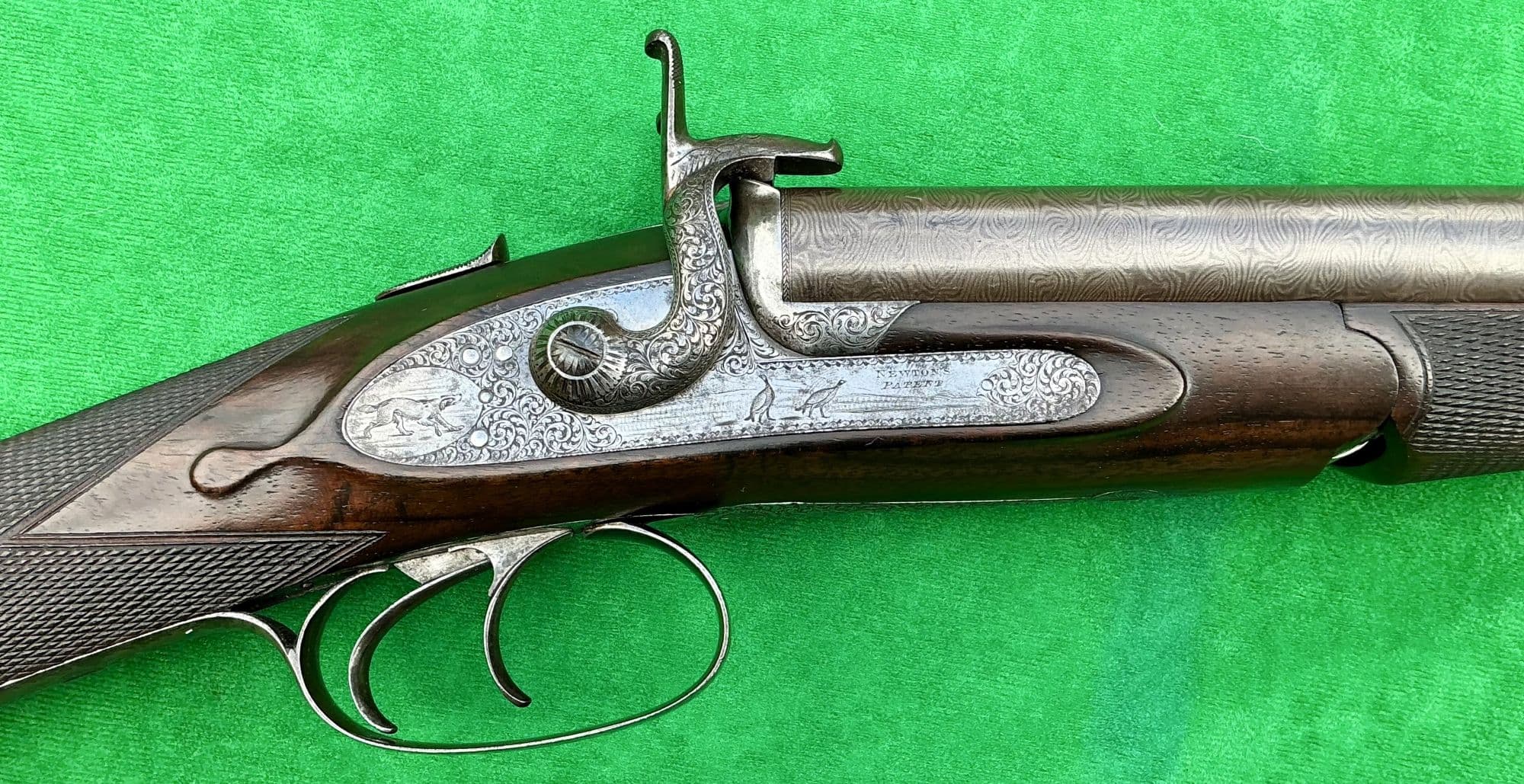
Thomas Newton - Gunmaker - Manchester
Thomas Newton – Gun-maker Manchester – 1816 to 1878 The Gun-maker Thomas Newton has been described by the late Geoffery Boothroyd as the “Northern Star of the Manchester Gunmakers” – Boothroyd’s observations are evidenced through the Thomas Newton Pinfire Sporting game gun in this article.
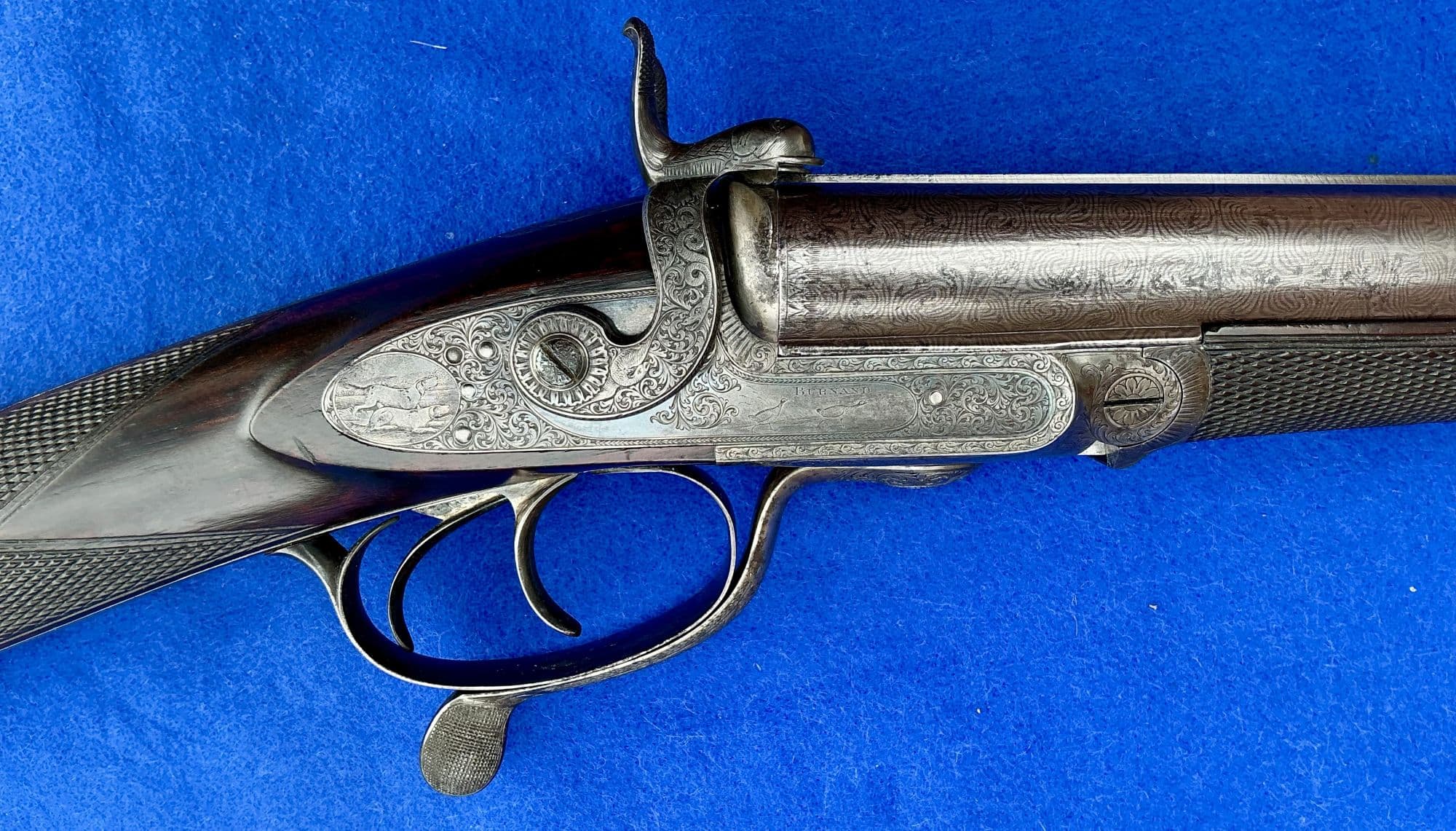
Richard Burnand - Gunmaker
Richard Burnand – Gunmaker Newcastle-on-Tyne 1837-1886 Richard Burnand, a talented Gunmaker from the North of England, Burnand produced quality guns of various types, including; Dueling Pistols, Rifles and Sporting game guns, all within the Victorian Period. Burnand is given credit by a number of gun-making historians and collectors, even though many of us are unfamiliar with Richard Burnand's work.
J. D. Dougall - Percussion / Cartridge Conversion Guns
J. D. Dougall - Percussion / Cartridge Conversion Guns This article covers the mindset of the Victorian Gunmaker and Inventor of J. D. Dougall. This unusual dual firing system, allowing the sporting Victorian game shooter in using the latest established design concept of the Centre-Fire Breech-Loader, but also in adverse or difficult conditions, allowing the gun to be used in reverse, and return to days gone, through being used as a Muzzle-Loader.
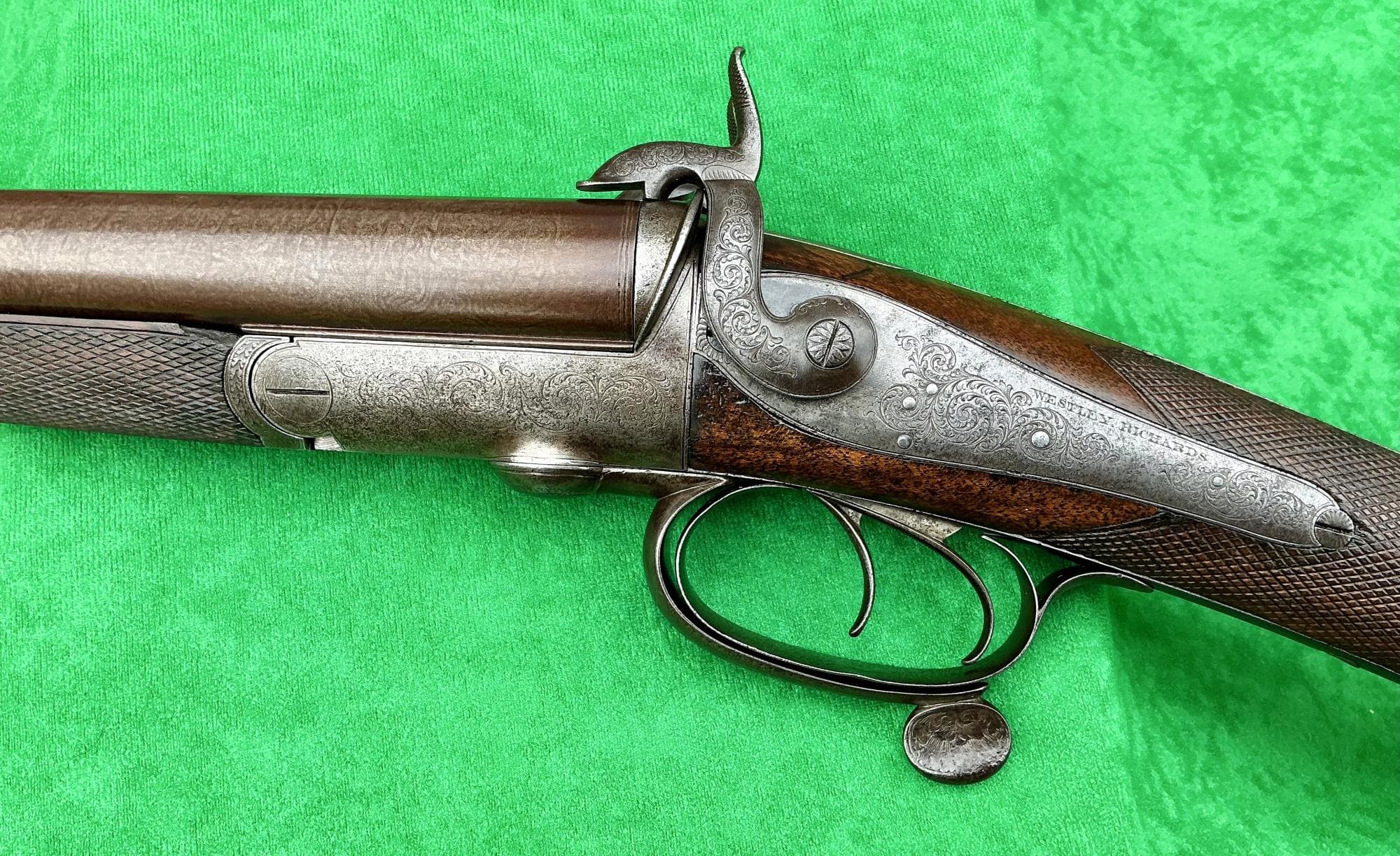
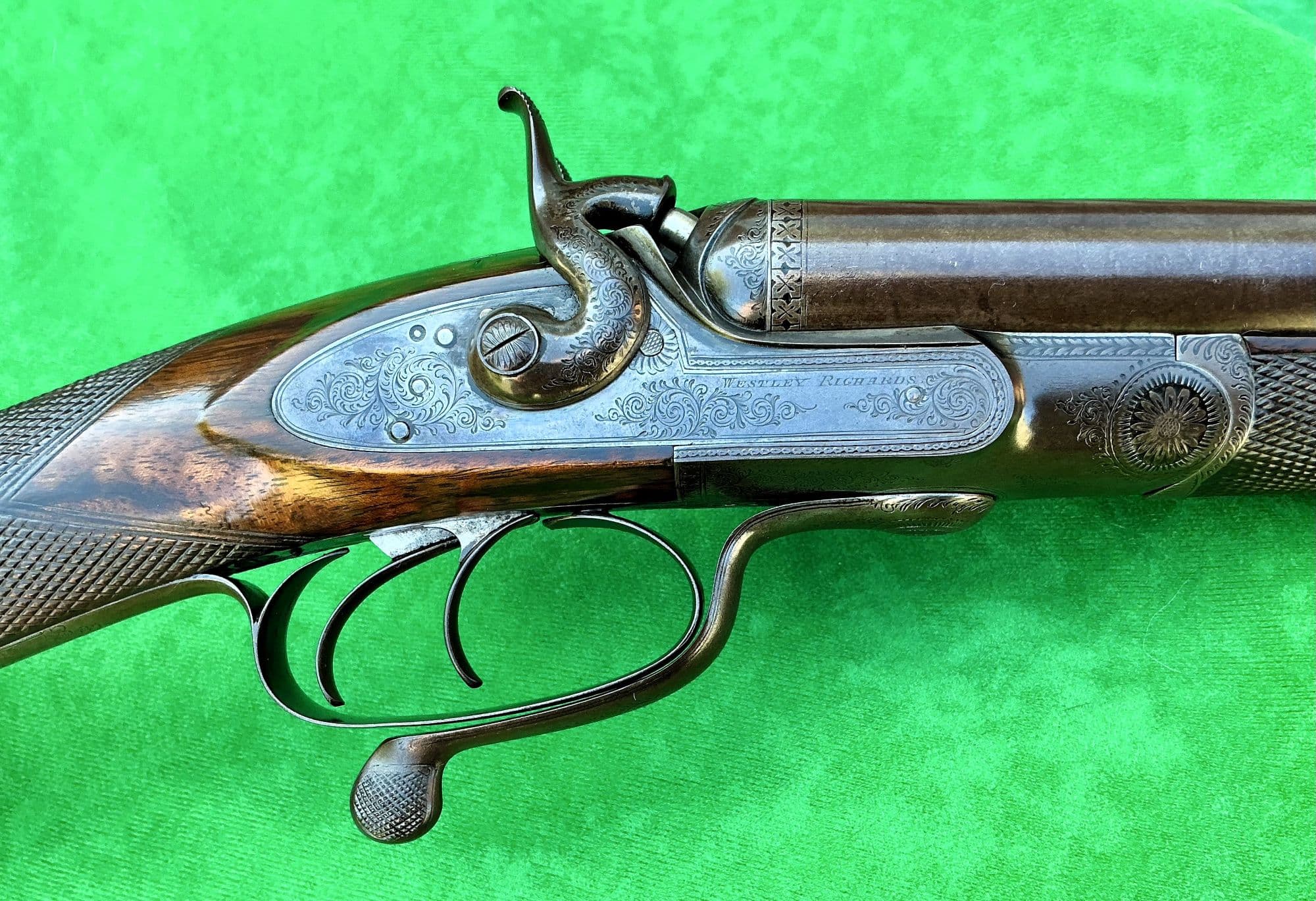
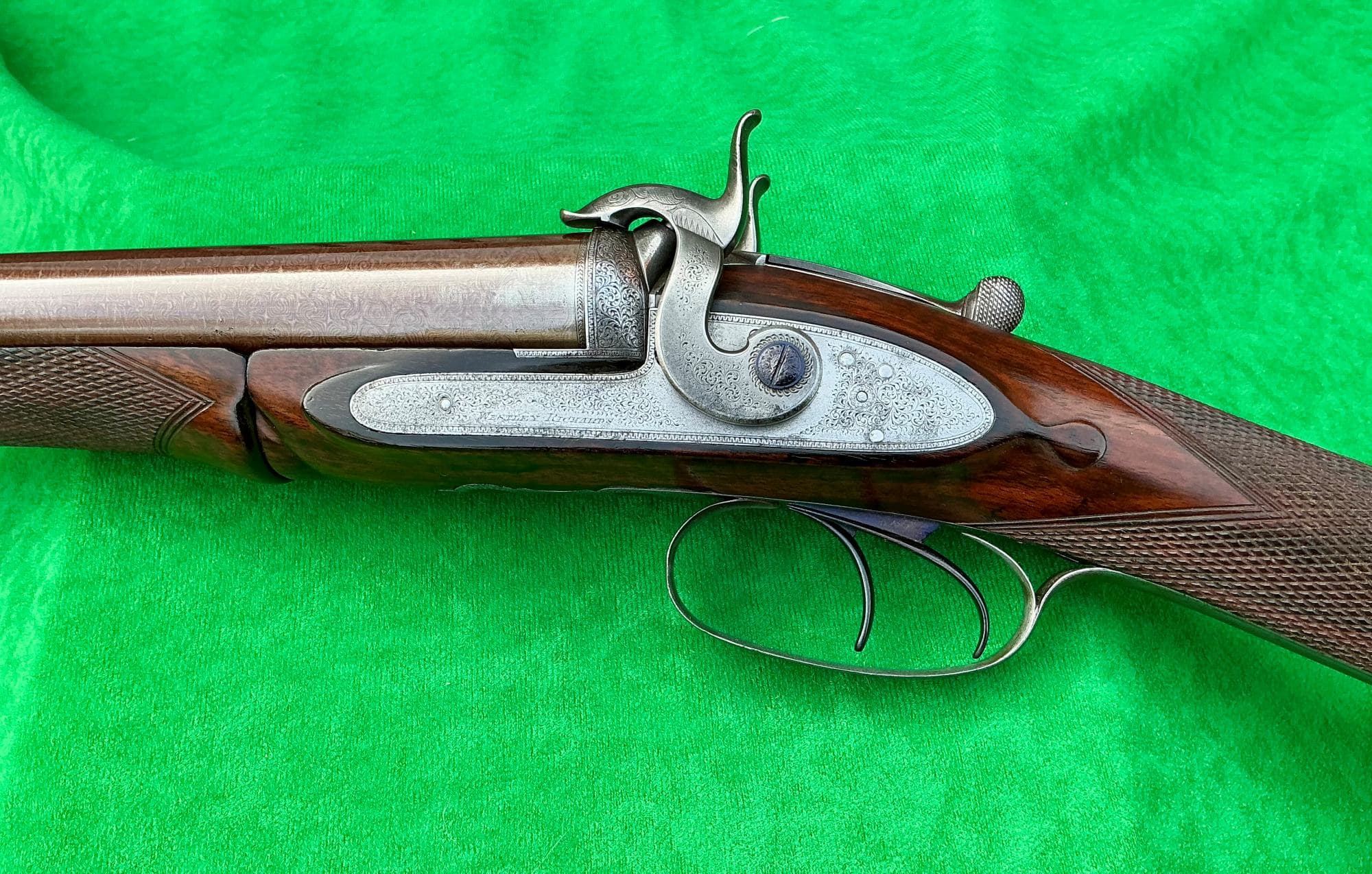
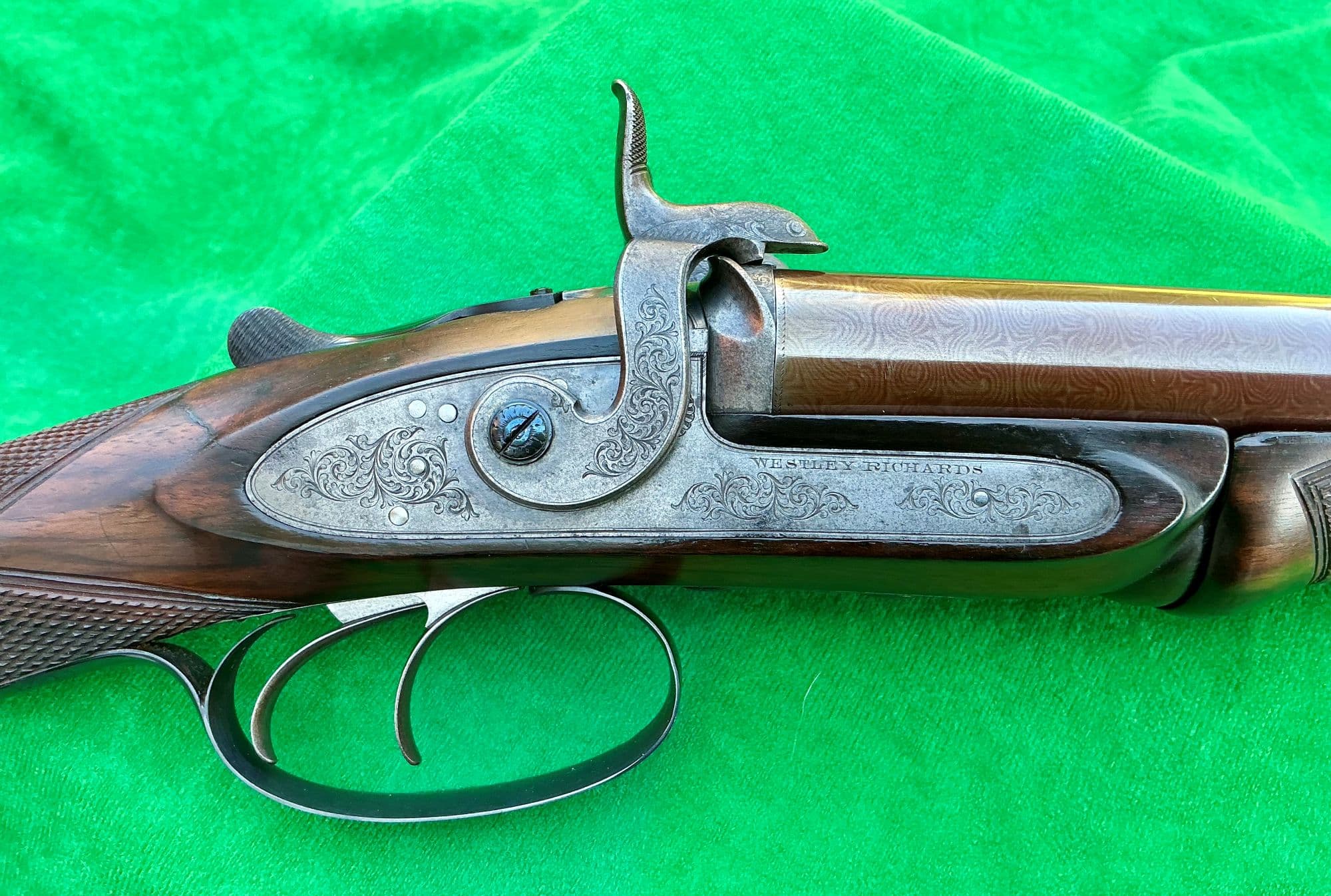
Westley Richards – 1860 Breech-Loader
Westley Richards – Gunmakers 1860 Breech-Loader The first Westley Richard Sporting Game breech-loading guns emerged in 1858 and were of Pin-fire form. The majority of early breech-loaders from Westley Richards encountered today are of Top-Lever patented designs.
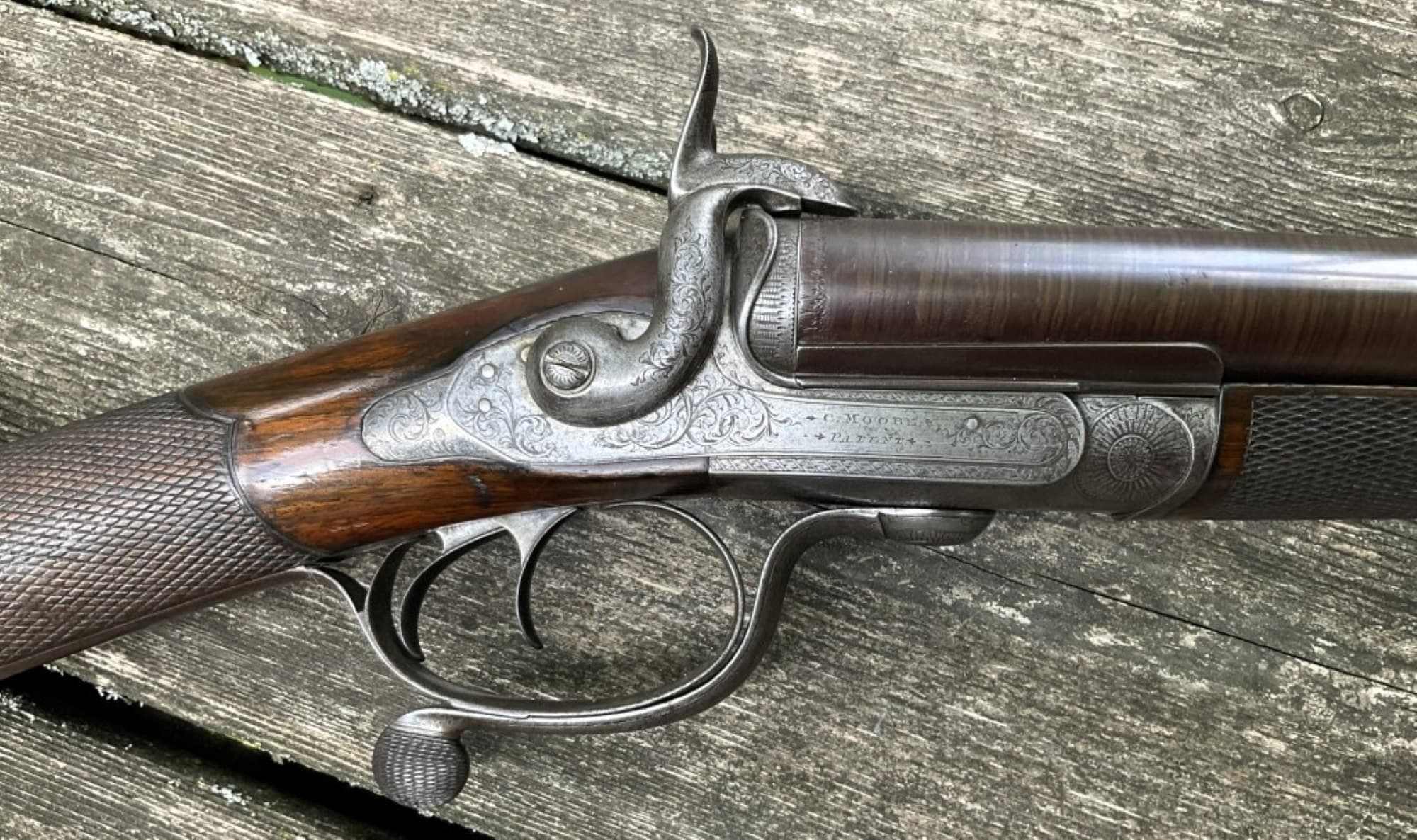
James Woodward of London
James Woodward of London Charles Moore, Pellet-Lock conversion to Pin-fire An interesting ‘Woodward-Moore Conversion’ – With the unending discussions over the terms of ‘best gun,’ ‘best-gun maker,’ and ‘best gun maker’, these discussions are seemingly hard to avoid, and are even harder to settle. While there have been many storied gunmakers, the period 1851 to 1869 is of primary interest to the author of this article, Stephen Nash, to which he reminds us, ‘It must be remembered, Gun makers of the new concept in building breech-loaders were all equally new to the task, no matter the pedigree of the maker, or their name’.
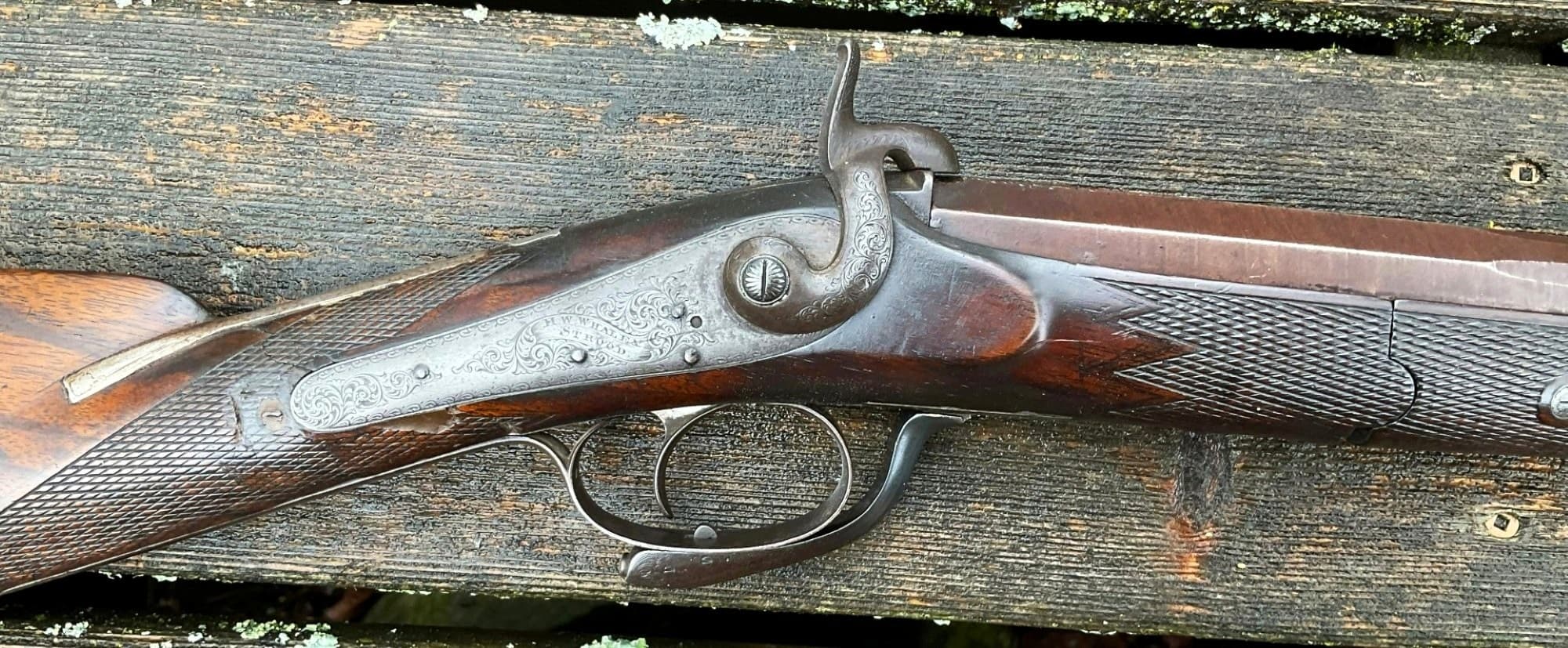
Henry Watson Whaley - Gunmaker
Henry Watson Whaley - Strood, Kent A Pinfire Single barrel, signed Whaley An interesting article from Stephen Nash, after securing a Single barrel conversion - Muzzle-loader to Pin-fire, by a provincial gunmaker, who likes to doing things the hard way !
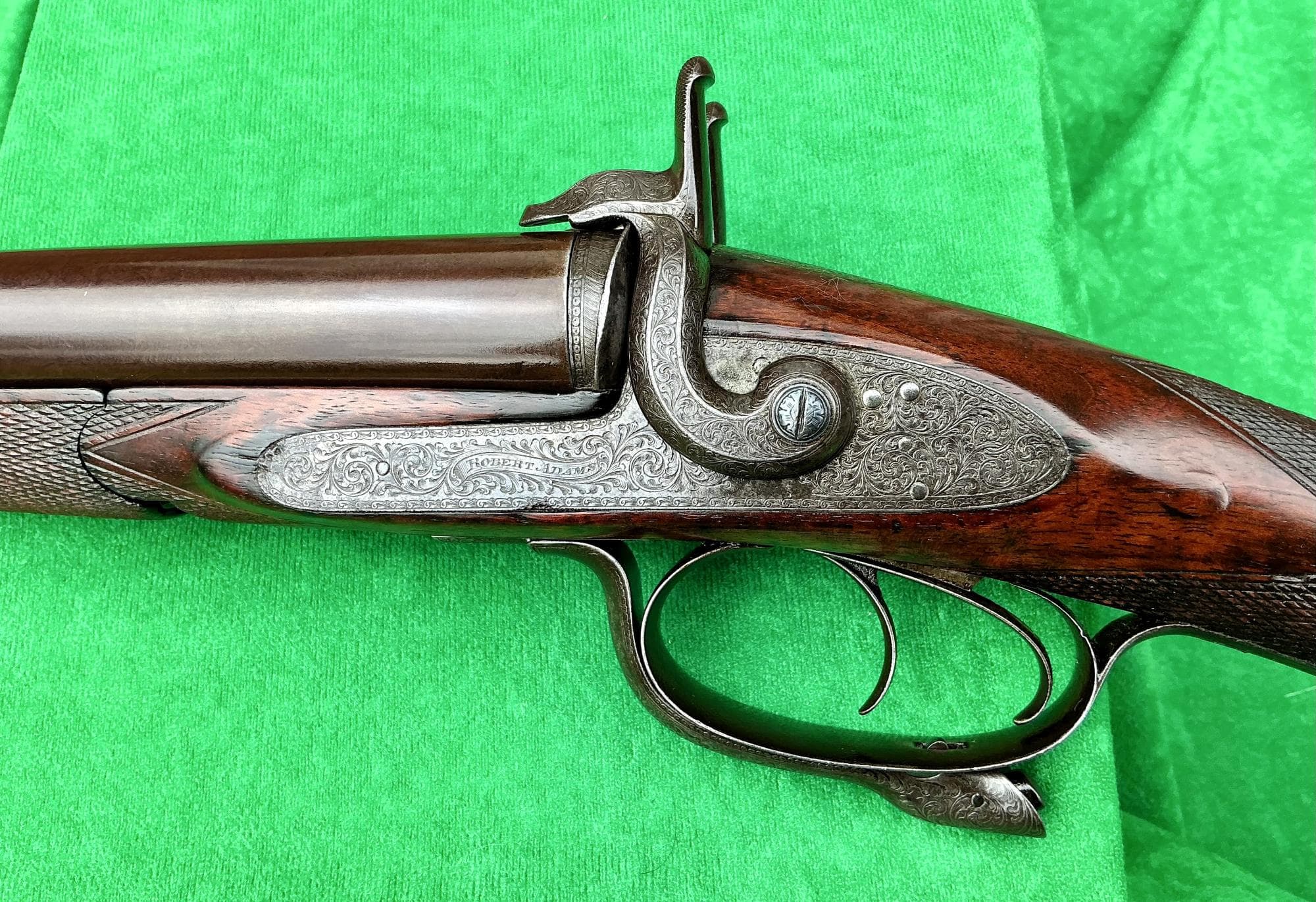
Robert Adams - Gunmaker - Pinfire
Robert Adams - Gunmaker - London - 1858-1866 Stories from the Scrap pile Stood in the corner of a provincial gun shop, dusty, rusty, and out of favour, this old gun was getting ever closer to ‘Madame Guillotine’ – fortunately, the gun was purchased for the price of a good Pub lunch. This 1860’s London made Pinfire had a ‘Tale to Tell’
Westley Richards - 1858 - Presentation Gun
Westley Richards Muzzle Loader Conversion – 1858 Looking at another quality made British Vintage gun, and then something interesting catches your eye ! – A plaque in-let to the right hand side of the stock, which reads – Presented to John Sidebotham by the late Lord Newton “Jan. 1899”.
Westley Richards - Centre Fire Patent No. 2623 - Article Two
Article Two – Centre Fire - Patent No. 2623 The second of the two Westley Richards sporting game guns featuring the Patent No. 2623 of 1864, for a single bite snap action. The patent bridges the Pinfire and Centre fire transition. The use of the lateral thumb lever, has made the guns in both; Article One & Article Two, look up to date and ahead of their time considering their date of manufacture
Westley Richards - Pinfire Patent No. 2623 - Article One
Westley Richards - Pinfire Patent No. 2623 - Article One
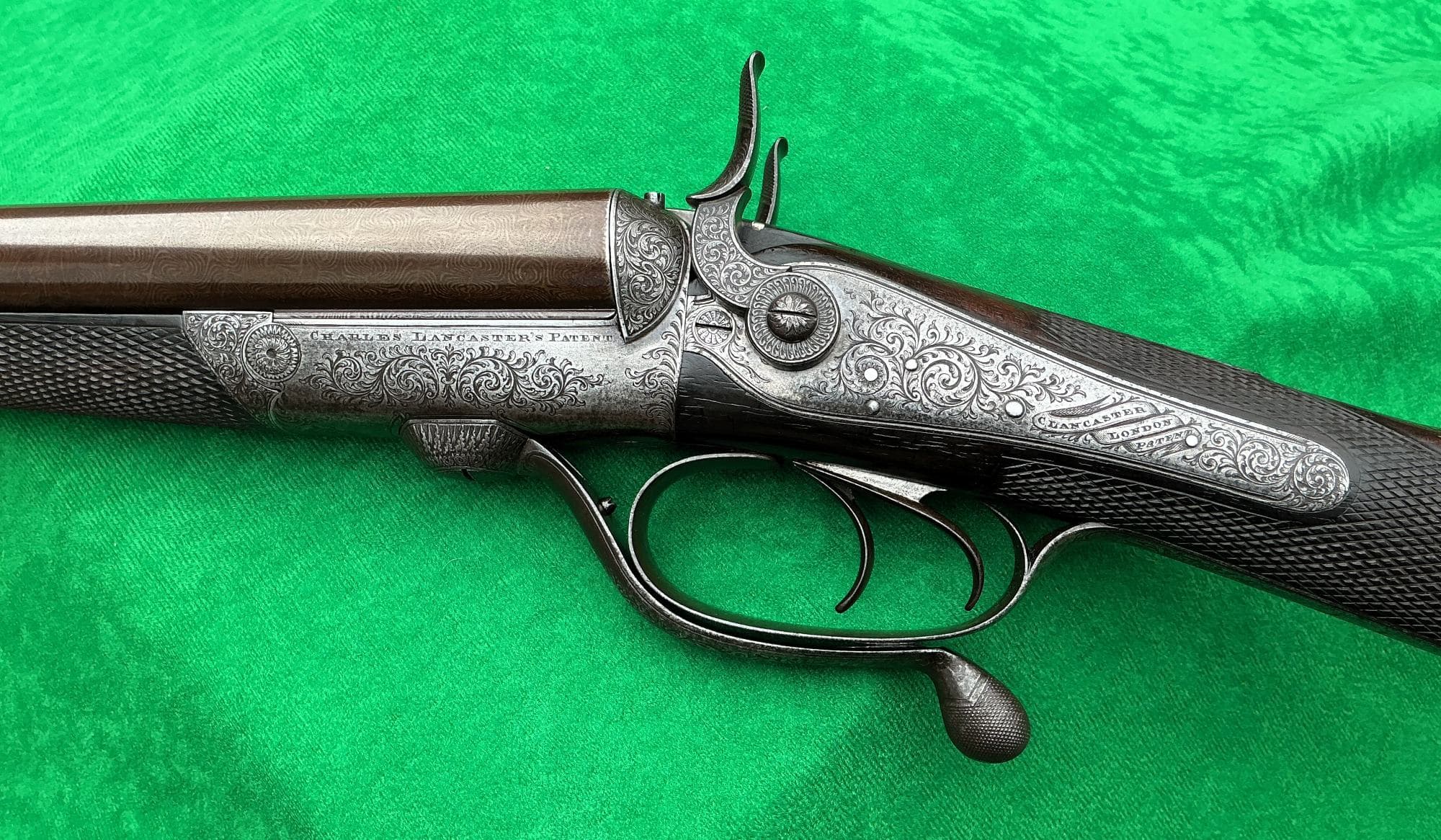
Charles Lancaster - Base-Fire, Gun & Cartridge
The 1856 patent ‘Slide and Tilt’ action is renowned for its links with the ‘Base-Fire’ cartridge made by Charles Lancaster. The action durability and strength comes directly through the locking of the barrels to the action in two stages.
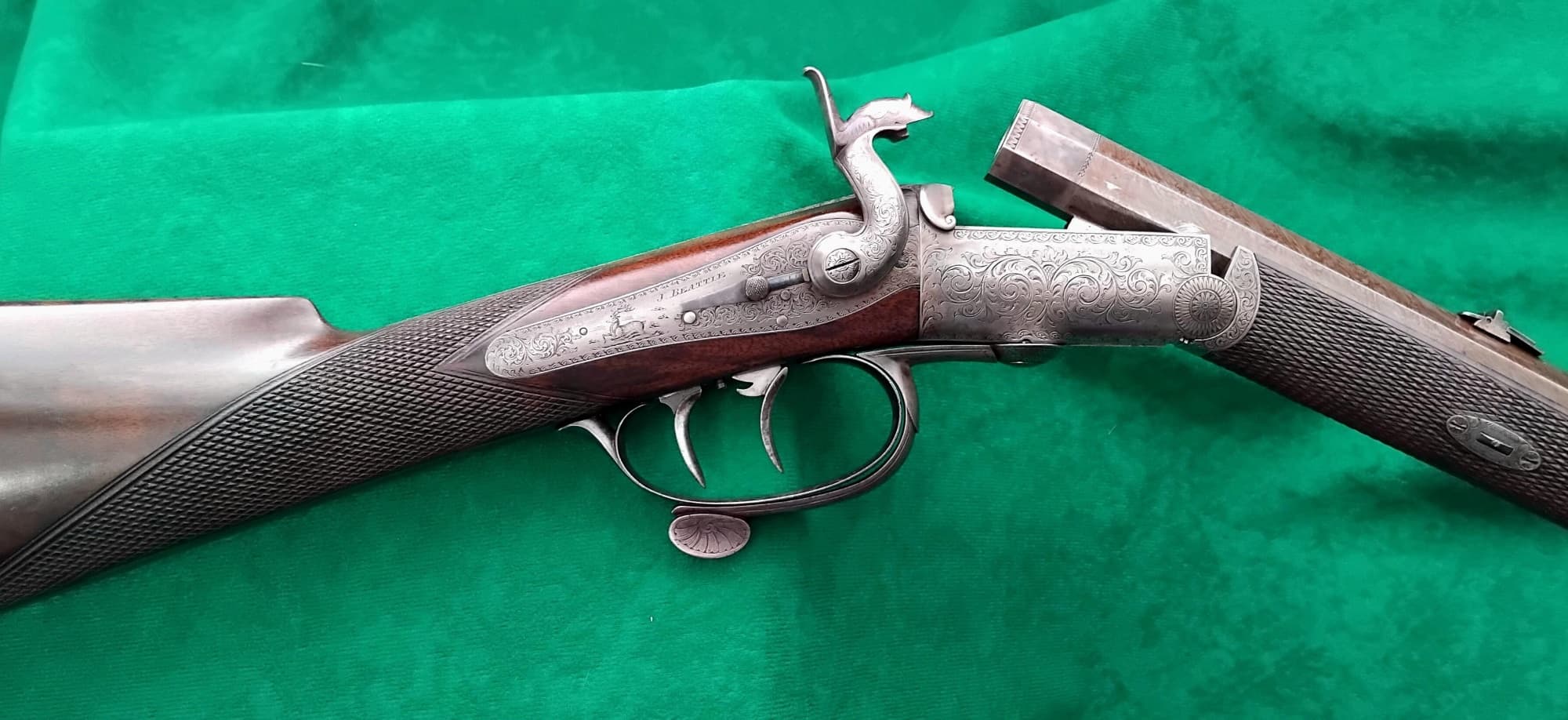
James Beattie - Deer Park Rifle
The Rifle that inspired this article was built by James Beattie, hand-made to order as a Park Rifle, for dedicated use within the confinements of the Deer Park.