James Woodward of London
James Woodward of London
Charles Moore, Pellet-Lock conversion to Pin-fire
An interesting ‘Woodward-Moore Conversion’ – With the unending discussions over the terms of ‘best gun,’ ‘best-gun maker,’ and ‘best gun maker’, these discussions are seemingly hard to avoid, and are even harder to settle.
While there have been many storied gunmakers, the period 1851 to 1869 is of primary interest to the author of this article, Stephen Nash, to which he reminds us, ‘It must be remembered, Gun makers of the new concept in building breech-loaders were all equally new to the task, no matter the pedigree of the maker, or their name’.

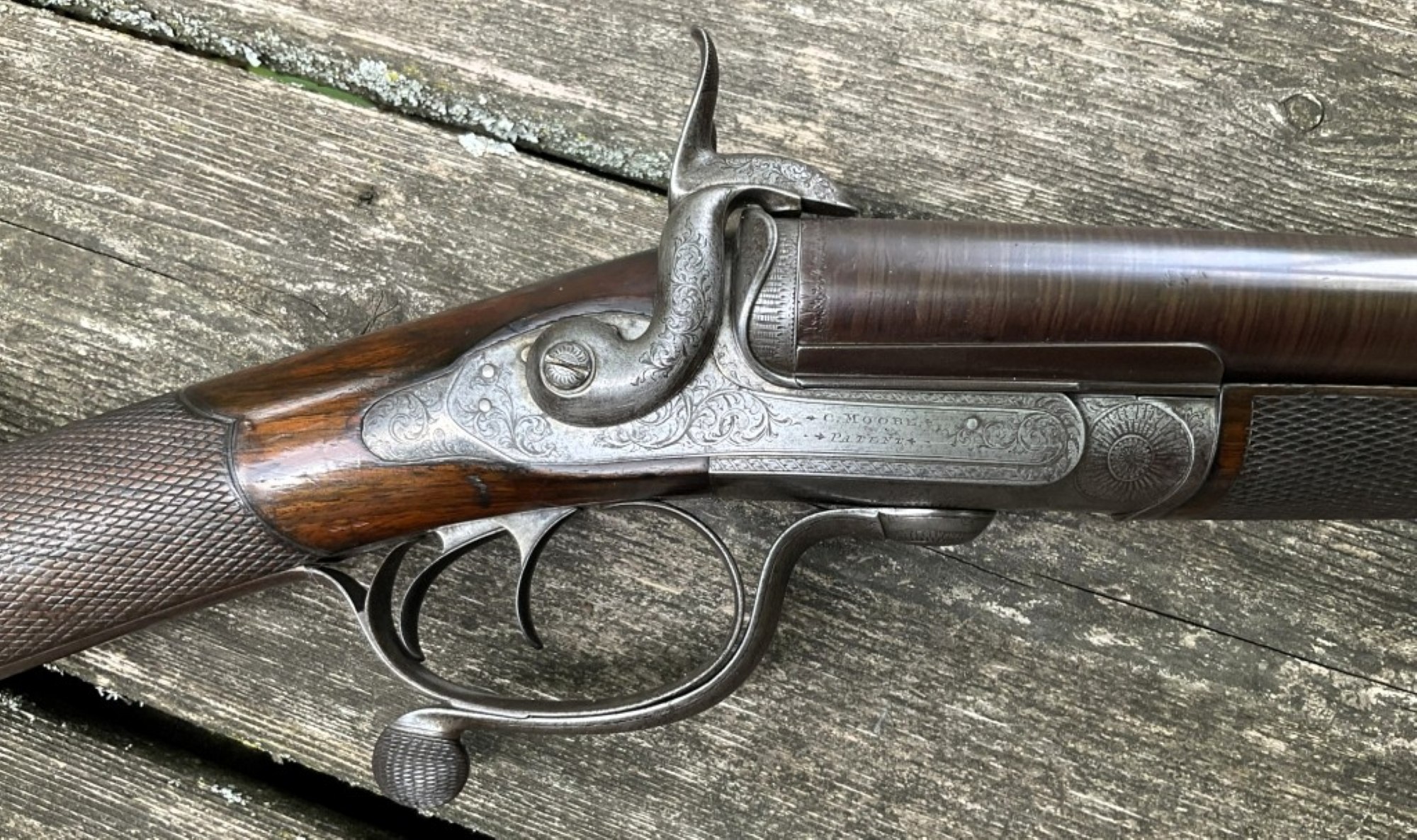
Quality 'Pellet-Lock' Muzzle-loader by Charles Moore converted to 'Pinfire' by James Woodward.
Only in the latter part of this period would the Birmingham gun-trade produce lower-cost versions. The earliest of breech-loaders, being either in the expensive or very expensive categories. These higher-cost guns may well have had better locks and barrels, or their higher cost possibly due to proprietary actions and features, rather than just the cost of materials.
Due to the high cost of a new breech-loader Sporting Game gun during this period, the thoughts of a conversion, or converting a better or best gun that may be deemed old fashioned or obsolete became an attractive option. These conversions could be made using a muzzle-loading barrel as the starting point for a new gun, or by re-purposing as much of the original gun as possible. The gun in this article is an example of the latter, an 8 lb 3 oz 10-bore pin-fire gun signed James Woodward of London, apparently made with barrels, locks, furniture, and butt-stock from a Charles Moore percussion pellet-lock gun.

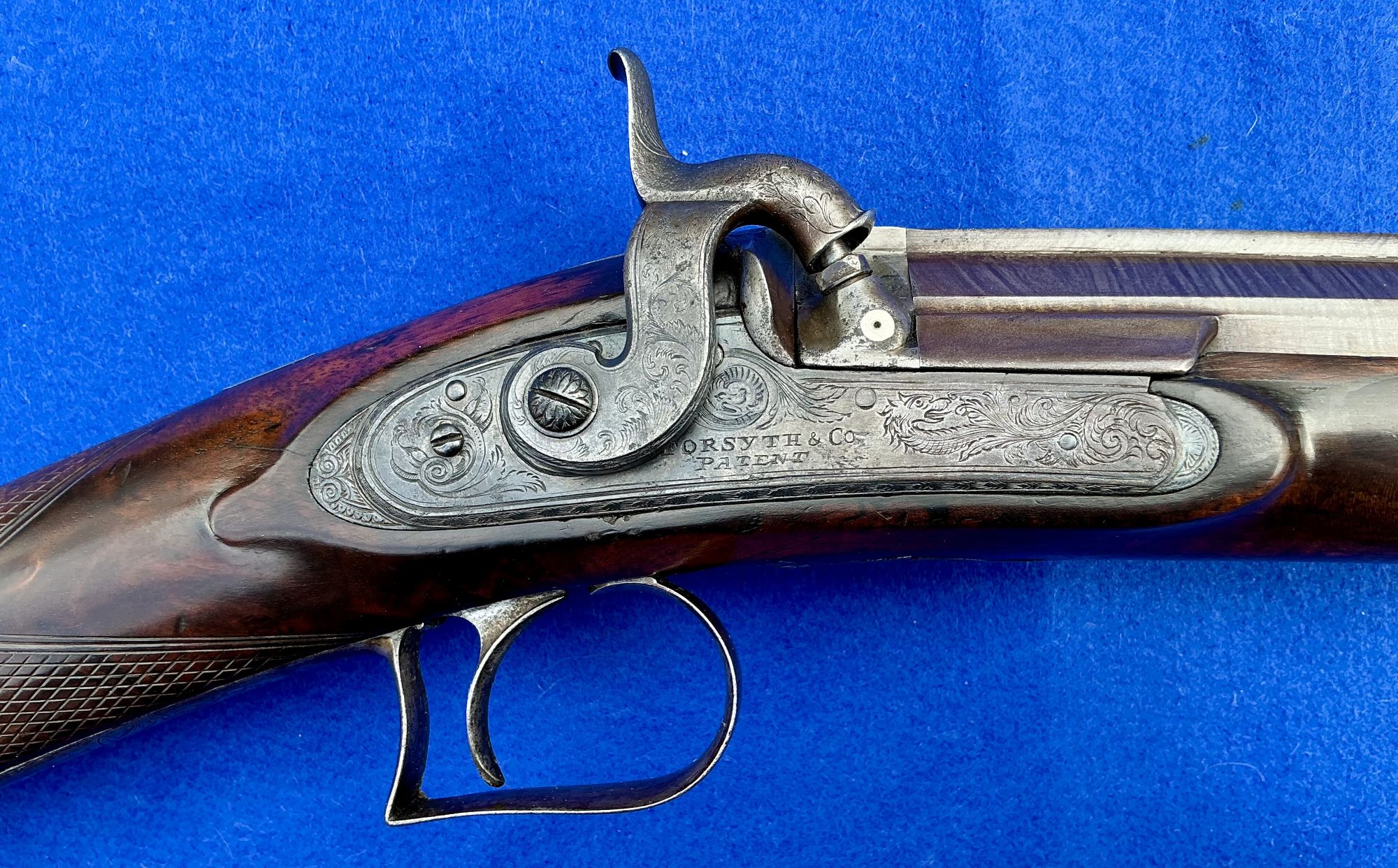
Action ‘Patent’ inscription, however, the pellet-lock patent was held by William Westley Richards 1821.
Pellet-lock guns were favoured by waterfowlers for their reliability and certainty of ignition. The pellet-lock system from Charles Moore used spherical pellets made of mercury fulminate coated with gum arabic and iron oxide, each pellet measuring approximately 2 mm in diameter and weighing about 20 mg, the pellets were considerably safer and more manageable than loose powder. The use of a pellet dispensing tool would have been included with the gun, this would facilitate the user in placing pellets precisely within the locks ‘pellet cup’ located under the cock. When firing the gun, the cock fell, and the pellet cover mounted under the cock, would automatically flip out of the way.

The wide top rib is signed “James Woodward 64 St. James Street London,”
This conversion might have spent more time in marshes, than along hedgerows, or it may have served as a live-pigeon gun. The 30 11/16” Iron twist barrels suggest the guns’ original date of manufacture is likely to be early - ( Charles Moore was appointed furbisher to St. James Palace and Hampton Court in 1829, and as gunmaker to William IV in 1836 ) - The wide top rib is signed “James Woodward 64 St. James Street London,” and the duck's head-style bar locks are signed “C. Moore Patent.”
Charles Moore, earlier, in 1827, had promoted the ‘isolated or ‘bar-in-wood’ lock (island locks are usually back-action, so an isolated bar lock is quite special on a sporting gun). Such locks and engraved inscriptions are found on Charles Moore pellet-lock guns, which predate the copper percussion cap.

Strong straight figured grained Walnut.
Despite the action body being engraved with the ‘Patent’ inscription, the pellet-lock patent was actually held by William Westley Richards, and not Charles Moore. The patent No. 4611, was granted to William Westley Richards for the ‘pellet-lock’ in 1821.
James Woodward had apprenticed under Charles Moore, and in 1843, he joined the Charles Moore business as a partner, at 64 St. James Street London, under the name ‘Moore and Woodward’. It is believed Charles Moore died in 1848, and the name of the firm became James Woodward soon after.

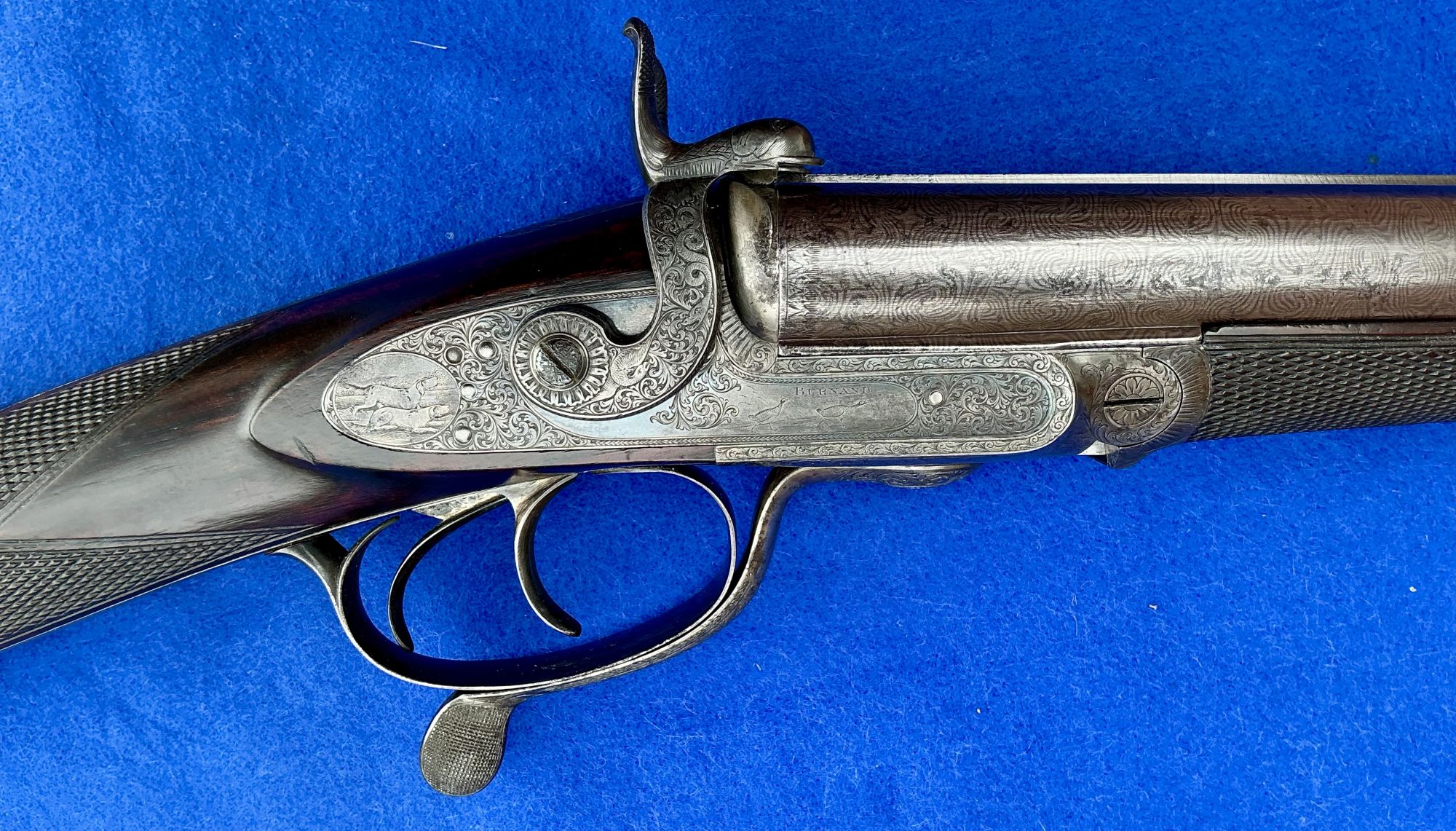
Fine tight scroll engraving on both, Action body & Under-lever opener.

Engraving is more open and less refined on the 'Trigger Bow'
The evidence at hand supports, that this gun appears to have been re-built by Woodward using the barrels, locks, furniture, and butt of a Charles Moore gun, perhaps taken from unsold stock or from a gun returned to the maker, and was fitted and adapted to a breech-loading action. Another clue is that the style of engraving on the lock-plates and furniture is different, with a more open foliate design, rather than the tighter scrollwork elsewhere on the gun. The action is an unmarked double-bite screw grip, indicating the conversion was made after 1862, and the rib inscription using “Woodward” rather than “Woodward & Sons” would indicate the conversion was performed prior to 1873.

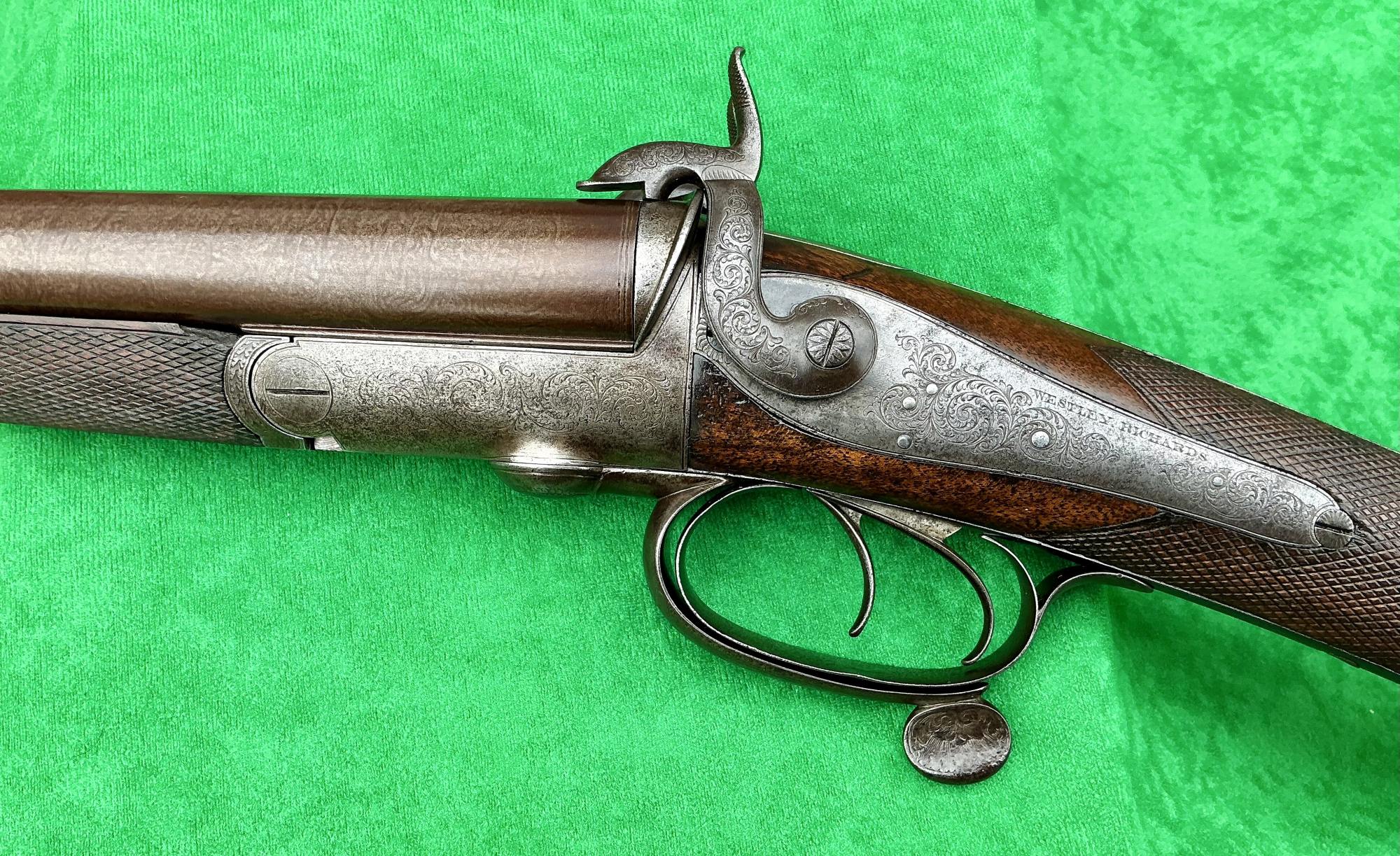
Lock-plates with open scroll engraving - Double-bite Lump & corresponding under-lever.
The business of James Woodward, also exhibited at the Great Exhibition of 1851 in London, with the business recorded in the small arms section, with exhibit No. 230, a “fowling piece with detached waterproof lock” the inventor being recorded as, James Woodward, 64 St. James Street London.

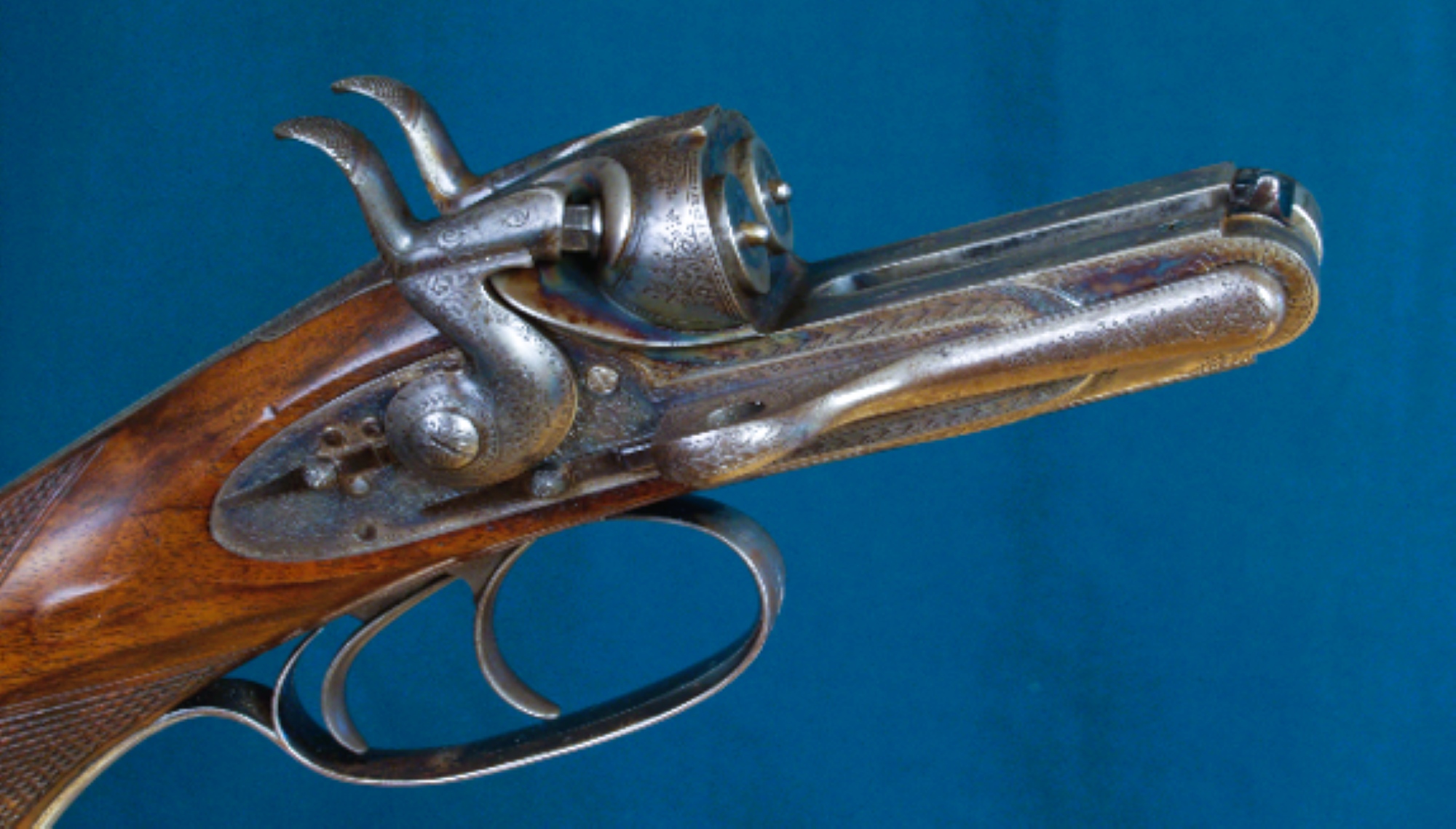
New Forend Iron / wood - Full width barrel flats, with Lock-up lumps & Hook via 'Shoe-lump'
The business was to become James Woodward & Son’s, London, during 1873. The quality of the workmanship, their guns and business delivery was exceptional, the company was eventually taken-over by James Purdey & Sons in 1948.