Thomas Horsley - No 1854
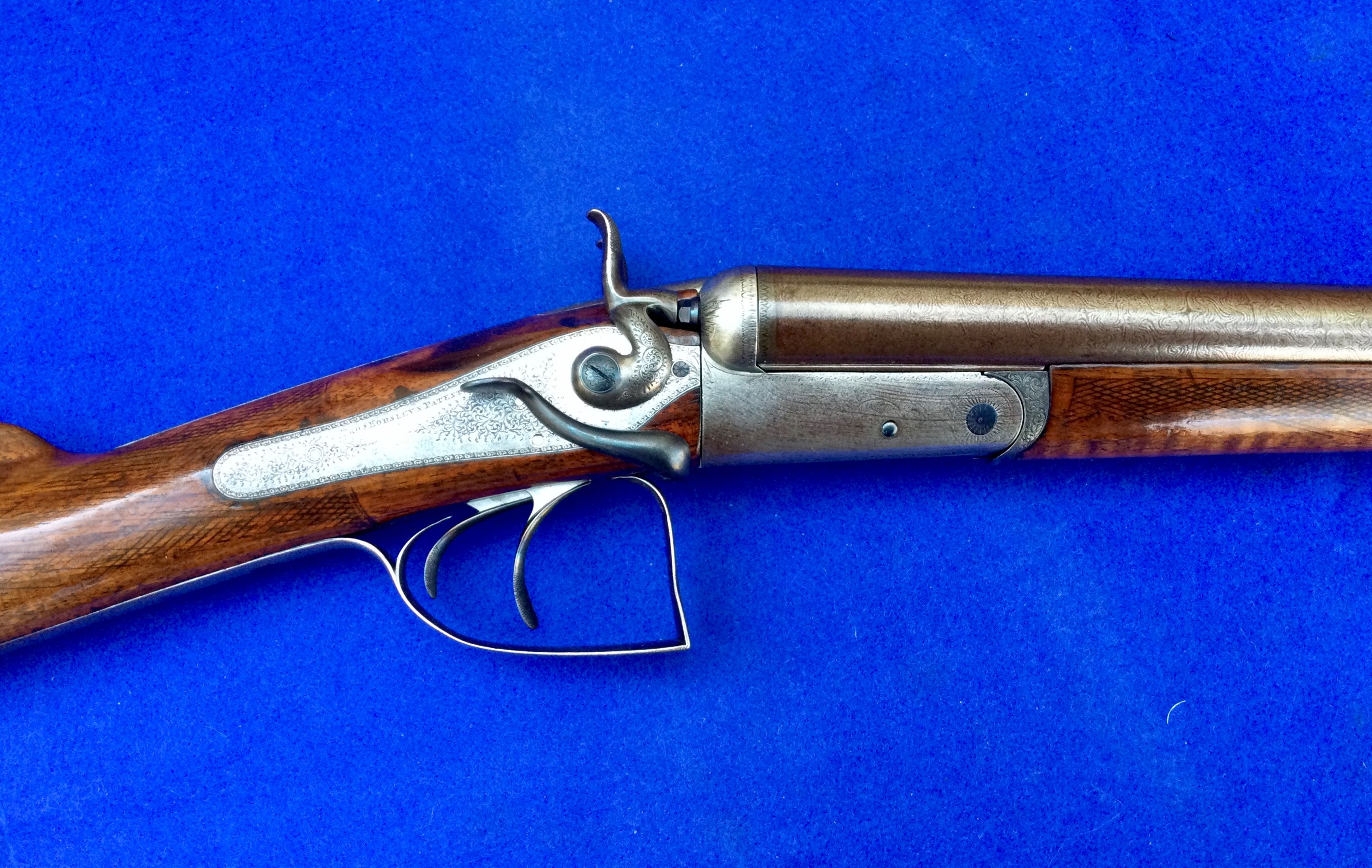
Thomas Horsley Hammer Gun - No. 1854
Stories from the Scrap Pile – Two
Another rare Vintage Gun found by accident, and destined for the scrap pile - While looking for a leather case to accommodate a Thomas Horsley Hammer Gun, a suitable case was offered on the condition, I took and disposed of the contents of the case. There, within the case was another old gun that had been classified as only fit for the scrap pile. The case contained an early Thomas Horsley, the gun had been extremely well used. The gun appeared to have served its previous owner well, nothing broken, just heavily worn. The gun had been kept clean during its life, however the signs of hard use were externally present, and the gun looked more than ready for the scrap pile, but this old Horsley had a tale to tell !

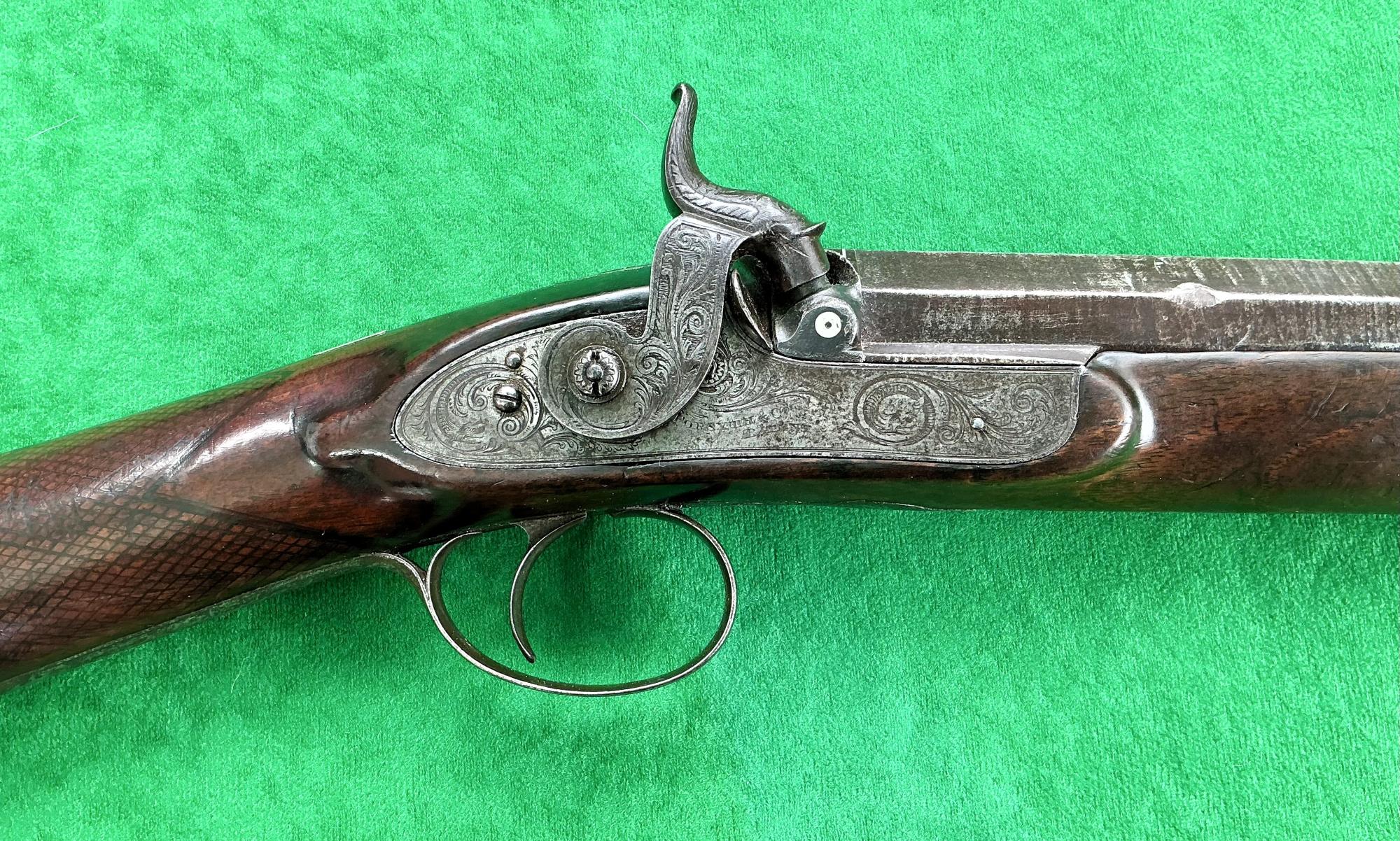
The early lines of a Thomas Horsley that appears older than it is.
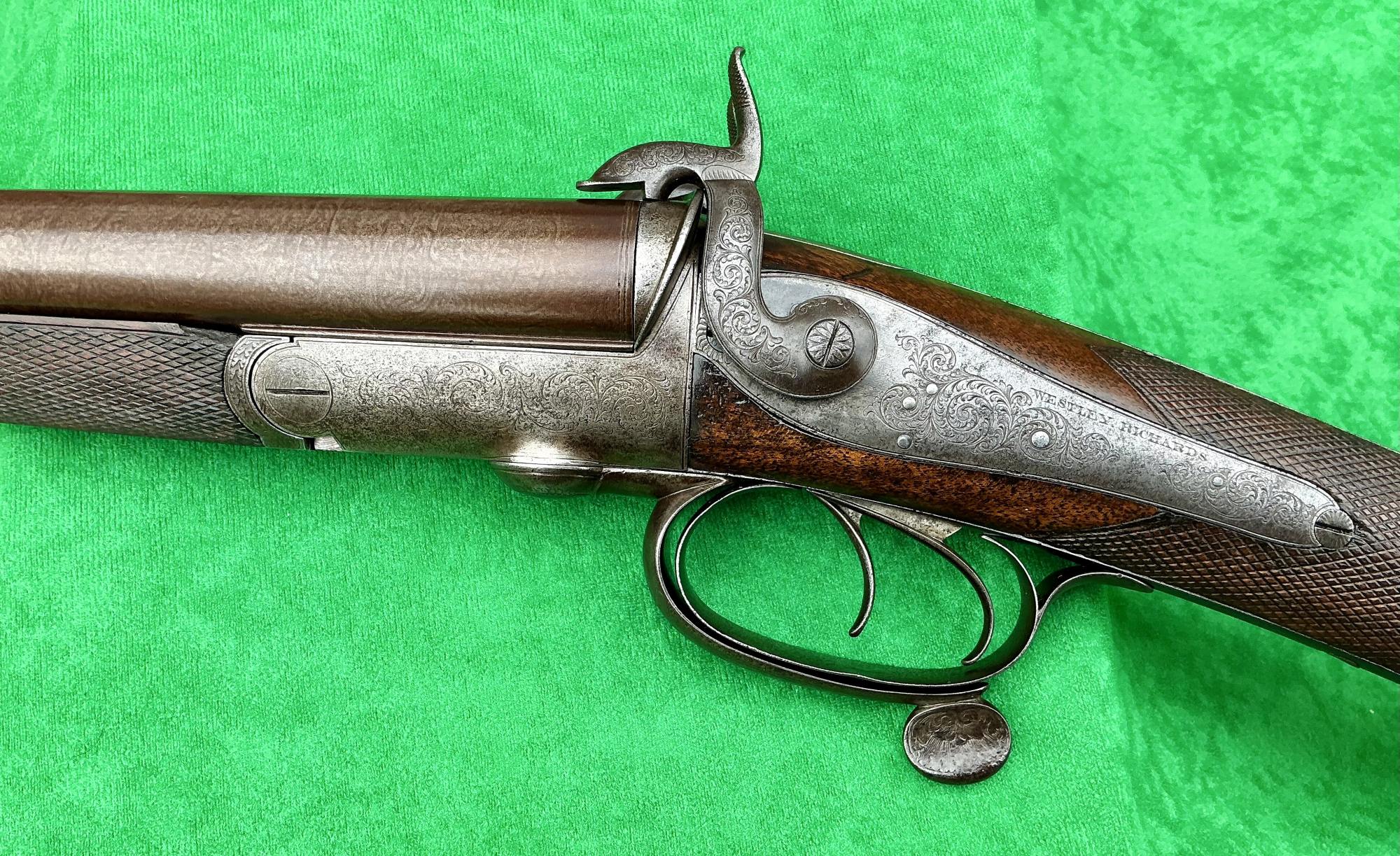
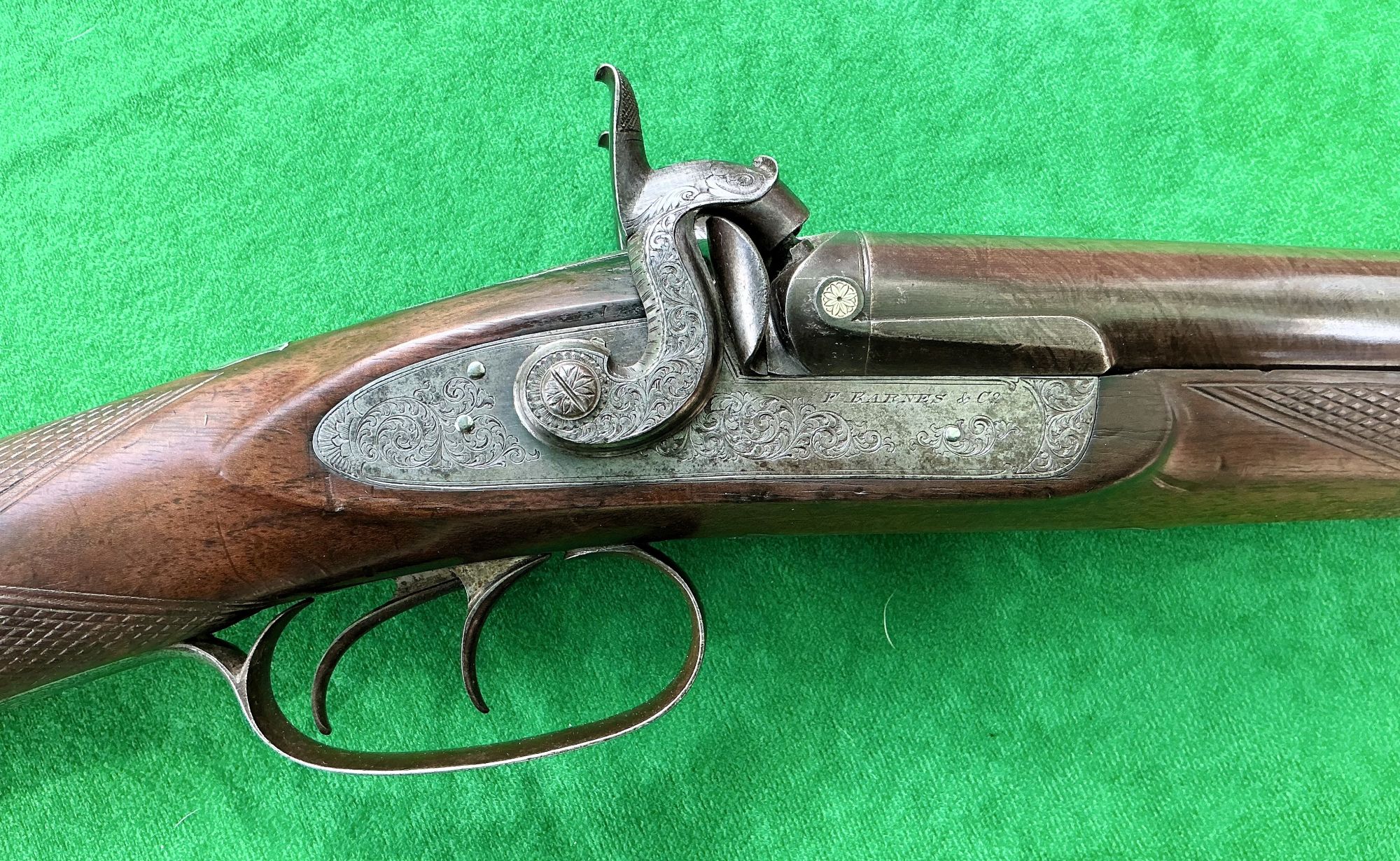
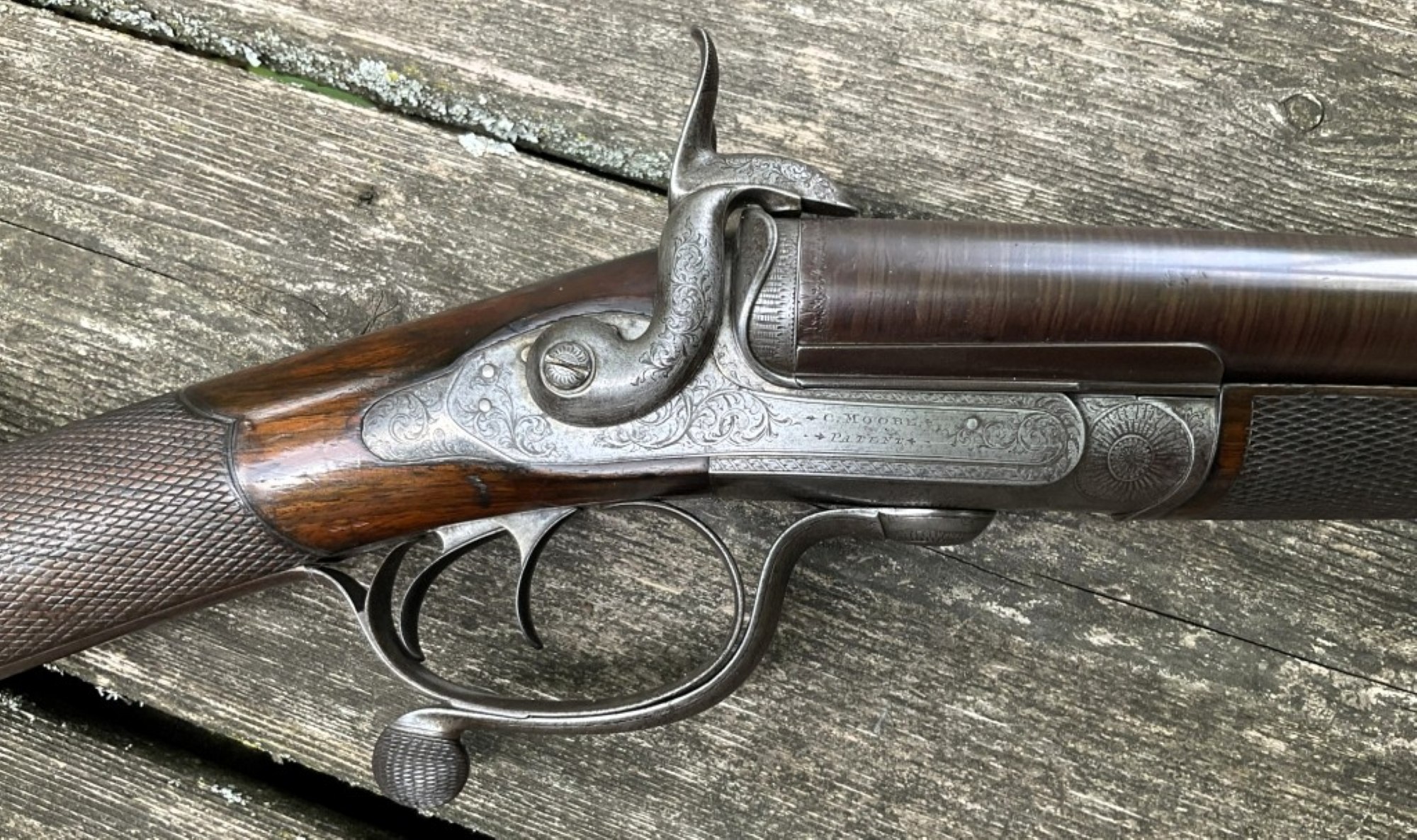
The gun appeared older than it actually was. The serial number was dating the gun to 1871, however the gun had a look of something built by Horsley ten years before. The gun also has a number of interesting features from a previous time. This included a square fronted trigger guard, a side lever opening, low set hammers striking the middle of the shoulders giving an appearance of a gun being converted from Pinfire, an early forend opening latch, and non-rebounding hammers. The idea of the gun possibly being a “Special Order” was growing. At this time makers of the day were all about development, and the latest designs, however this Thomas Horsley seemed to be old fashioned, and living in the past. The most distinct, unusual and puzzling feature had been applied to the stock, this looked to be part of a “Try” gun. The gun had been made with an adjustable comb in 1871 ! This was operated by a key to the underside of the stock. An adjustable combed stock at such an early period ! - I’m guessing the application of the adjustable comb would ensure the gun shoots high, adding lead for driven birds, or possibly if the gun was to be shot by other family members.


The early use of an adjustable comb - applied by the maker when built in 1871
The gun at this point had become very interesting. The importance of Vintage Gun enthusiasts, collectors and historians on the subject are paramount for information in this area of research. The authority on all things “Horsley” is David Baker, fortunately, his book “Thomas Horsley - Gunmaker of York” had recently joined my library. The Thomas Horsley book referenced a gun with the same adjustable stock configuration, with the reference surrounding a gun built in 1863 (an adjustable comb in 1863 !) The illustrated gun had been converted from “Pin-fire” and re-barrelled from Damascus to steel. This gun built in 1863 had by all accounts been well used.
On contacting David Baker to ask about any possible links between the featured 1863 Horsley gun in his book, and the Horsley saved from the scrap pile. The reply from David Baker, was both informative and interesting. Yes, the two guns have most definitely a link, as both guns were made for Lord Stourton of Stow. The gun recently recovered gun was listed in the Thomas Horsley records as one of six guns ordered, and built by Horsley for Lord Stourton. The interesting part of this story being, the whereabouts of the gun has not been known for over a hundred and forty five years. There was no mention in the records of an adjustable comb, this important fact was very close to being lost from history, as the gun was destined for the scrap pile. The stock configuration thought to be unique had a long lost relative, not exactly a twin, more of a clone.
The Horsley from the scrap pile was made in 1871 as a 14 bore. The guns’ similarities to its older twin were present - the gun has seen some considerable use, with the checkering in places being worn flat, off face, ribs loose, barrels dented and pitted - The gun looks like a hard worked, and well used tool.
The patents marked on the gun are: 2410 of 1st October 1863 for a sliding top lever, single bite snap, and 1138 of 17th April 1867 for a withdrawing striker patent. The barrels have no address on the rib, other than - “Thomas Horsley York”. The forend latch - Believed to be attributed to Charles Harvey for his forend fastener patent 1793 of 1866 would fit with the date of the gun being built in 1871. There are a number of similar forend latch’s, like the workings of the S. Matthews provisional patent 3573 of 1878, and the F. Baker Patent 1735 of 1878, these patents are seen on Rigby guns, and several others like Cashmore and Horsley, but in this case the gun in question is far earlier.

The Action body showing "Lightening Slots" and the use of a rising stud
To ensure no further deterioration, the gun was treated to a strip, clean, service, light internal lubrication, and minimal restoration. The decision to dismantle the gun threw up a design fault within the second gun. The original Lord Stourton gun illustrated in Bakers book on Horsley, showed as having a first patent thumb lever close to the trigger guard. The second gun had a side lever that did not give access to lock (lever side) without dismantling the bottom of the action - The trigger guard and trigger plate had to be removed before the lock itself could be safely removed. What became quickly apparent, none of this had been removed in sometime, if ever. The locks cleaned, allow us to see the locks were best quality Non-Rebounding Locks by Joseph Brazier “Ashes” - The locks after 150 years show little signs of wear, and work perfectly, giving positive half cock and full cock, with superb trigger pulls. Saved from the scrap pile, this vintage Thomas Horsley lives on as another interesting vintage gun.