Double Side-Lever Surprise
Robert Jones, Liverpool
Stories from the Scrap pile – Three
Robert Jones - 60, Dale Street, Liverpool - Hammer Gun No. 6682.
This exceptionally rare and unusual Double Side-lever Hammer gun was completed between 1873 and 1884, the address of 60, Dale Street Liverpool, serial number, proof marks, patent and other anomalies narrows a build date close to 1873-1875. This gun being black powder proof only, and in 16 bore was yet another gun destined for the scrap pile, fortunately the gun passed through the hands of an enthusiast and historian on its way to destruction, taking time to research the maker and the patent, the makers application of a double side lever opening system became a sticking point for research, thankfully this held up the process of destruction until a clearer picture emerged.

Elegant lines of an early 1870's Hammer gun
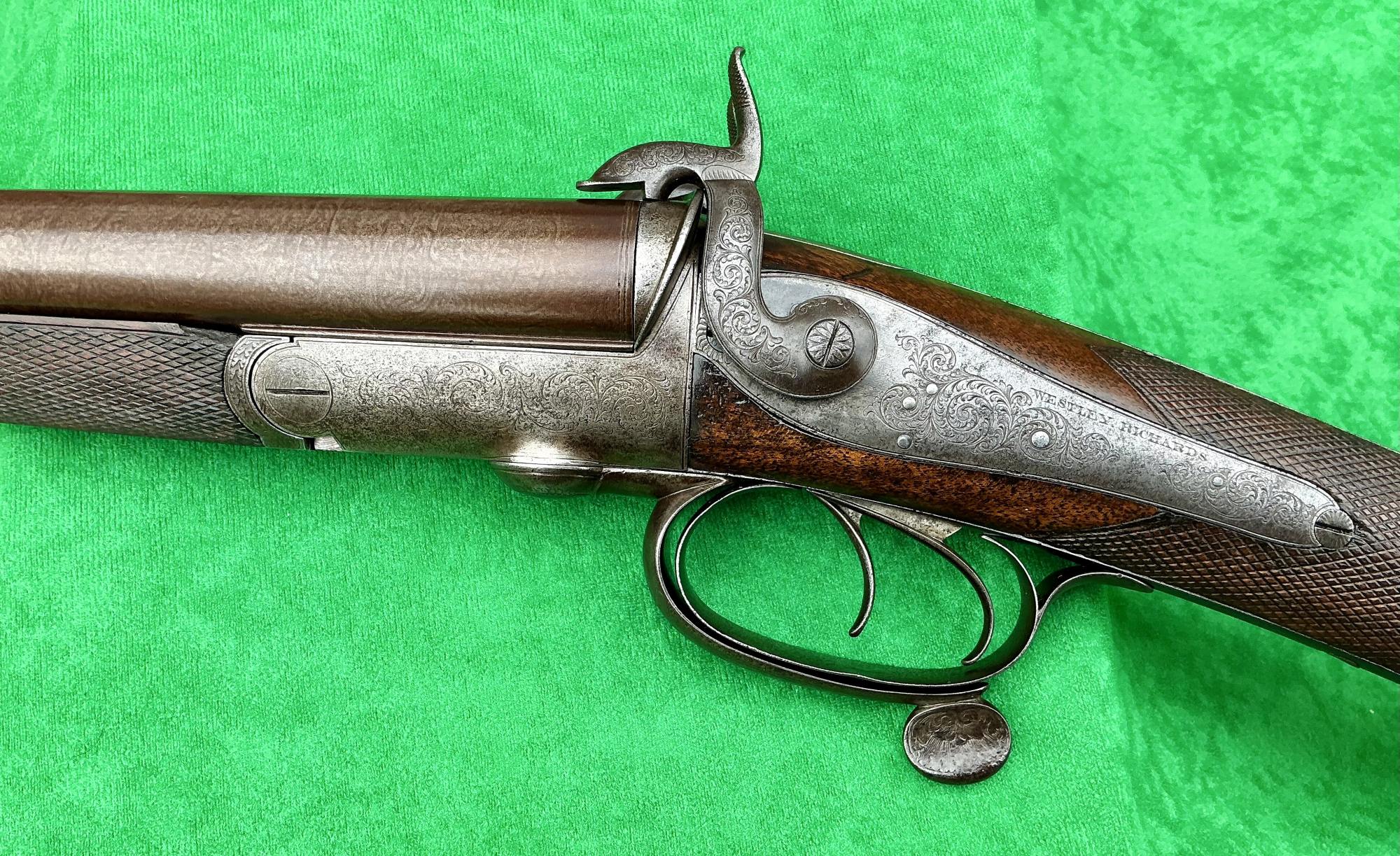
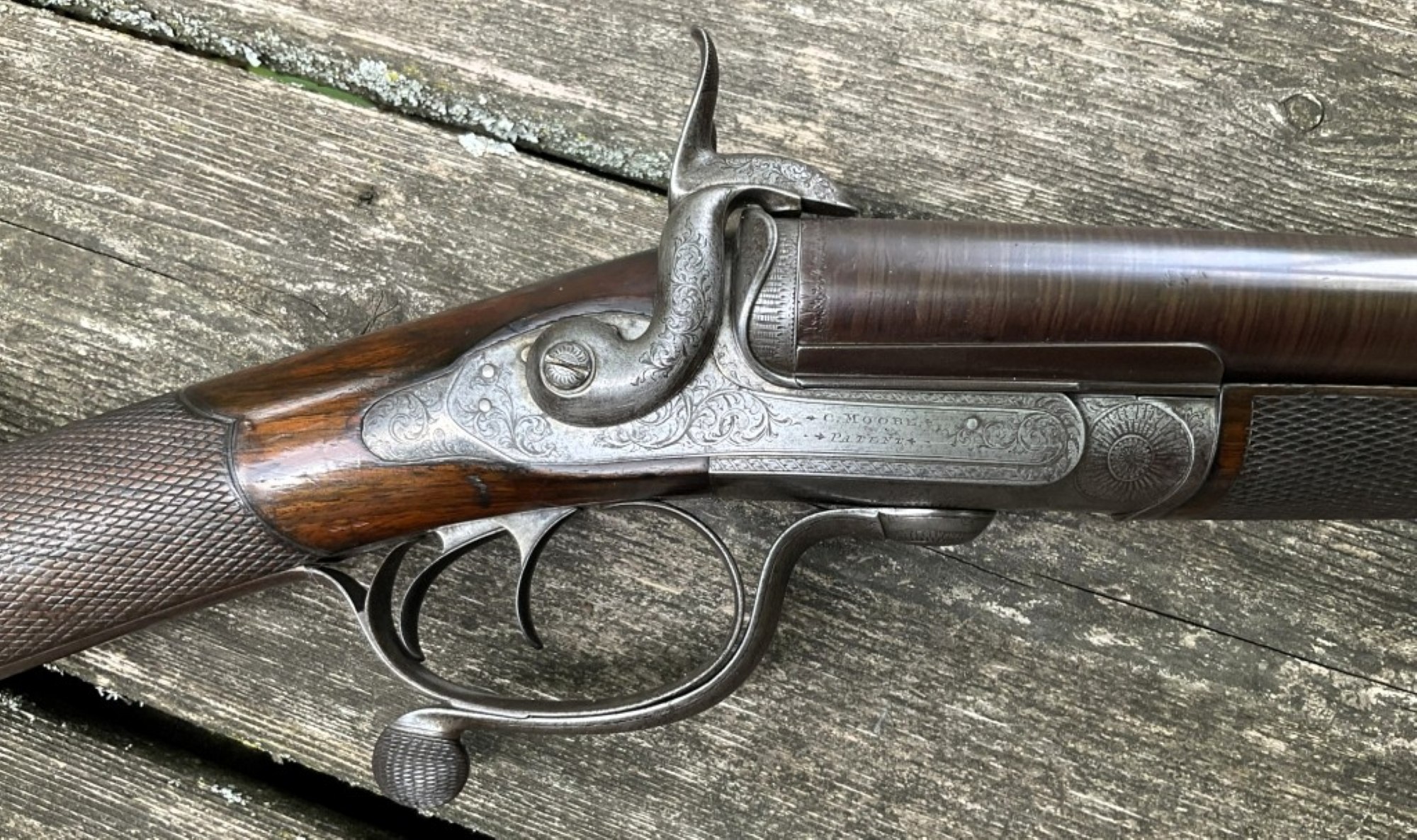
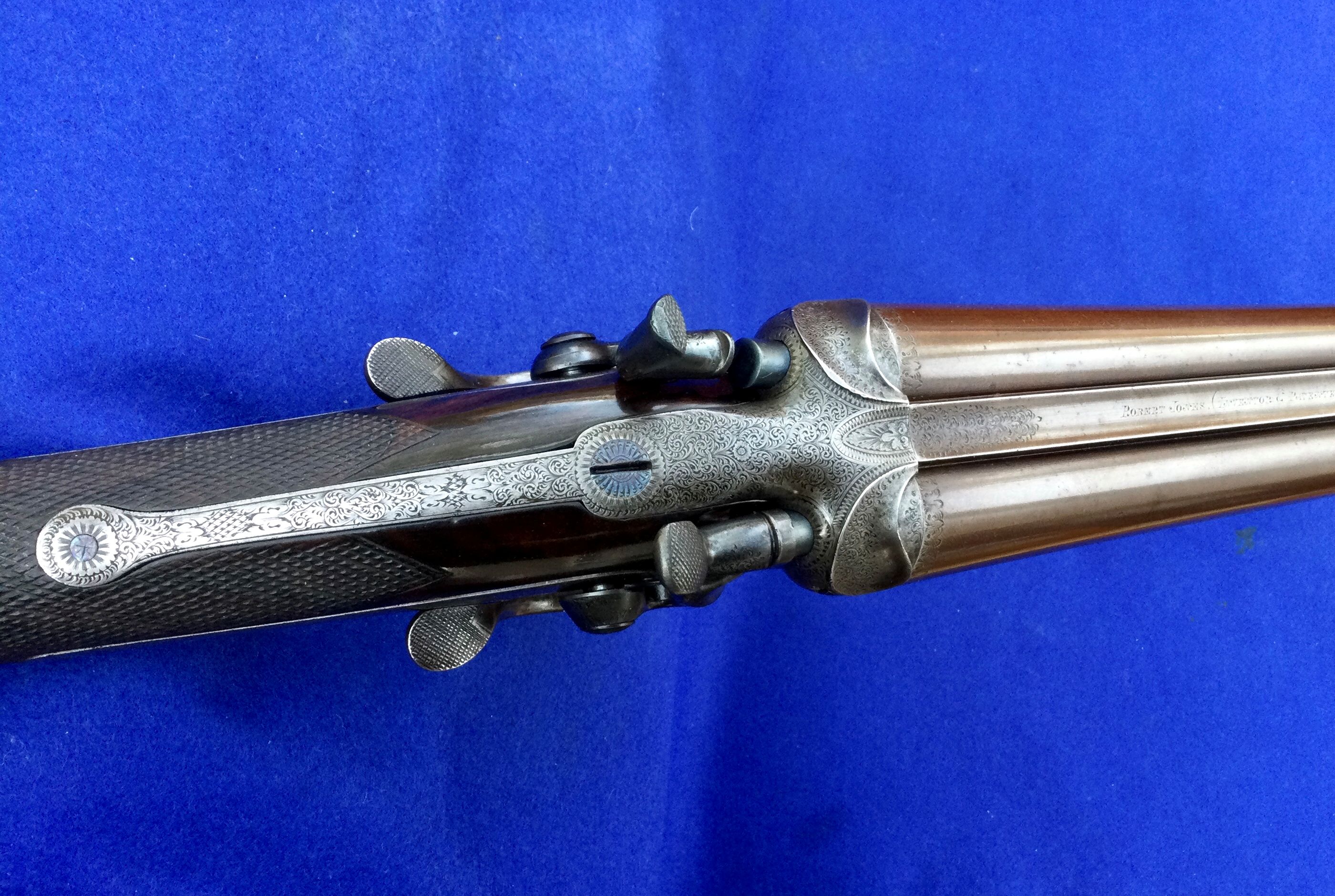
Hammer guns during this period were at their most elegant. The gun displays an unusual feature of a Double Side-Lever, which allows the gun to be opened right or left handed. This feature is likely to be included to support design, style, elegance and symmetry. The sight of a double side lever appears to be something of a rarity. The gun locks up very similar to the Scott action bolting system being made with a top lever, however the configuration of the bolting system operated via a double side lever appears to be scarce, if ever previously seen.
The gun is made using Stanton (joint patent) locks, and consecutively numbered locks. The proof marks are Black Powder 1868 to 1875 (London), this again narrows the date of manufacture.

Horn tipped finial with push button release
Robert Jones patent 2121 for 1872 stamped on the action flats covers the bolting and retracting firing pins used within the gun. The action body uses a single bite coil sprung snap action, the retracting firing pins having slots, all operated through the Double Side Lever, with the Y shaped retracting bar linked to the slotted firing pins, and the single bite snap action bolt.
The gun being manufactured between 1868 and 1875 raises another area of interest, the forend fastener. At this time there were five patents that were almost identical to the W. Anson patent No. 3791 for 1872. The Anson patent being very close to the forend fastener fitted to the Robert Jones gun in this article. The similarities question when the Robert Jones forend catch was made, and the protection that patenting offered at the time, as they all appear to be of a similar design. The forend catch applied to the Robert Jones gun would be covered by the W. Anson patent, however the forend metalwork is not marked, or credited to another, and would allow consideration for the forend fastening and latch work to be that of Robert Jones’ interpretation. The forend catch is without doubt of early design, and well made, this reflects and continues throughout the gun.

A well made 16 bore, with two opening levers
This interesting gun, being made in the Victorian period with a typical approach by makers and innovators of the time striving to make designs work, and at the same time look right. The surfacing of this unusual Double Side Lever Hammer Gun has resulted in considerable research to find another, or similar.
The research has included in checking through a huge number of catalogues, including those from the Yannaghas collection, Boothroyd collection, Rosner collection and the Keith Neale collection, all of whom specifically collected the weird and wonderful from this period – No sign of a double side lever ! The contact of, the well-versed and respected in this area (both sides of the Atlantic) haven’t seen the like !

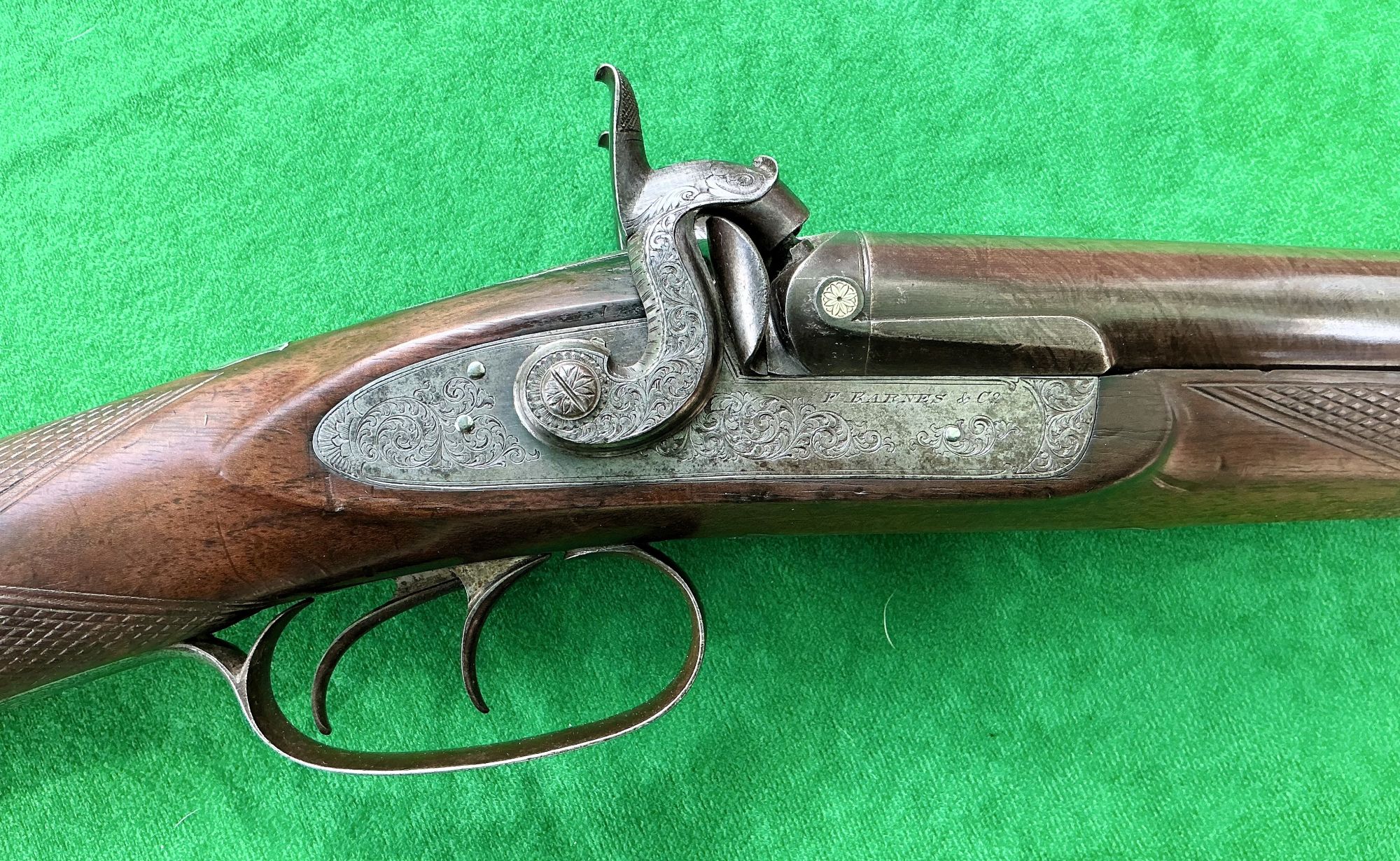
Strong grained walnut, with engraved "Heel & Toe" plates.
Robert Jones was a well-established gunmaker, the question the research has uncovered is; did Robert Jones make this particular gun ? the research on this gun, has shown the company outsourced work for their best guns. This is a best gun, and with the records showing orders for complete guns being made for Robert Jones, to his exacting requirements, it becomes highly likely this gun was made by one of the highly respected makers, either, totally, or in part for Robert Jones, and for that to be carried out by a Top quality trade supplier. There are several who could have completed the order for Robert jones, including Bentley and Playfair, or William Powell, both made best hand built guns for the trade at the time.

The double side lever, and the engraving of a "Best" gun
Research notes are sparse, but include the following - William Jones was an English gun maker from 1826 to 1895. Robert Jones (son of William) was a partner in Jones & Taylor , (Robert Jones & Walter Taylor) located at 58 Manchester Street, Liverpool, England from 1848 to 1900. They sold guns marked Robert Jones Monarch Gun Works, Manchester Street, Liverpool.

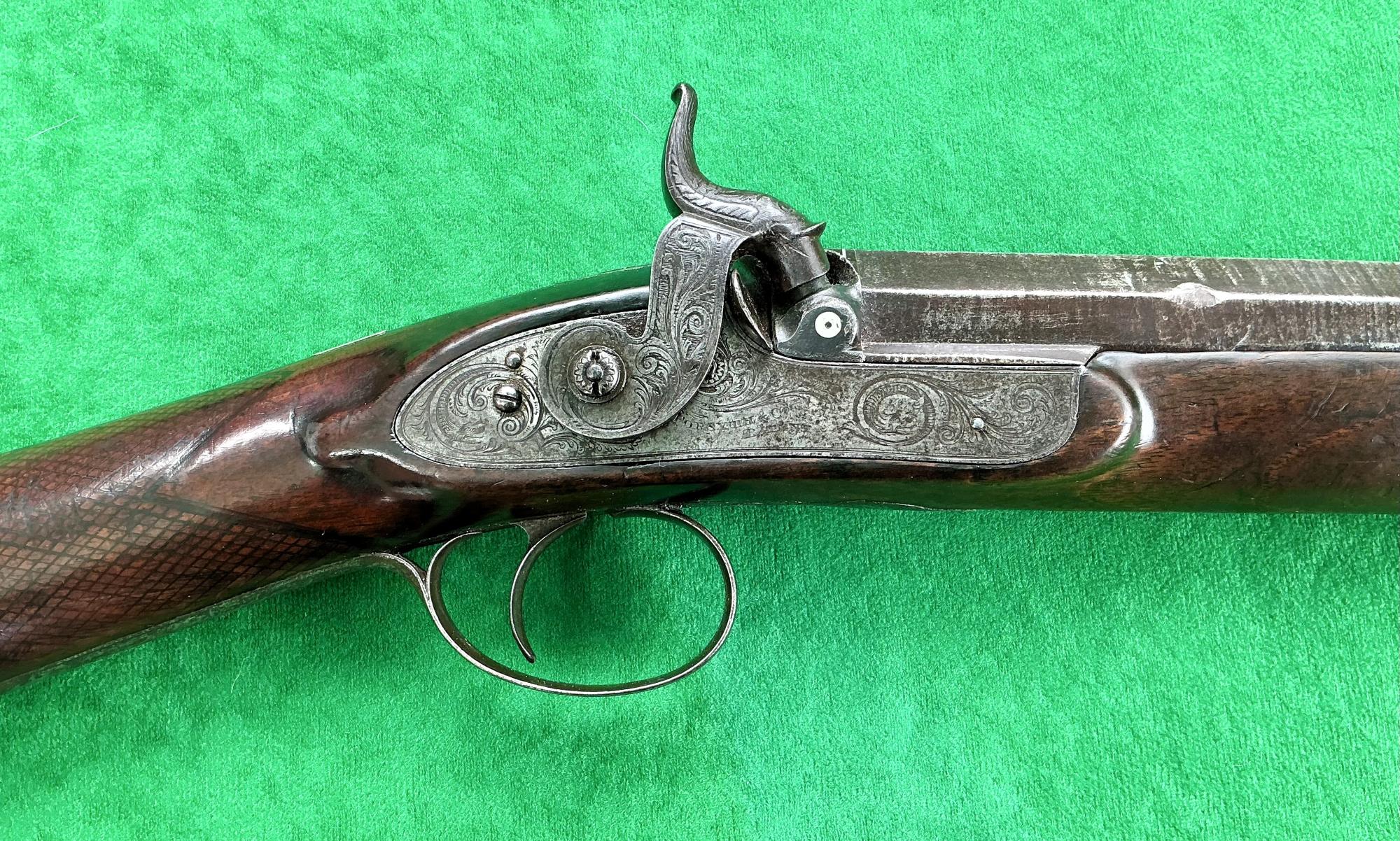
Deep hard oil finished wood-work, shield shaped escutcheon - the gun showing quality throughout.
In 1885 James Hooton, a schoolmaster and probably a customer and friend of the Jones family, bought a share of the business of Robert Jones (the second) when he emigrated to the USA. Robert's son, Robert Jones (the third) (b.1859) did not emigrate, he remained to run the business. It is possible that James Hooton was possibly related to the Jones family but this is speculation. James Hooton (b.1843 in Sevenoaks, Kent) was recorded in the 1871 census as a schoolmaster living at 1 Admiral Street, Toxteth Park, Liverpool. He was married to Maria (b.1850 in Liverpool). They had one child, Harriet (b.1870 in Toxteth), also living with them were James' father, Thomas, his mother, Charlotte, and his brother, Arthur. The 1881 census records James as a teacher of English. A daughter and three sons were recorded, James (b.1872), Alfred (b.1875) and Thomas (b.1880). No record of the family has been found in the 1891 census but in 1901 they, but not Maria or her son James, were recorded living at 47 Kingsley Road, Toxteth Park, with another daughter and a son, Frederick R (b.1889). In this census James, aged 58, described himself as a gun maker and a widower. The firm bought their guns from Birmingham makers and some from Belgian makers.