Robinson Hammer Gun Wins County Championships
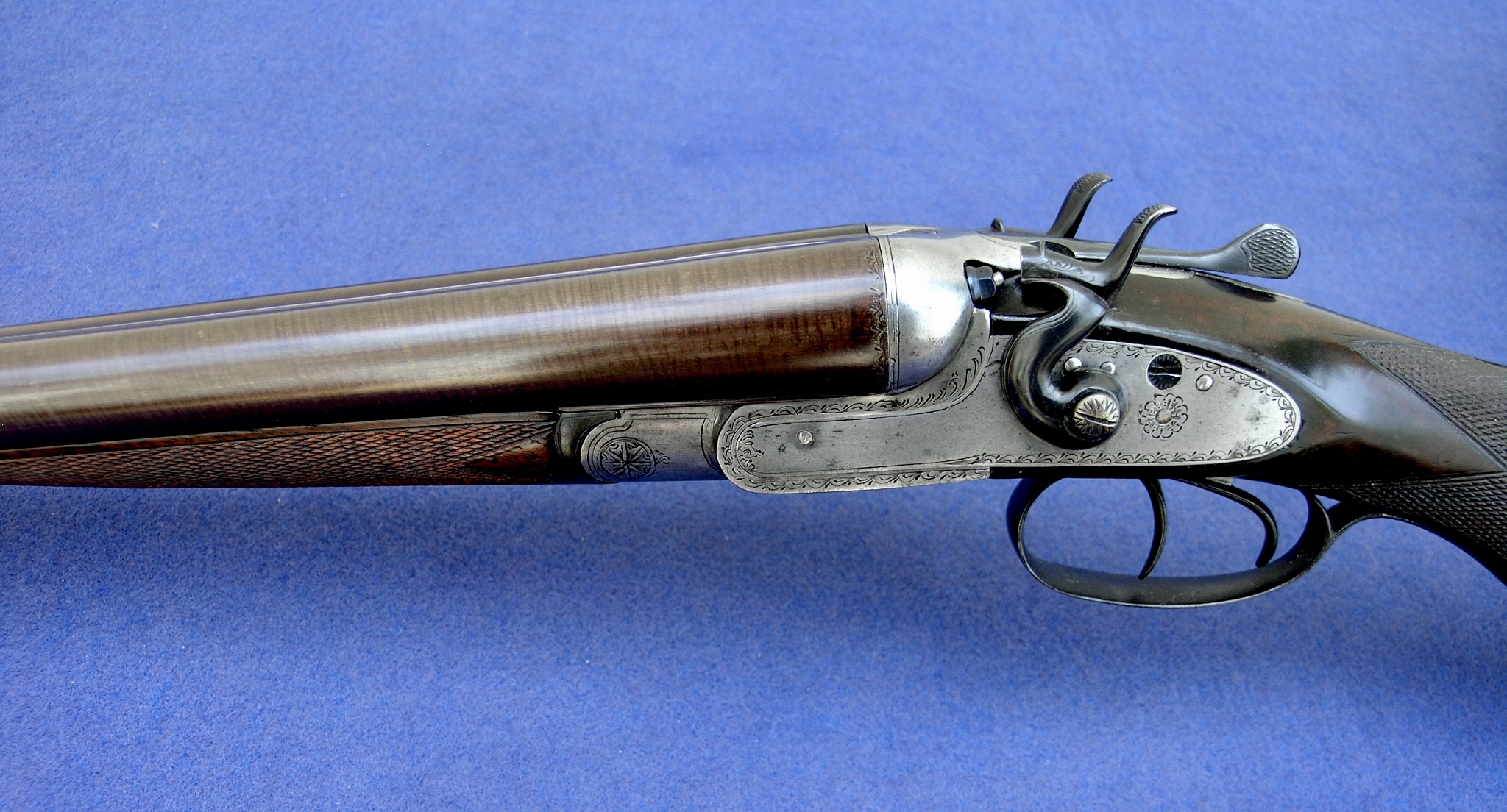
Robinson Hammer Gun Wins County Championships
Stories from the Scrap Pile - One
This old Hammer gun is typical of British Guns that are regularly put to one side, used for spares and parts. The maker is not well known, the quality of the gun is at best medium. The type of gun seen as obsolete by the majority of shotgun users, lacking the ability to generate interest, or value, these guns are simply disregarded – Thousands of late 19th century British guns like this are placed in the scrap pile.

This old Hammer gun had the good fortune in finding someone interested, ensuring its safety.
The gun having an interested new owner, would ensure another piece of social history would be saved. The gun and its story saved from the scrap pile through good fortune and strangely by accident. We have all heard it ! – I’m clearing out my cabinet, I need to get rid of some old guns, do you want one? The gun was offered to several local shooters, the gun simply did not created any interest. The end of the road for yet another Vintage gun had come, and at that point the gun was destined for the scrap pile.
The owner of the Robinson Hammer Gun for the past 58 years, disappointed by the lack of interest in his pride and joy for over half a century, had tried hard, but got nowhere. As a last resort, the Robinson owner asked for help to dispose of the gun, but still no takers, a local collector David Neale, offered to help dispose of the gun, in a twist of fate became the guns’ latest custodian. Taking time to ask about the guns’ past. The story that unfolded highlighted, the gun was of important local social history, and had links with the start of Clay Pigeon shooting competitions on the Isle of Wight – This Vintage Robinson Hammer Gun had won the “County Championship Shield” on the Isle of Wight in the 1960’s.


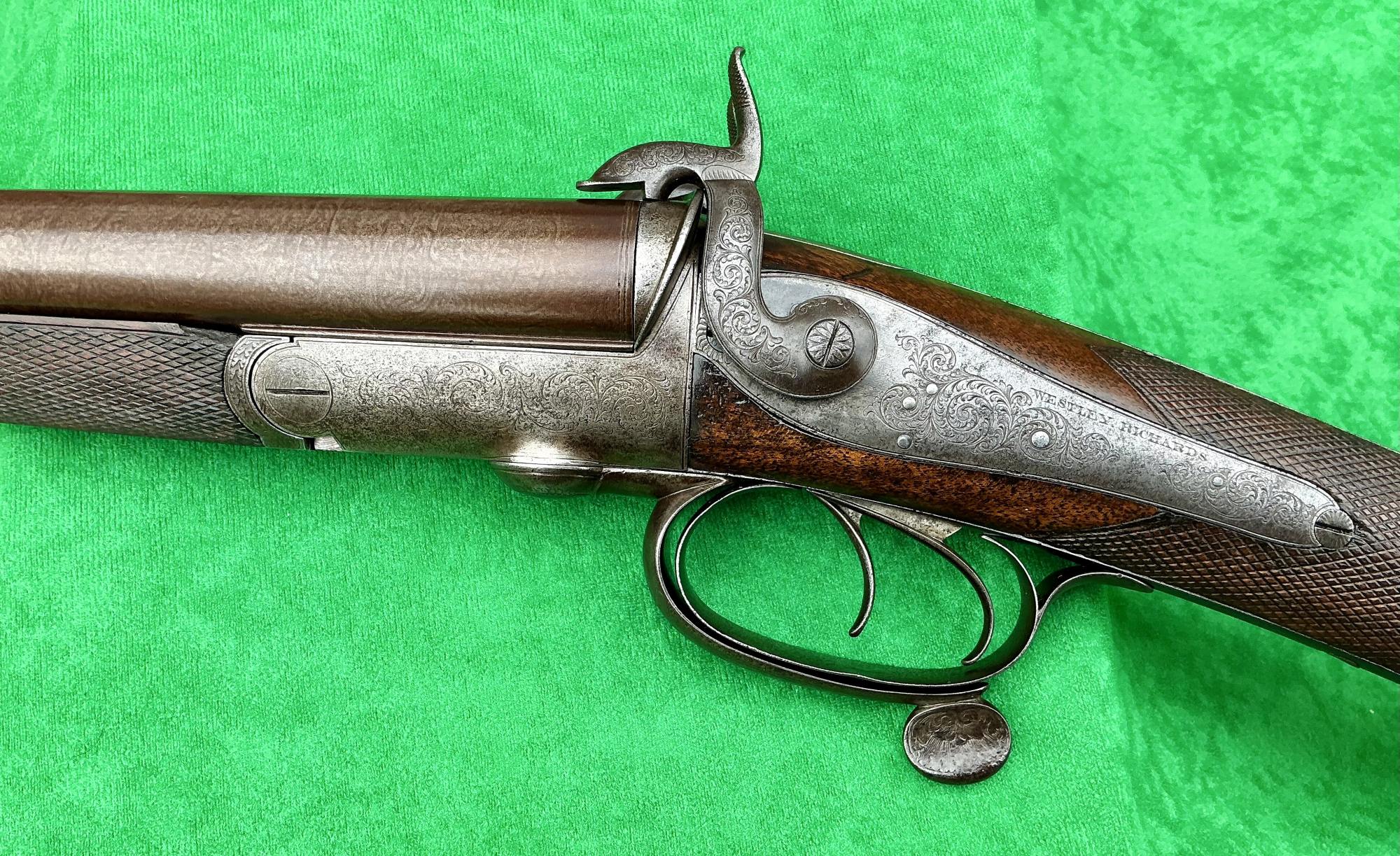
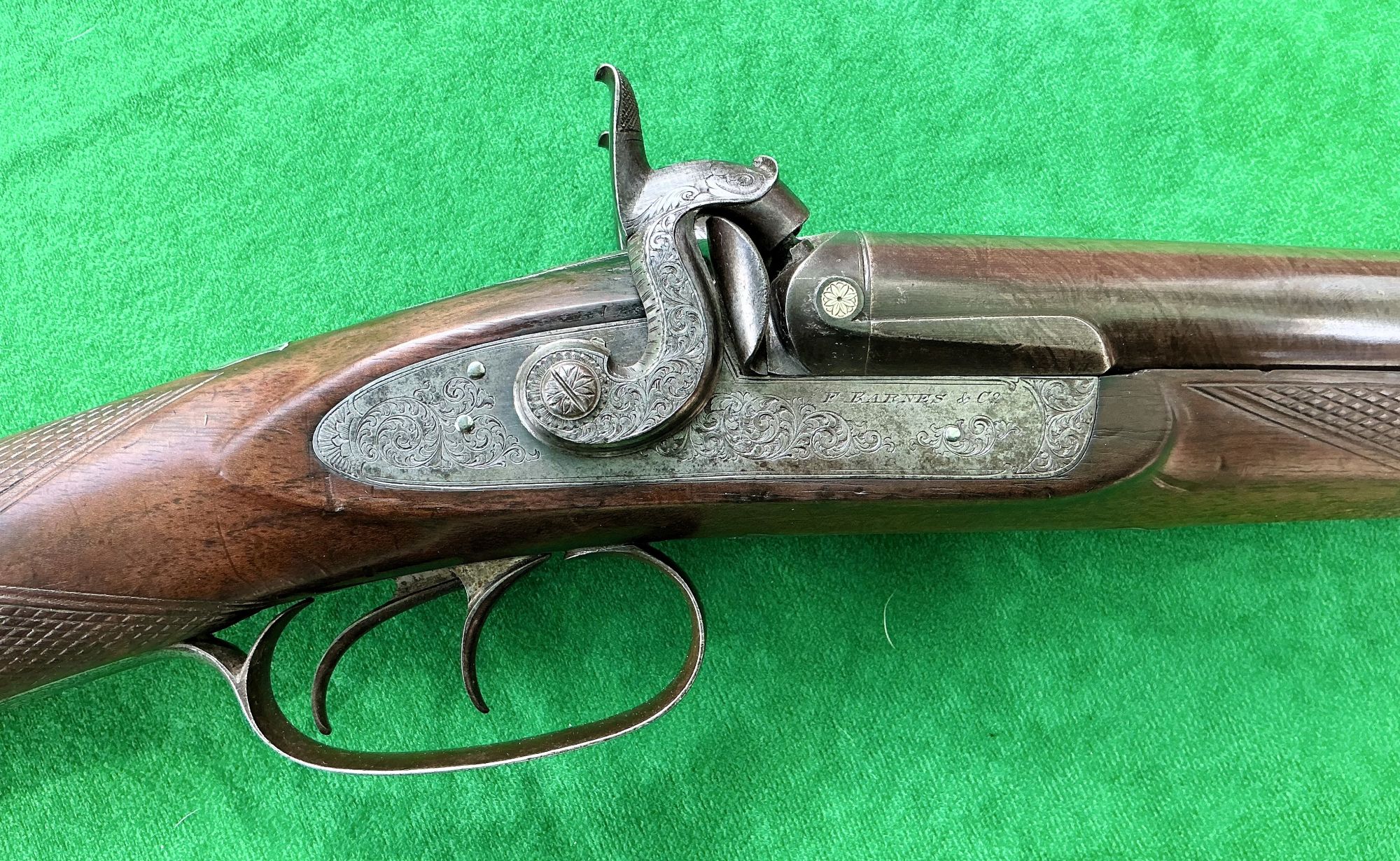
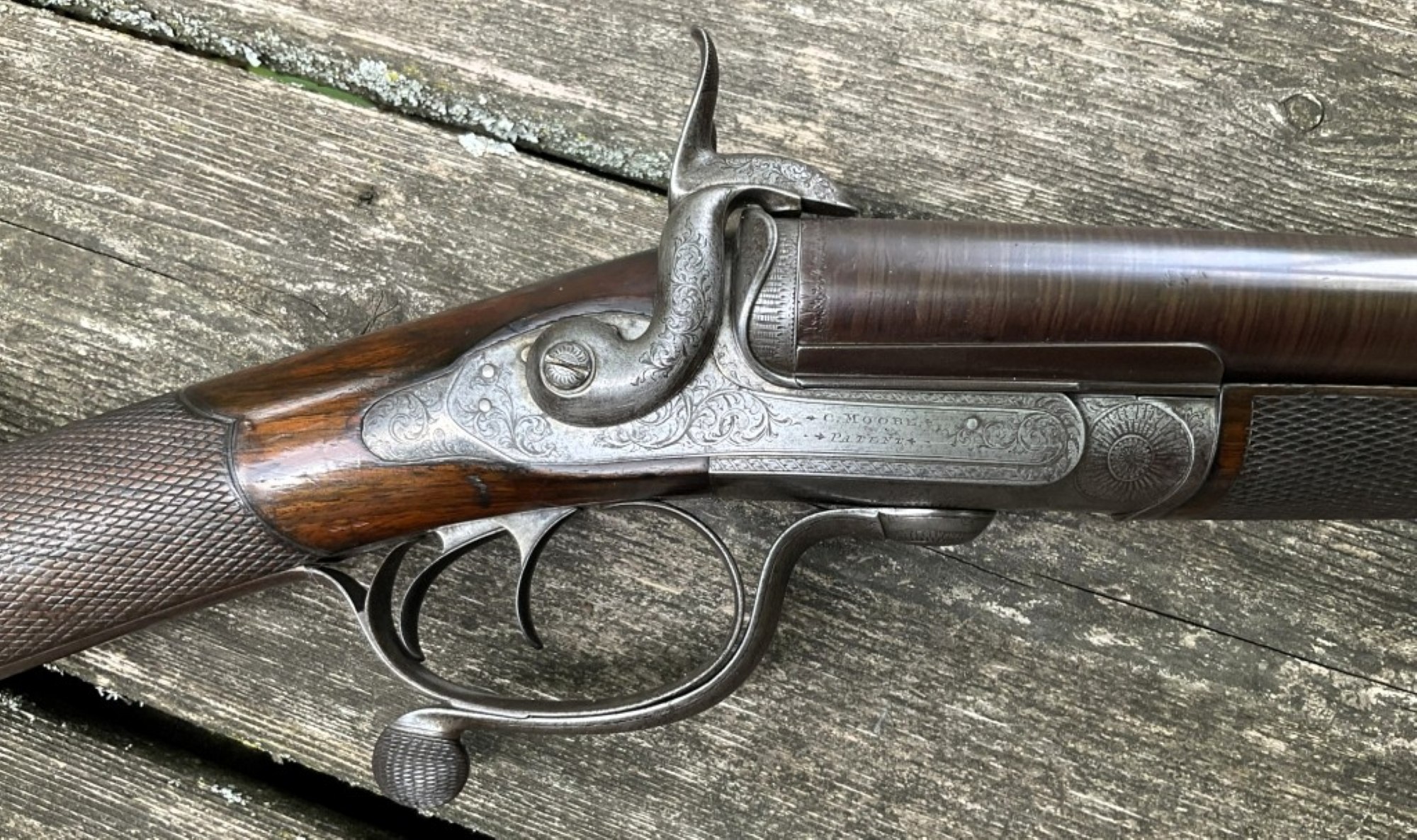
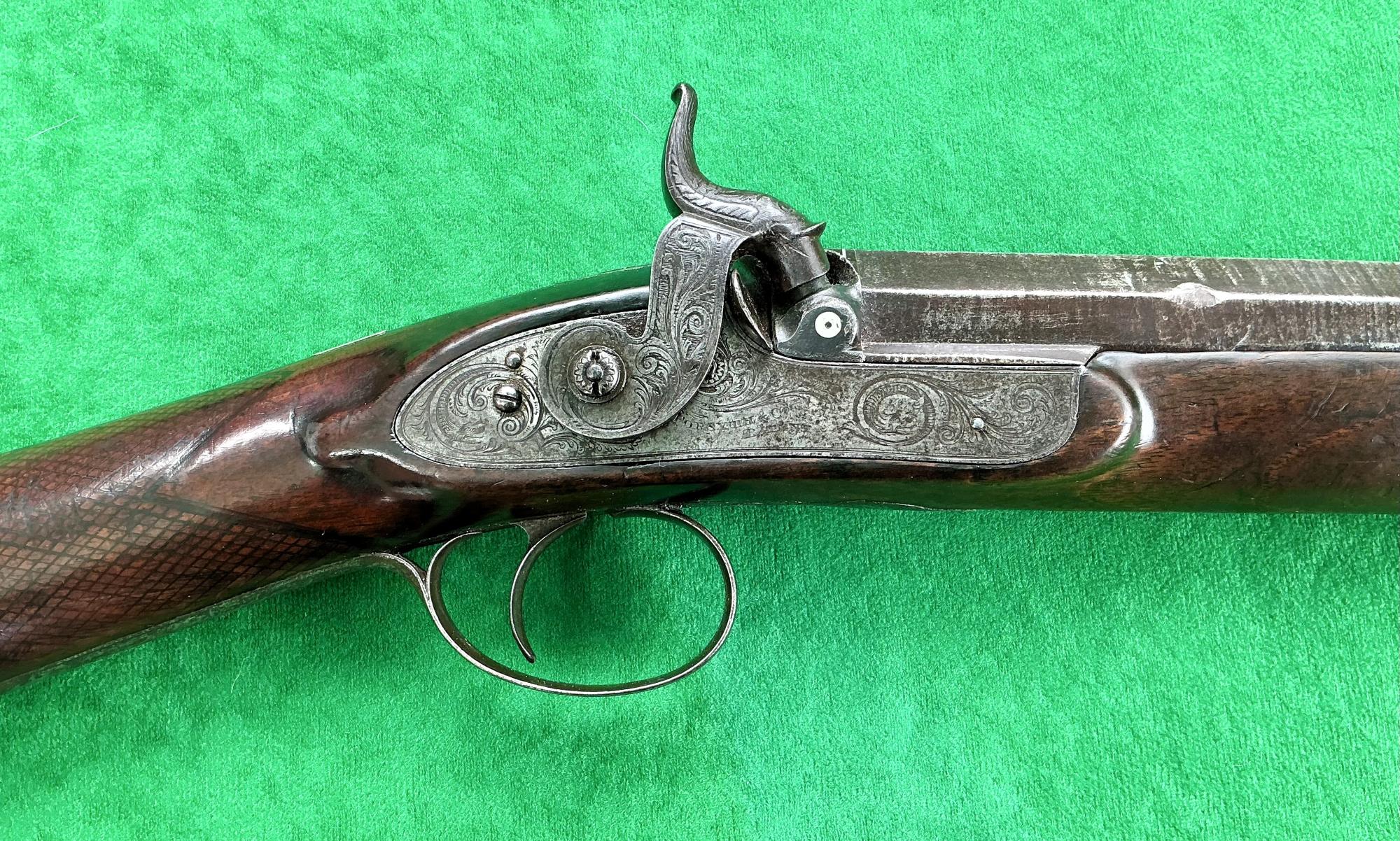
This plain old Birmingham Hammer Gun was in very good condition, and had been well cared for.
This gun was gaining a voice, and had a story to tell, but what do we know about the maker ? The maker is worth a mention, as all said and done, the gun had fired tens of thousands of cartridges during its 145 years, and remains in good, safe shooting condition.
The maker being little known during his 29 years in the Gun-trade. Henry James Robinson was born 1856, he became an established part of the Birmingham gun-trade as an outworker. Robinson primarily working as a local action maker for the Birmingham gun trade, there a very few guns with the Robinson name on them. There is a high probability due to his skill base, that Robinson was used for conversions during the relatively early days of the breech-loader. There remained a market need for conversions of Muzzle loaders and Pin-fire to Breech-loading Centre fire guns. This could also include in fitting good quality barrels from older guns to his trade actions. Robinson worked out of 103 Lancaster Street initially from 1879 to 1881. In 1881 Henry Robinson moved to 5 Price Street. During 1890 a Gunmaker by the name Harry Robinson was recorded at the same address, this person is likely to have been the same person, Henry Robison. Interestingly, as from 1895 to 1908 the name at 5 Price Street reverted to Henry James Robinson.

The barrels are 14 bore ( .700 ) however chambered for 12 bore - 2 1/2 inch cartridges.
The 12 bore Henry James Robinson Hammer gun in this article had been made using a set of 14 bore barrels with Birmingham black powder proof marks for 1868 to 1875, and then re-chambered for 12 bore cartridges and re-proofed during 1887 to 1896. This Henry James Robinson Hammer Gun found its way to Holland and Holland, where Holland and Holland had put the gun through their workshops, placed the gun in their London outlet window. The gun was sold the gun to Mr. Gashes in 1958, at this time, the gun had been Nitro Proofed at Birmingham 1954 to 1889 proof. The gun was proofed at .700, the gun now measures as when Nitro Proofed, with barrel wall thickness at 27 thousandths in both, and now choked Cylinder & Cylinder. The bores today remain perfect, bright and clean.

A strong, very plain Medium quality Hammer gun - still in use toady after firing close on 100,000 cartridges
This interesting old 12 bore hammer gun was with its last owner 1957 - 2015 (58 years) – Mr Norman Gashes was born and bred in Thameside Essex. The majority of all his shooting with the Robinson Hammer gun was in the form of wildfowling in and around the Essex coastal marshes. Mr Gashes described the gun as being used, dawn and dusk, on wild moonlit nights, on the foreshores of East Tilbury, and from Mucking to St Peters, also off the Blackwater break wall. The winter of 1963 included a visit to Barnstaple in North Devon, with the gun in the car, and an early morning with a full moon resulted in shooting white front geese from the shoreline. The majority of the local countryside in Essex where Mr Gashes used the gun was owned by the Whitmore Estate, any opportunities of rough shooting were difficult to secure, however where there is a will there is a way. As mentioned, the gun was being used regularly in the late 1950’s over the Essex countryside before relocating to the Isle of Wight.

Plain Birmingham Hammer Gun, that has stood the test of time and longtime use.
The relocation took place during the early 1960’s, where the gun was being used all over the Isle of Wight on game, vermin and clay pigeon target shooting several times a week. The 1960’s were early days for clay pigeon shooting on the Isle of Wight, however by 1964 there were a number of regular small clay shoots on and around the Island. Mr Gashes used the Robinson Hammer gun at several of these clay pigeon shooting layouts, including “Downend chalk pit at Arreton”, “Atherfeild holiday camp” on the Military Road (South Wight) – The Holiday Camp also had a “High Tower” (1963/64) to simulate high driven game, other locations where clay target shooting took place, was at Clamerkin Farm at Porchfield near Newport, Mallards Farm at Bathingbourne, and something a little smaller at Newchurch.
Mr Gashes made regular trips, using the Robinson hammer gun at the Isle of Wight Gun Club at Sainham, Godshill. Mr Gashes described the Isle of Wight Gun Club during the late 1960’s as a “Far smaller affair, than today. The club catering mainly rough shooters, game shooters and farmers practicing on targets that simulated and replicated live targets being met in the field”. Things were changing, and the regular clay shooting events created natural competition between local shooters.

Early Laminated not Damascus barrels, for this medium quality gun - Barrel walls at 27 Thou. in both.
The first Isle of Wight County Championship Shield (open competition) was held at Downend Chalk pit initially, where Mr Gashes and the Robinson Hammer gun won the competition for the first time in 1966. The event moved to the Isle of Wight Gun Club at Sainham, Godshill in 1967 where Mr Norman Gashes and the Robinson won the County Championship shield for the second time, and again for the third time in 1968. The Robinson Hammer Gun establishing its ability for Competition through winning the County Championship Shield over three consecutive years. The Robinson Hammer gun at the time of its winning successes was over ninety years old and still performing very well. The coming years saw the gun regularly used at different clay clubs and shooting grounds for field practice, and preparation for the game season. The Robinson Hammer Gun and owner continued, and remained very competitive during the 1970’s. The Robinson and its owner were shooting wherever clay shooting took place. The Robinson was used on a number of interesting shoots and venues. These included, the Duxmore syndicate game shoot, Bob Cooper’s clay shoot at Hulverstone, the owner reflecting; this shooting ground replicating many targets seen by game shooters in likewise surroundings. The Robinson was also used several times at Gerry Shorts “Shepherds Chine” shooting ground at Atherfield, the owner stating this clay shooting layout produces good game and competition targets, and many targets with unexpected angles of flight.

Where did the Robinson Hammer Gun come from ?
The owner relayed an interesting story about buying the gun in 1957 for the princely sum of £20 from Holland and Holland. Mr Gashes, worked at the War Office at the time, and regularly walked past Holland and Holland, on his way, to and from work, on seeing the gun in the window over a period of weeks, made the decision to have a closer look before buy the gun. Mr Gashes, enquired and asked about the choking of the gun, he was informed by the seller, the gun was between ¾ and full. The chokes being measured with a plug gauge at the time, and not a barrel micrometre. This practice is a lesson we later learn for us all, and a reminder to get the seller to measure the gun barrels and chokes with a bore gauge, especially when buying a fixed choke gun and requiring particular choke dimensions.


Forend is plain and simple with Hackett snap forend catch and horn tip.
After sometime of owning and using the Robinson, the gun’s choke measurements were rechecked, as the new owner noticed proof marks that showed the bores measured .700 in line with its most recent proof just before being sold by Holland and Holland, these proof marks and measurement were are not what was expected, as the proof marks of nominal English 12g / bore is usually .729, and obviously in this case the purveyor also presumed this. The practice of regularly using of a barrel bore micrometre, quickly showed up the discrepancies. The gun was in actual fact True Cylinder in both barrels. The measurements due to the fact the barrels started life, and remaining 14 bore, but being chambered for 12 bore cartridges.
The gun performed for the next half century with no break downs, and having some memorable shooting from salt marsh wildfowling in Essex, a trip to North Devon in the 1960’s for more wildfowl, all forms of game and vermin, and the previously mentioned big impact during the early days of Clay Pigeon shooting on the Isle of Wight. Although the gun had no choke, the tight bores and parallel choke boring killed a very high percentage of all targets when and where ever the gun was used.
The gun had to be re ribbed six months after purchase, this was carried out by Jeffery’s of London, unfortunately this resulted in the original named top rib being removed, and the new top rib not being engraved, this has resulted in the gun no longer carrying the H. J. Robinson name. The gun has been fitted with a stock extension in walnut giving a length of pull of 14 ¾ inches including a vulcanite pad, the stock is lightly cast for the right hand shooter. The gun surprisingly handles, moves and mounts smoothly, and is well balanced.