Joseph Reilly - Gunmaker London
Joseph Charles Reilly – Gunmaker
An Important London Gunmaker
Joseph Charles Reilly, what we now know is this Gunmaker was far more important to the British gun making story than initially thought by many.

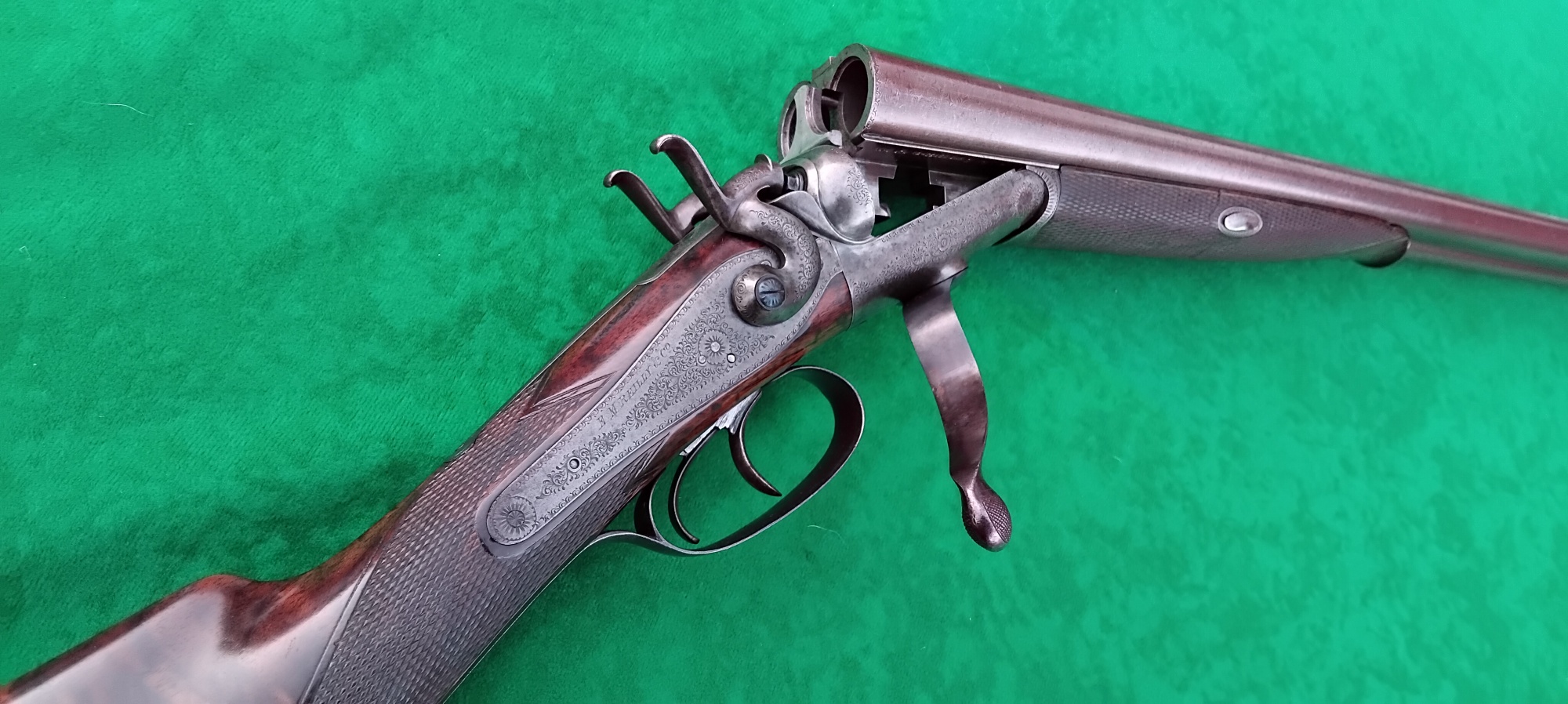
The E. M. Reilly 1877 Hammer-gun that inspired this article
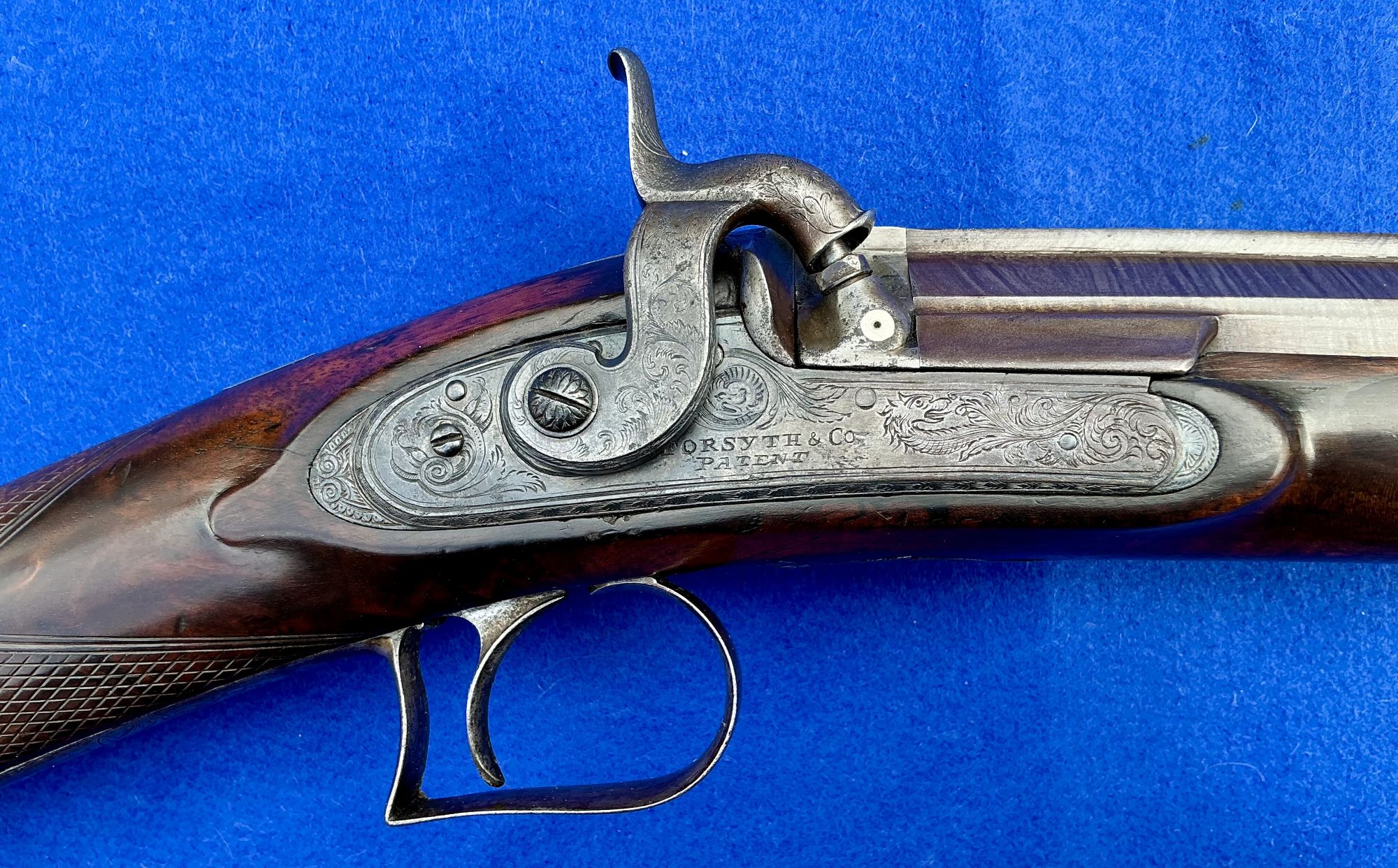
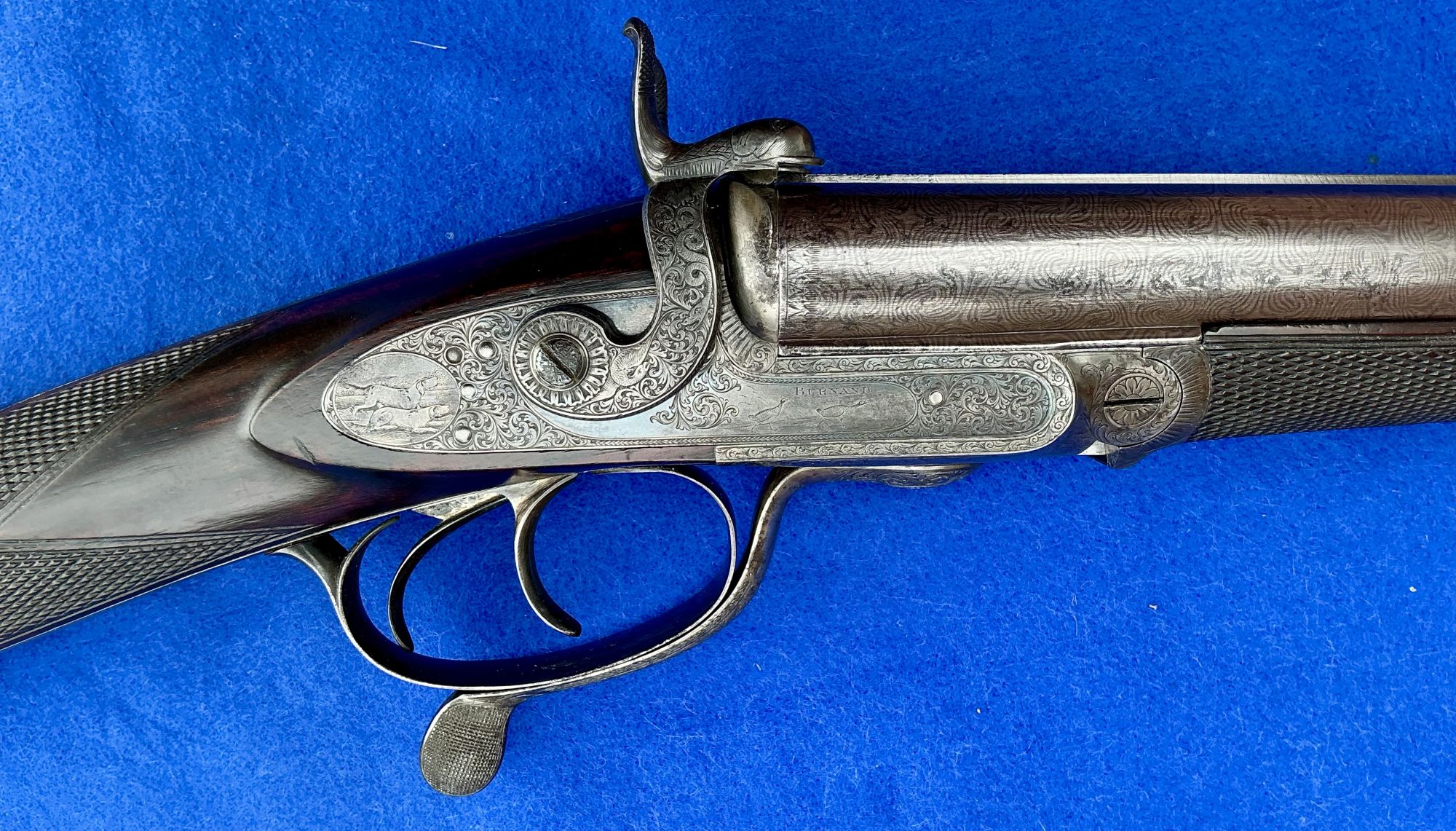
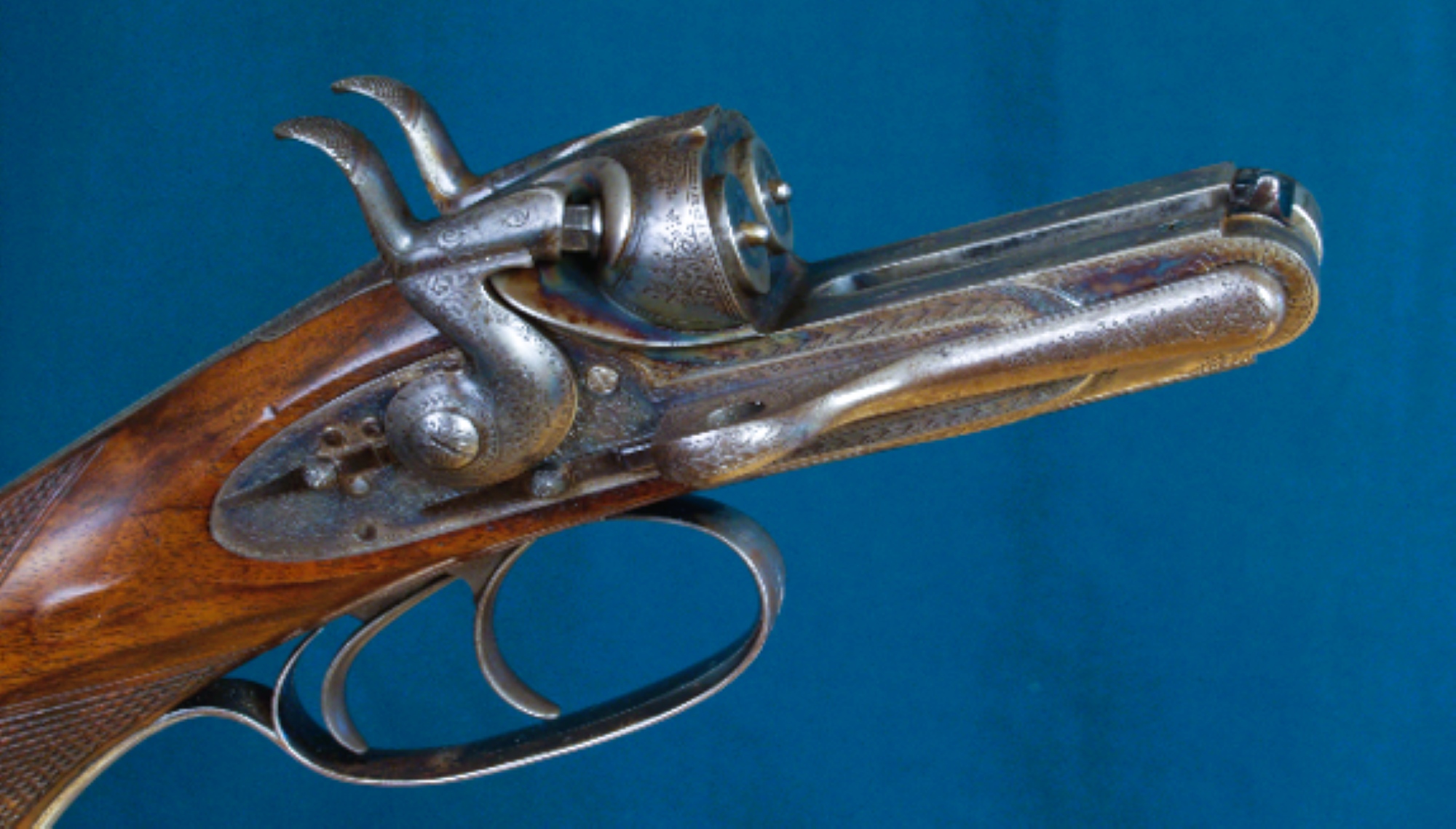
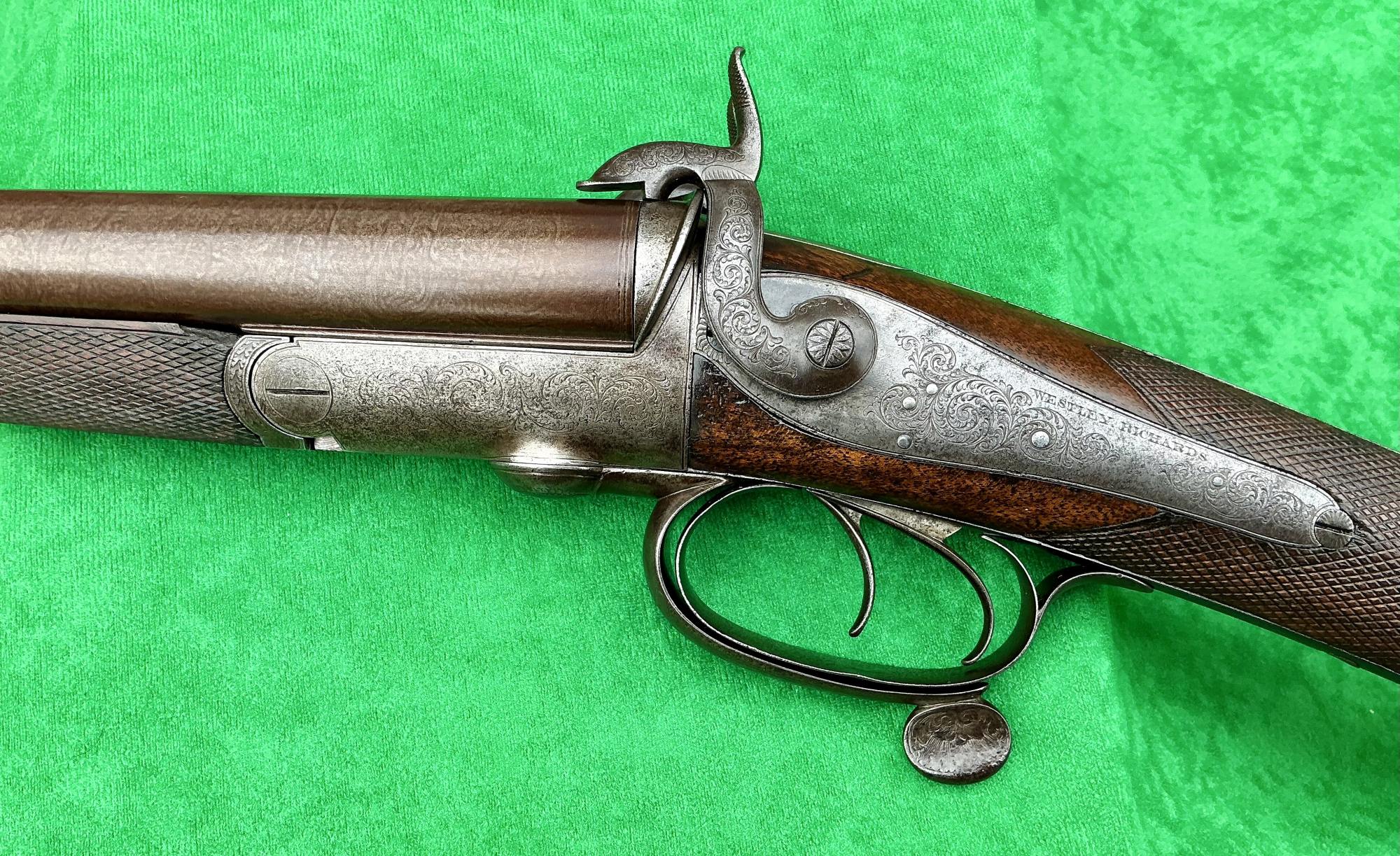
The shotgun that inspired this article appears on first glance to be just another old British Hammer gun of the Victorian period, but looking closer, the gun is a hand-made London gun, with more than off the self details, it is highly likely this gun was made to order. The gun has 30 inch barrels, originally Black Powder proofed at London with proof marks for 1875 to 1887, however, without the marking "NOT FOR BALL" and proofed as a 13 bore, it is highly likely the gun was made with "No Choke" omitting the need for "Not For Ball" to be included in the proof marks, or the barrels may have been made and proofed earlier. The barrels today remain heavy, and retain massive barrel wall thickness of 34 and 38 thousandths. This is a common trait carried over from the Muzzle loading era. The gun was re-proofed for Nitro Proof in 1996 at Birmingham and now carries a second set of proof marks for 1989 to 2005, the barrel work in preparation for re-proof has allowed the barrels to be bored to create valuable choke restriction, the gun now has 1/8 and 3/8 of choke. The stock heel plate and extending top tang are made of steel (another Muzzle loader trait) and the gun carries a Reilly signature in using well figured French Walnut (found in better Reilly guns). The forend cross-pin latch locking has been retained. This remains in keeping with other parts of the gun, although seen as a little old fashioned, or traditional, but a request from whoever had ordered the gun. The gun locks up using the Jones' LOG (lever over guard system), with back action (Re-bounding) locks by Stanton numbered to the gun for 1877.

Well proportioned, Well finished Hand made E. M. Reilly.

The gun handles like a wand in the hands of the user.
Joseph Charles Reilly was born in Ireland in 1786. He hailed from a well-to-do family, J. C. Reilly aspired to become a lawyer. In the mid-1800's he went to London, and at around this time he numbered his first Reilly built gun which may have been 001, though many gun makers started their books with a higher number. His guns during this period often displayed the address “Holborn Bars.” Joseph Charles Reilly adopted a business model which did not change during the life of the business: i.e. provide a quality hand-made product for a moderate price and deliver it rapidly. With this model he undercut more expensive and better known makers and made his profit on volume.

Traces of original finish on action body and lock plates still remain after 148 years.

Strongly made Hammers with Hare eared tips - the gun is well engraved throughout.
The Reilly business model also dealt in used guns taken in trade and sold guns under license. Reilly numbered his own guns consecutively for 90 years, with certain exceptions around the time of the move to New Oxford Street in 1847. Reilly had extensive finishing facilities in his large London buildings and likely to have stockpiled actions, and barrel blanks imported in the white from Birmingham, this allowed him to meet orders faster than his competitors.
The first advertisement so far found with "Gun-Maker" appeared in 1831. In August 1835 Joseph Charles Reilly with Edward Michael Reilly as an apprentice moved to 316 High Holborn. In August 1840 the firm’s advertising style changed from J.C. Reilly to just “Reilly” which may mark the advent of 23-year-old E.M. Reilly as a full partner in the company. The style on the gun’s ribs continued to be “J.C. Reilly" or "Joseph Charles Reilly.”

Steel butt plate with elongated top strap, a left over trait from the muzzle loader era.

The Stock escutcheon engraved with the original owners monogram - Original Owner unknown.
J.C. Reilly, during this period, also became known for his air cane guns. The young E.M. was billed as the expert and was mentioned in advertisements, identified as “Reilly Junr." In 1847 or early 1848 E.M. wrote a widely disseminated pamphlet on air guns (mostly an advertising brochure highlighting the company's ability to produce all sorts of air-guns and parts) which is cited to this day. The pamphlet title page noted the author was "Reilly junr," and used the 502 New Oxford Street address and included "removed from Holborn."
In late March 1847 Reilly moved to 502 New Oxford Street, a large building In the "Elizabethan" area. The last extant guns with High Holborn on the ribs are guns numbered 3392 and 3402. At this point the main serial number chronology for Reilly long-guns jumped up 5000 numbers to begin anew at around 8400 probably with production supervised by E.M. Reilly.
From 1847 to 1859 long guns and hand guns can be found with “Edward M.” Or “Edward Michael” on their ribs; however, if they do not have a Reilly chronology Serial Numbered on them, then these guns were not built by Reilly - they were only engraved and marketed. Around the time of this move and the change in the main serial number chronology, J.C. Reilly appears to have kept a series of numbers for himself beginning around SN 7000 and ending around 8100 when he retired in 1857. J.C. Reilly often (but not always) put his full name or initials on the ribs of these serial numbers per his 27+ year tradition but with the 502 New Oxford Street address; yet the trade / case labels with "Reilly" as the firm's name and the advertisements / publicity remained the same for both number series.
The first extant serial numbered gun in the J. C. Reilly “7000” series is 7201 (a SN 7021 exists but with the High Holborn address possibly indicating the Reilly’s split their numbering system a bit before the move to 502 New Oxford Street); the last (no doubt made in 1857) is 8052. There is one outlier, S.N 3514, with "Reilly" and the New Oxford Street address on the rib, apparently made (per the trade label in the case) after 1855, a number which harkens back to High Holborn, illustrating the sometime quirkiness of J.C. Reilly.
The Reilly Gun making business exhibited at the 1851 Crystal Palace International Exposition (as Edward M. Reilly) were he was much taken by the Casimir Lefaucheux breech-loading pinfire guns. Reilly, Lang and Blanch became the major advocates for this new type of gun in England. Advertisements show that Reilly had a 300 yard shooting range near his London establishment located off Wood Land, Shepard's Bush.


Reilly also exhibited at the 1855 Paris “Universelle Exposition”, where he received much acclaim and "many orders were booked." The exhibit was in the name of E.M Reilly; however, advertisements make clear that though E.M. won the medals, the firm was still "Reilly, Gun Maker." Reilly case labels changed after 1855 to illustrate the 1851 and 1855 medals and to highlight “Fusils a Bascule” (French for breech-loading guns) and other breech loaders such as Prince Patent guns which he marketed and promoted.
In September 1857 J.C. Reilly retired to his country estate at Bourn End, Cranfield, Bedfordshire, where he died a wealthy man in January 1864; his last guns in the "7000" series were engraved with Caesar's words "Veni, Vidi, Vici" (“I came, I saw, I conquered”) possibly as the swan song story of his life. "Formerly Gun-Maker, London" is chiselled on his tombstone.
In January 1859 with new partners (unknown) E. M. Reilly opened a branch store in a large building at 315 Oxford Street, early on also referred to as "the Armoury House" (Salvation Army hall was located behind the building), which had a 50 yard shooting gallery.

The "E. M. Reilly and Co." name was used from 1859 to 1918.
The company may have used "Reilly & Co." for a short while in Spring-Summer 1859. However, by October 1859 the company’s name had changed to E.M. Reilly & Co, a name which continued in use until bankruptcy in 1918 and beyond when the name was bought by Charles Riggs.
During August 1860, the company's description on case labels and in advertisements changed from “Gun Maker” to “Gun Manufacturers” and at that time the sketch of 502 New Oxford Street was dropped from his case labels. The basic format for the new label remained consistent for the next 30+ years with a few variations.

London Black Powder Proof marks for 1875 to 1887 - Original Plumb Browning to Barrels.

Birmingham Nitro Proof Marks, with date code for 1996 - 850 bar, 12 bore, 65 mm Chambers.
In 1862 Reilly showed at the London International exposition and won a medal for an exhibit which included a gold-washed 12 bore shotgun which may still exist (SN 12532). From at least the 1840’s the Reilly’s tried mightily to win a lucrative military contract from the British government. J.C. Reilly exhibited brass mortars in 1845. E.M. Reilly promoted the Prince patent breech loader in the late 1850’s. He worked with the Green brothers to win a contract for their patent breech loader, to which E. M. Reilly had manufacturing rights, in the early 1860’s (competing against the Snider which won out). Reilly put forward the Comblain breech loader from Belgium, to which he gained patent rights in England, in 1868-70 (competing against trial guns such as the Martini and the Henry, a combination of which was adopted). And, he patented an explosive bullet in 1869, a sort of early M-79 idea. However, he never obtained a contract.
Reilly did sell and engrave British military guns - Enfield’s, Snider's, Martini's and later Lee-Speeds; He hawked these guns to the Yeomanry Volunteer Militia at wholesale prices, versions of them to Military personnel going abroad and to big-game hunters for 50 years. But, unless he built them himself he did not serial number these guns.

Reilly's used French walnut for their better hand-made guns.
E.M. Reilly always seemed enamoured with Paris and as the 1867 Paris “Universelle Exposition” approached, he meticulously prepared an exhibit that was extensively lauded. It won him gold and silver medals, led him to became a “gun maker” for Napoleon III, and in February 1868 to open a branch office (EM Reilly & Cie.) at 2 rue Scribe, Paris where orders for his guns could be taken. The store was located in the Grand Hotel near the Gare du Nord, a prime location. This branch office remained open for the next 17 years. The first extant gun with 2 rue Scribe on the rib is 14983. His case labels changed at this time to feature the two medals won at the 1867 World’s Fair and often (but not always) mentioned both branch addresses. Two and a half years later after the battle of Sedan Napoleon III fell from power; the medals disappeared from Reilly’s case labels for a while, yet continued occasionally to resurface on both labels and in advertisements for the next 15 years.

This gun uses a Forend Latch using the cross-pin system, is seen as traditional - complete with Horn Tip.
Reilly's affinity for France was well known. In the Autumn of 1870 he was prosecuted for attempting to smuggle 2,000 shells to his Rue Scribe address, a violation of UK neutrality in the conflict, and in 1871 offered to sell 6,000 Chassepot rifles (stored in Birmingham) to the new French Republic. In 1876 some Reilly labels and publicity began advertising a connection to the King of Portugal and by 1882 to the Kings of Spain and The Netherlands. Also around 1876 he changed the description of the company in ads to "Gun and Rifle Manufacturers" (as did many other English gun makers).
This description was sometimes, but not always, used on his trade/case labels for the next 15 years. In addition around this time 315 Oxford Street began to use a slightly different case label and later, also for a short time, a different label for revolvers but with the same shape advertising "Breech Loading Gun & Rifle Manufacturers." In addition, from as early as 1868, Reilly had evinced an interest in penetrating the American market. He acquired an American agent (Joseph Grubbs, Philadelphia), had his guns advertised in mail order catalogues, and exhibited at the 1876 Philadelphia centennial alongside very high-standard British guns such as Purdey, and won a medal. Reilly again exhibited at the 1878 Paris exposition and again won medals.

The action body - Stripped and checked, the whole of the gun being the same - well finished inside and out.
By 1880 Reilly sold a third more - soon to be twice as many - serial numbered, handmade bespoke guns than both Holland and Holland and Purdey combined, this in addition to a very active business in guns sold under license from well-known gun makers including revolvers (Tranter, Beaumont-Adams, Walker, Colt, etc), rook rifles, repeating rifles (Sharps, Winchester, etc.), as well as merchandising every type of gun accoutrement - re-loaders, cartridges, shells, cases, etc. and sustaining a huge business in previously owned guns. Reilly told the 1881 census taker that he employed some 300 people in his firm, a very high number for the times, an indication of the extent of his gun manufacturing and sales business.
Around 1881 per advertisements it appears that Reilly made a business decision to stock ready-made guns and sell them off-the-rack as well as selling his usual bespoke made-to-order guns. This might account for the soaring number of guns serial numbered per year, which grew from about 650 numbered in 1880 to some 1050 in 1882. It might also account for certain discrepancies in serial numbered guns from this time forward such as 303xx which would have been numbered in late 1888-early 1889 but still has "Not For Ball" on its barrels (a stamping discontinued in 1887). If this were the case, Reilly probably serial numbered his off-the-rack guns when sold and his bespoke guns when ordered and a deposit put down. In November 1881 Oxford Street was renumbered; ”502” became “16 New Oxford Street” and “315” becoming “277 Oxford Street.”
The Reilly Gunmaking business was booming and gun production topped 1000 a year. Reilly reportedly was making long guns for other London gun-makers and around this time began importing cheap Belgian-made revolvers in parts which he assembled in his buildings, engraved and sold. He exhibited at the 1882 Calcutta fair (a British Empire only affair) and won a medal and was highly praised for his exhibit at the 1885 London International Inventions Exposition where he again won medals.

The stock has good strong figure throughout, with Strong straighter grain through the hand.
Reilly guns dominated live pigeon shooting contests throughout the 1880’s and big game hunters in Africa used his guns and advertised the results (including Henry Morton Stanley, the Welsh-American and perhaps the most famous of all African explorers, Dr. David Livingston, and noted Victorian era African hunter and author Frederick Selous).
In July 1885 Rue Scribe was closed. The reasons for this are not known - hand made guns were being sold at a very high rate; it may have had to do with the departure of a long-time partner ( possibly a M. Poirat ? ).
In the early 1880's Reilly apparently opened a small satellite branch of their 2 rue Scribe, Paris, this being at 29 rue du Faubourg, St. Honore, Paris for a short time.
Reilly exhibited at the 1889 Paris World's Fair, the “Tour Eiffel" Exposition Universalle, and may have won a silver medal. However, by this time advertisements for Reilly guns had significantly declined and he did not publicize the medals if he won them.
A nasty law-suit on easement limitations to the Salvation Army Hall behind Rielly’s establishment at 277 Oxford Street was litigated. The fact is, something changed with the firm after 1886; Reilly's guns regularly won competitions and were donated to be given as prizes at high-end shooting competitions; but the company just gradually disappeared from mass-media print. In July 1890 E. M. Reilly contracted broncho-pneumonia and passed away. E. M. Reilly's sons Herbert H. and Charles A. were young. His wife Mary was in her 40's, however, business was still lively. Who ran the company during these years is not known, although widows were known to successfully manage companies in England at the time after the deaths of their husbands.
Reilly guns by 1894 were no longer being mentioned as winners in pigeon shoots; Reilly victories and promotional donations of guns as prizes had been a prominent feature in London papers for 25 years. His 28 year old eldest son ( possibly illegitimate but acknowledged ) Edward Montague Reilly, "gun maker," who was involved with the company in some way, died in 1895. In 1898 the company closed 16 New Oxford Street where it had been located for 50 years; 277 Oxford Street remained open.
The supply of bespoke guns continued to be sold in the early 1890’s at a good rate, but as the decade advanced, and factory mass produced guns with steel barrels began to compete with Damascus, the demand for these hand-made and measured guns in a middling cost category seemed to decline. ( Many London gun-makers began to have problems in this time period ). Reilly advertisements in mass media, an almost daily occurrence in the London press since 1833, declined markedly as the 1890's progressed. In response, with sales diminishing, closing the finishing facilities at 16 New Oxford street while retaining the shooting gallery and smaller sales and manufacturing spaces at 277 Oxford Street would seem to have been logical.
The last extant serial numbered gun from 16 New Oxford Street is 34723. After 1898 the trade / case labels changed to reflect the marketing of magazine guns and advertised the medals won in 1876 ( Philadelphia ), 1878 ( Paris ), and 1885 ( London ) and 1873 ( Vienna ) - although there is no evidence that Reilly actually exhibited in Vienna. On Reilly’s presentation cases, the company description changed back to "Gun and rifle makers" although the company was still "Gun and Rifle Manufacturers" in phone and business directories. In 1903 the Company vacated 277 Oxford Street where they had been quartered for 44 years while the building was being renovated and moved 300 yards down the street to 295 Oxford Street.
The company apparently was run by Herbert H. ( Bert ) Reilly and Charles A. Reilly, both being E. M. Reilly’s sons. The first extant gun with 295 Oxford Street on the rib is serial number 35422. The company remained at 295 Oxford Street until bankruptcy was declared on 06 June 1912. The last extant gun with 295 Oxford Street on the rib is serial number 35678. Reportedly during this period at least one gun was built with J. C. Reilly and the old Holborn Bars address on the rib. Herbert Reilly opened a small gun shop, “E. M. Reilly & Co.”, in 1912 after the bankruptcy at 13 High Street, Marylebone. No advertisements can be found for the shop though per London postal address, telephone and business directories they identified themselves as "gunmakers." No guns with this address on the rib have been found. The date of the E. M. Reilly & Co. closure is not noted although it is listed in London telephone directories up to 1919.
In August 1922 The Reilly name was bought by a sporting goods dealer named Charles Riggs. The majority of most Reilly history summaries put the date of purchase as 1917, however this is belied by the dates of newspaper advertising. Charles Riggs apparently decided he could use the name to promote his premium line of guns ( possibly built by Osborne / Midland ). Whether a Reilly had any say in the design of these Riggs-Reilly guns is unknown.
Charles Riggs remained in business until 1966. His “Reilly named” guns have six-digit serial numbers and appear to begin at around 130000. A Riggs "Reilly" with a serial number in the 150000’s is known to exist. The Reilly's sold all types of guns in various qualities using all types of actions. Reilly serial numbered about 33,000 guns from circa 1825 to 1912, all built by them. The guns that they made had an artistic elegance and balance, which is unmistakable. Reilly was one of the first to use highly figured French walnut for their stocks and their engraving, for the most part floral scroll work, was consistently classy. Reilly's best guns were as good as those produced anywhere in England at the time.