Joseph Needham
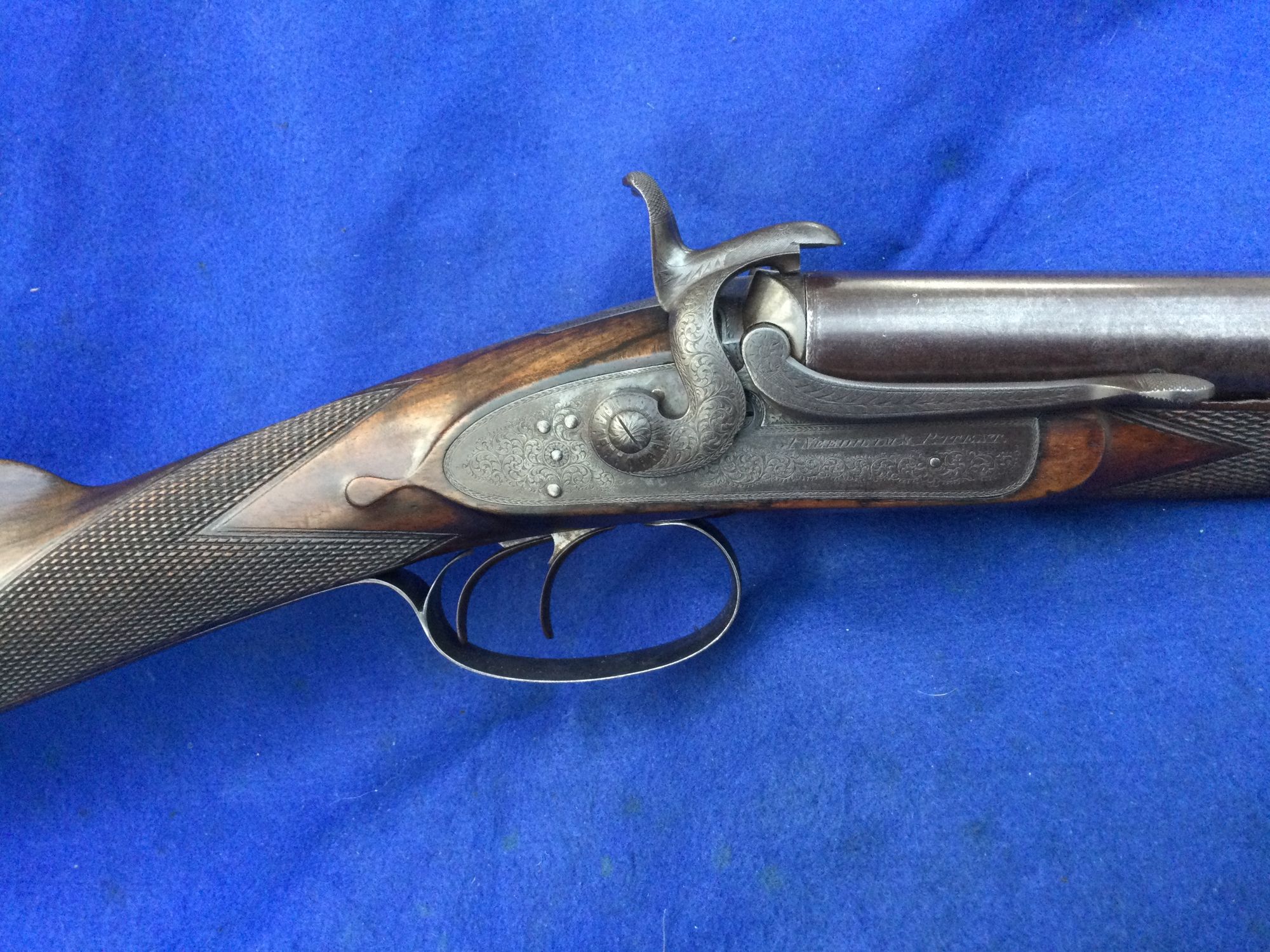
J. V. Needham - Pinfire
Thomas Brazier Locks
This Needham Pinfire built with Locks by Thomas Brazier, and having had the good fortune of being looked after for over one and a half centuries. These ground breaking guns were well made, like the Pinfire ignition system, both being relatively short lived in the UK, and with the rapid development to centre fire, the Needham Pinfire game guns were never made in vast numbers. The build quality has supported both their conversion to centre fire and their passage though time, surviving examples in Pinfire configuration are low, however examples in simply well cared for original condition is more unusual.

In 1845 William Needham moved to London where he opened at 26 Piccadilly trading as William Needham & Co. The name changed, and from 1849 to 1851 being recorded as William Needham without the "& Co".
In 1851 the name of the business changed to William & Joseph Needham, but this Joseph does not seem to have been his son, if it had been then the business would have been named William Needham & Son.
The Joseph Needham in question appears to have been Joseph Needham of Ashtead Row. It seems that this Joseph and his son, Joseph Vernon Needham, manufactured guns in Ashtead Row for William, and possibly also for Henry in Vine Street.
In 1861 Joseph may have died, because in 1861 Joseph Vernon Needham was recorded in business at 108 1/2 New Street, Birmingham. However, in the 1861 census J. V. Needham is recorded as a visitor at a boarding house at 32 Cloudesley Street, Islington, London.
On 22 May 1862 J V Needham registered patent No. 1544 for a sidelever automatic self-half-cocking breechloader in which the breech opened by moving the barrels forward (see W J Harvey patent No. 1056/1860 and E Brooks patent No. 1585/1863).
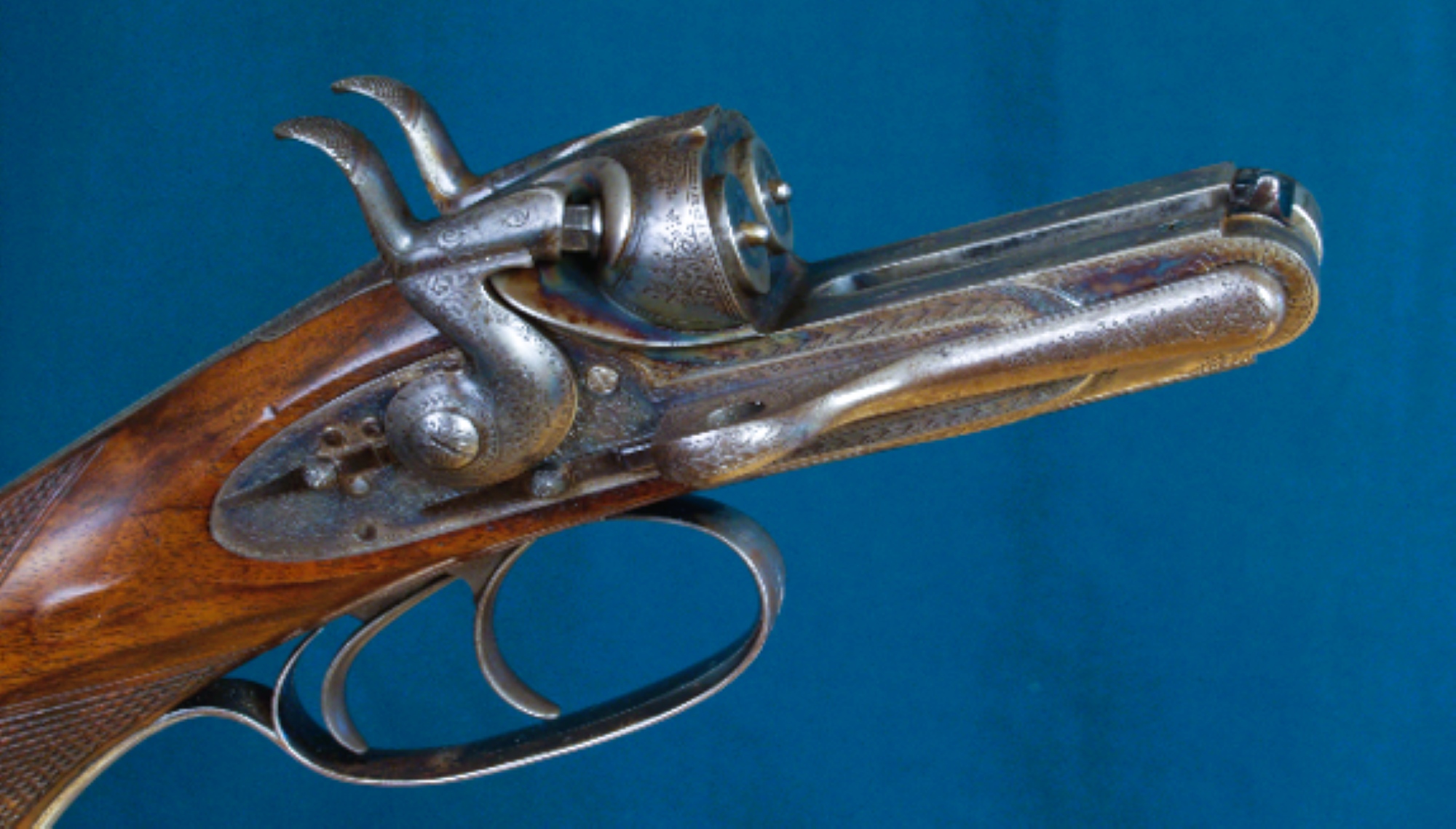
The example featured is a J. V. Needham 12 bore, a 1862 patent - Sidelever, Single-Bolt, Snap-Action, Self Half-Cocking, Bar in Wood, Pinfire, Hammergun. The rib engraved Joseph Needham 26 Piccadilly London. The design and build of these guns demonstrates the level of engineering, and mindset of Victorian Gumakers.
The serial number of this particular example being 1273, and with a patent use number of 405, places the gun in the early part of production. The patent used to build this gun was 1544 for 1862, and incorporates a patented rotating single bolt. The fences with external cams, half cock the hammers as the side-lever is pushed down, at the same time opens the gun. The barrels do not have extractors, as the cartridges could be removed by pulling the pin of the cartridges once fired.


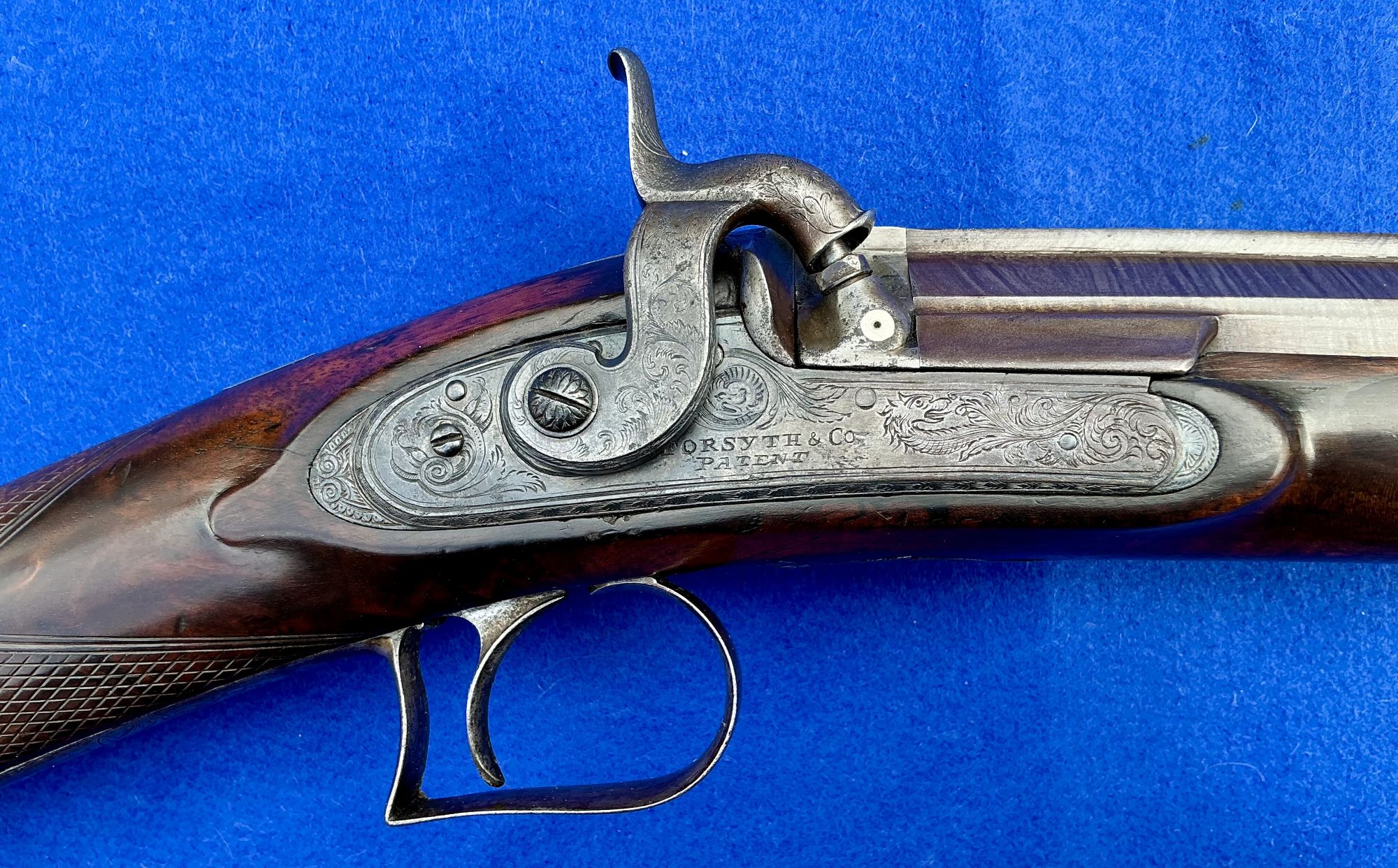
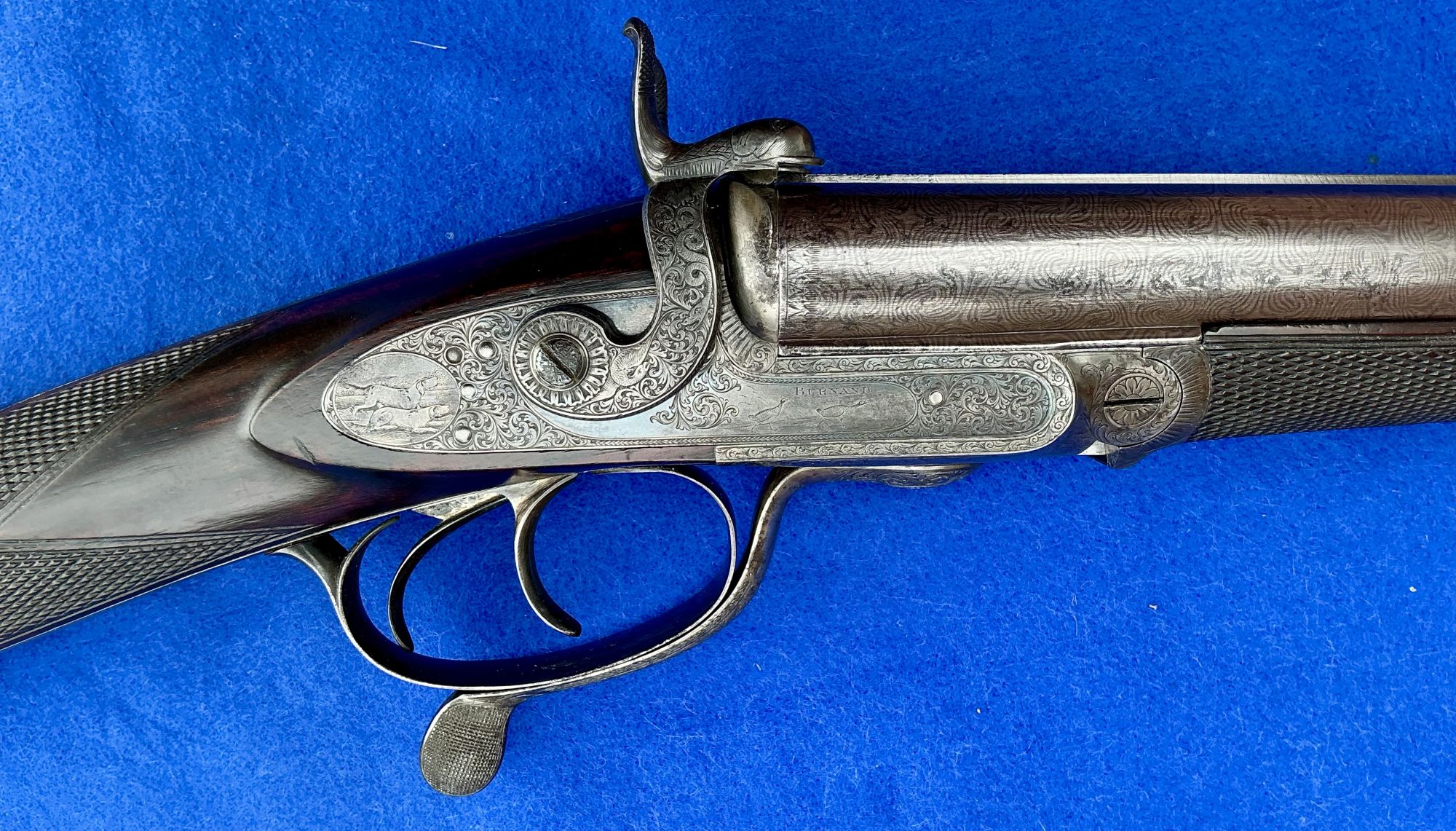
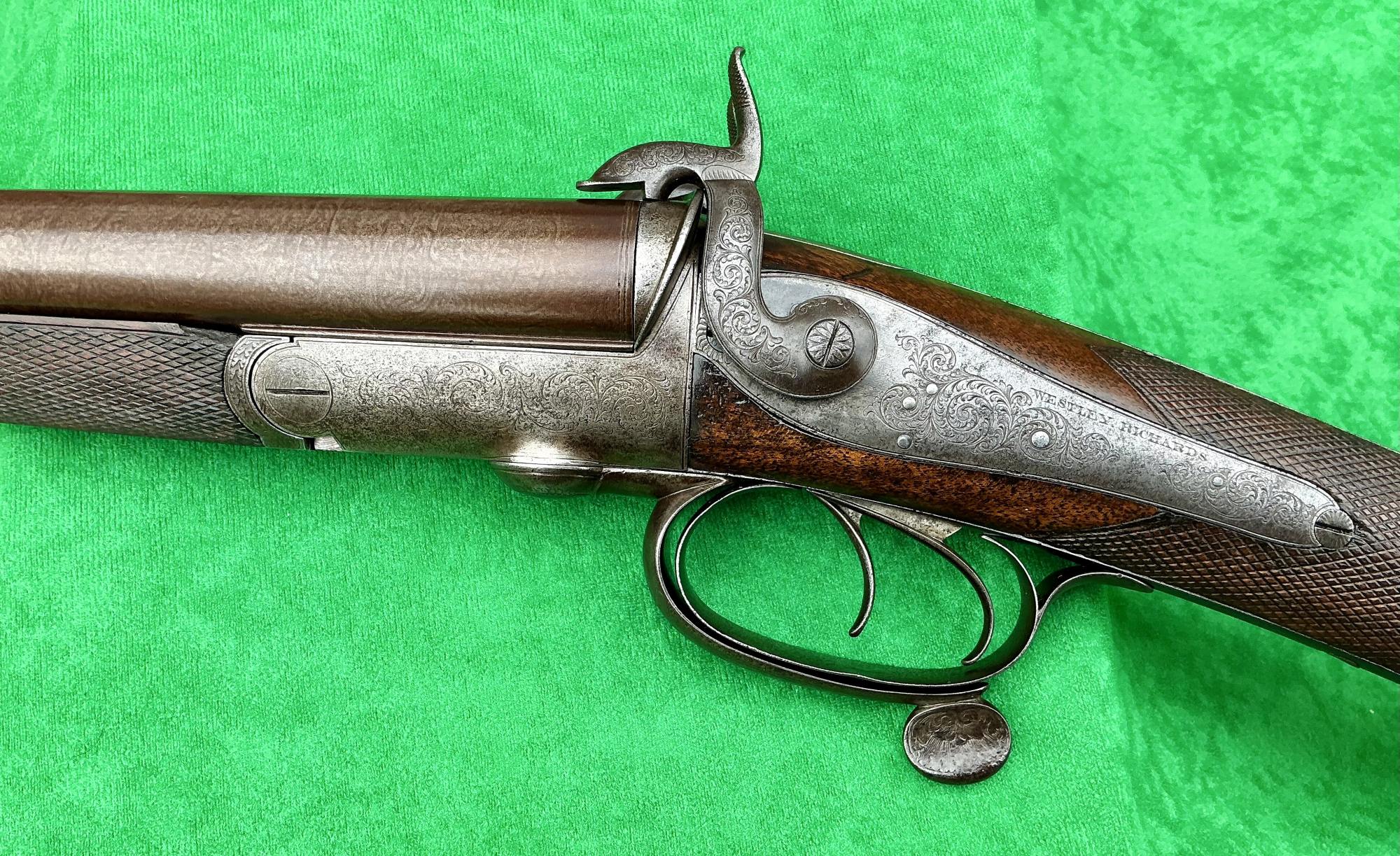
The best quality locks are non-rebounding sidelocks, the inside of the lock plates and bridles retain good levels of colour hardening. Looking between the limbs of the main spring we see the name of the lock-maker T. Brazier.
Thomas Brazier was recorded as a gun lock maker, also a gun and pistol maker from 1827 to 1872 in Bloomsbury Street, and at Townwell Fold, Wolverhampton, but he almost certainly established his business earlier than 1827. He was married to Elizabeth (b.1792 in Horton, Staffordshire) and they had at least three sons and two daughters.
The first businesses to be recorded using the Brazier name appear to be those of Thomas Brazier who was born in Bilston in 1781 and Joseph Brazier who was born in Bilston in 1783. They may have been related, possibly brothers.
We usually link the name of Lock making and Brazier to Joseph Brazier, however research identifies - seven firms of lock makers operated under the name of Brazier, and there were at least eight more individuals employed in the trade, some of these Brazier named lock makers supplying Joseph Brazier.

The woodwork has “cared for” age related wear. The locks carefully removed for inspection showed superb inletting were the locks rest within the stock. The locks initially dry and grubby, have been lightly cleaned and lubricated. This revealed a set of beautifully made locks, being over a hundred and fifty years old, and in superb condition.

The Bar in Wood action incorporates a metal engraved barrier between the action nose and forend, very much like we see in modern guns today. The barrier between the action and forend seems to disappear on later guns built using this patent. The gun also incorporates a permanently attached for-end with horn tip. The attention to detail to a single screw head only visible through removing the trigger guard is no surprise, along with the quality of the stock in letting of trigger guard tang.


There remains an opportunity to find good examples of vintage British sporting guns when you are least expecting, happy hunting.