Thomas Miller - Sunderland
T. Miller – Sunderland
Thomas William Miller – Gunmaker
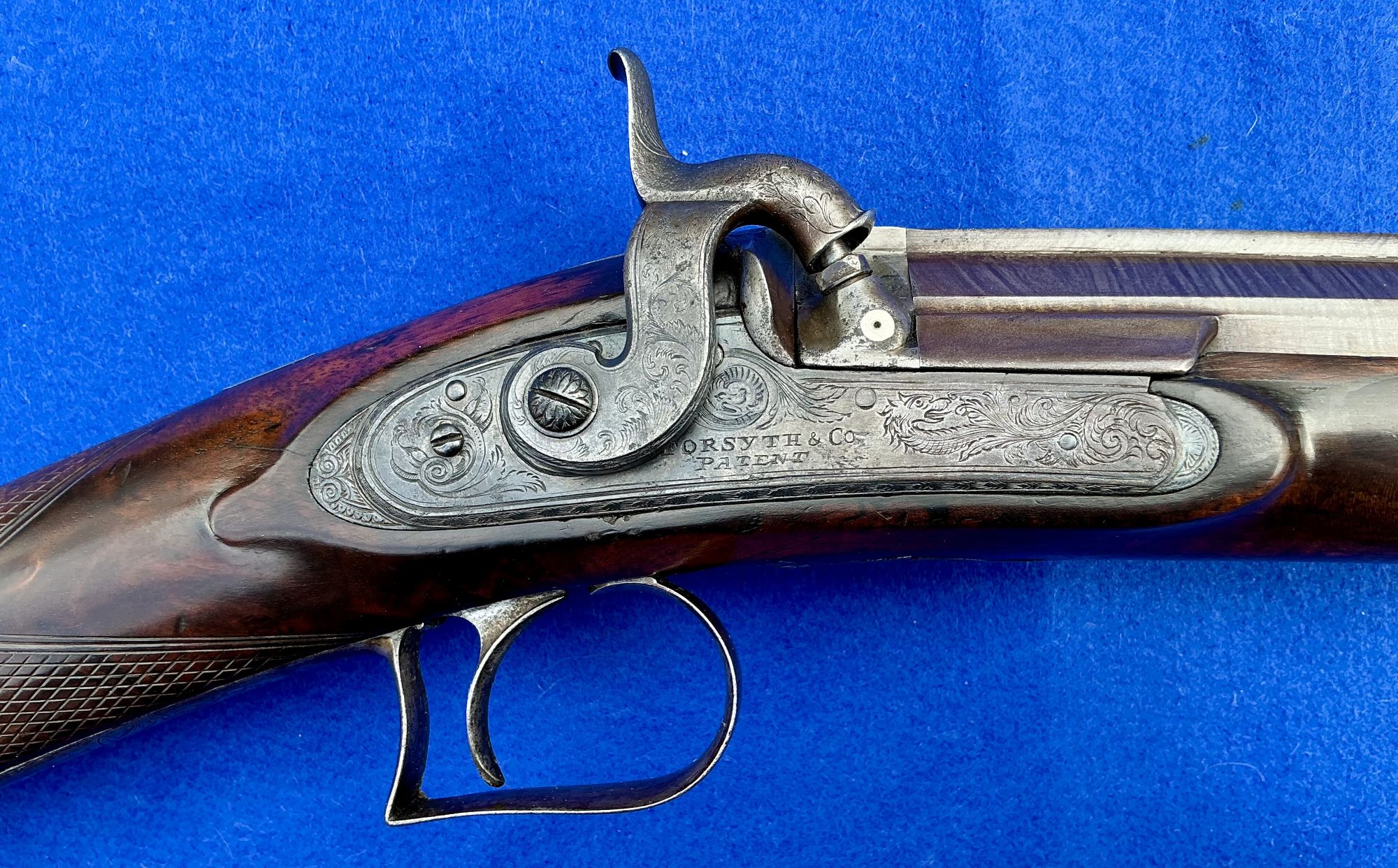
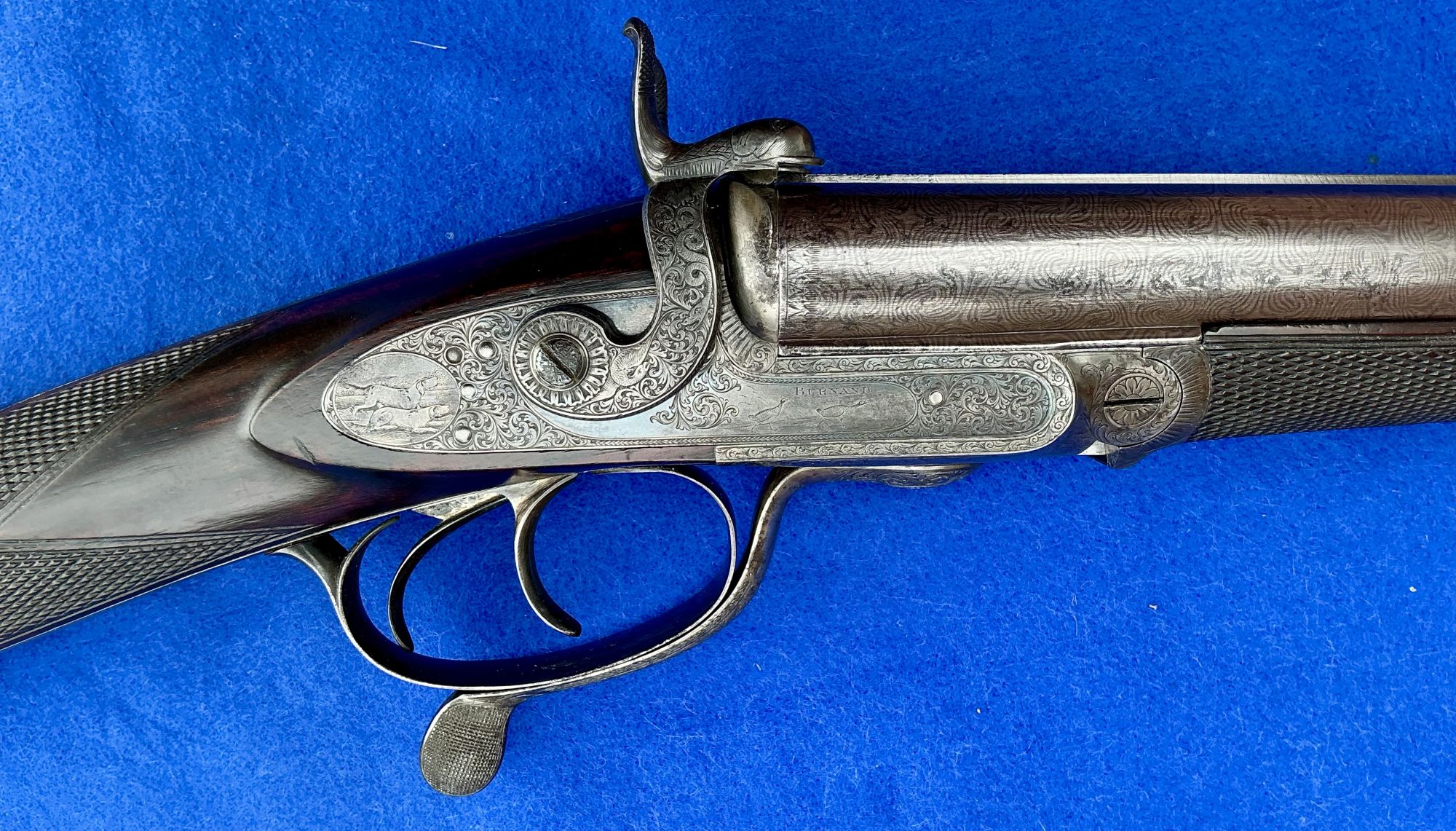
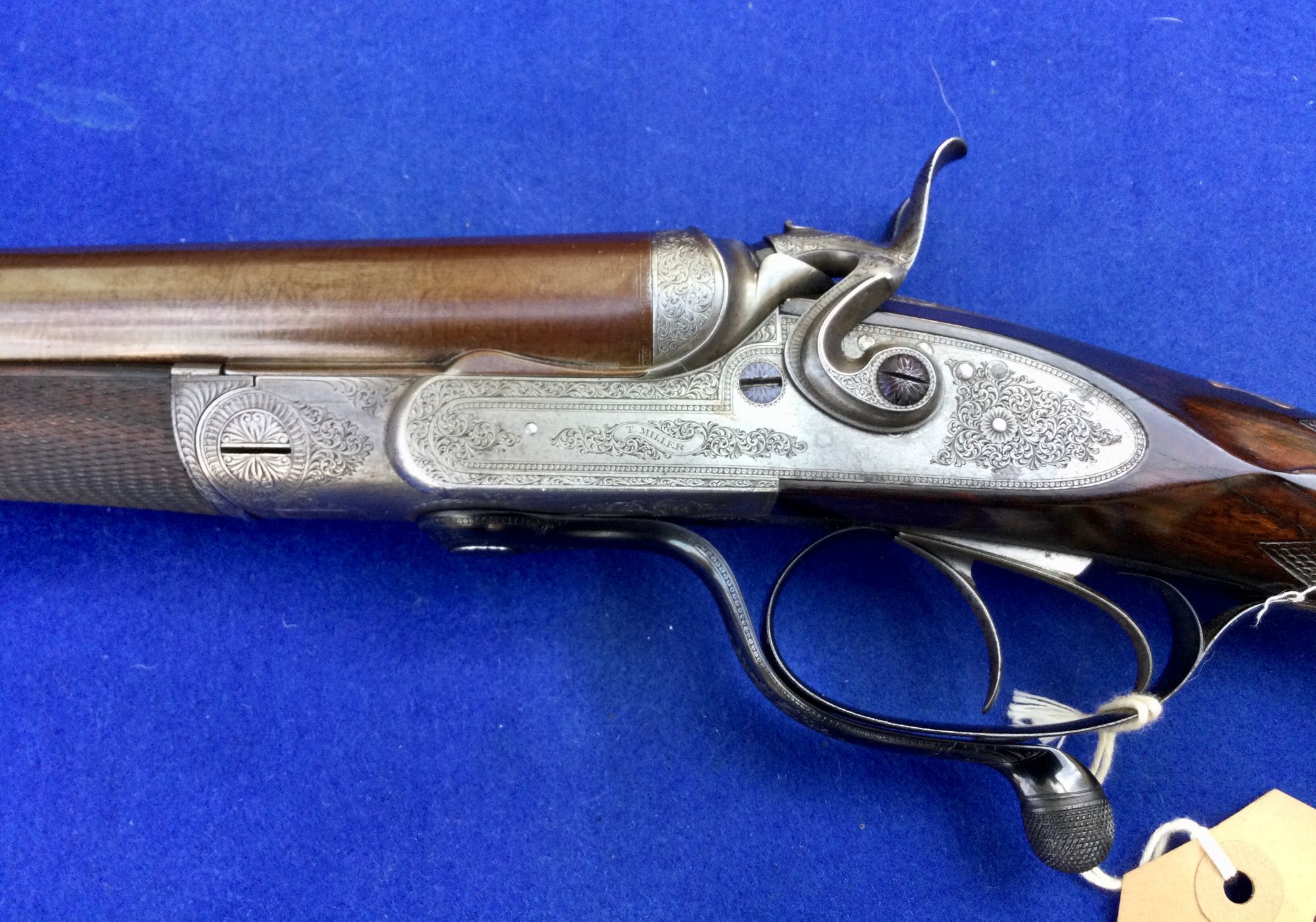
Thomas Miller was a talented provincial gunmaker operating out of Sunderland. We know little about Thomas Miller, other than his surviving guns are well made and of good quality. The gun that stimulated this article is an eye catching 20 bore Hammer gun. The gun stands out due to the quality, and level of finish, looking closer, the quality is not just skin deep.

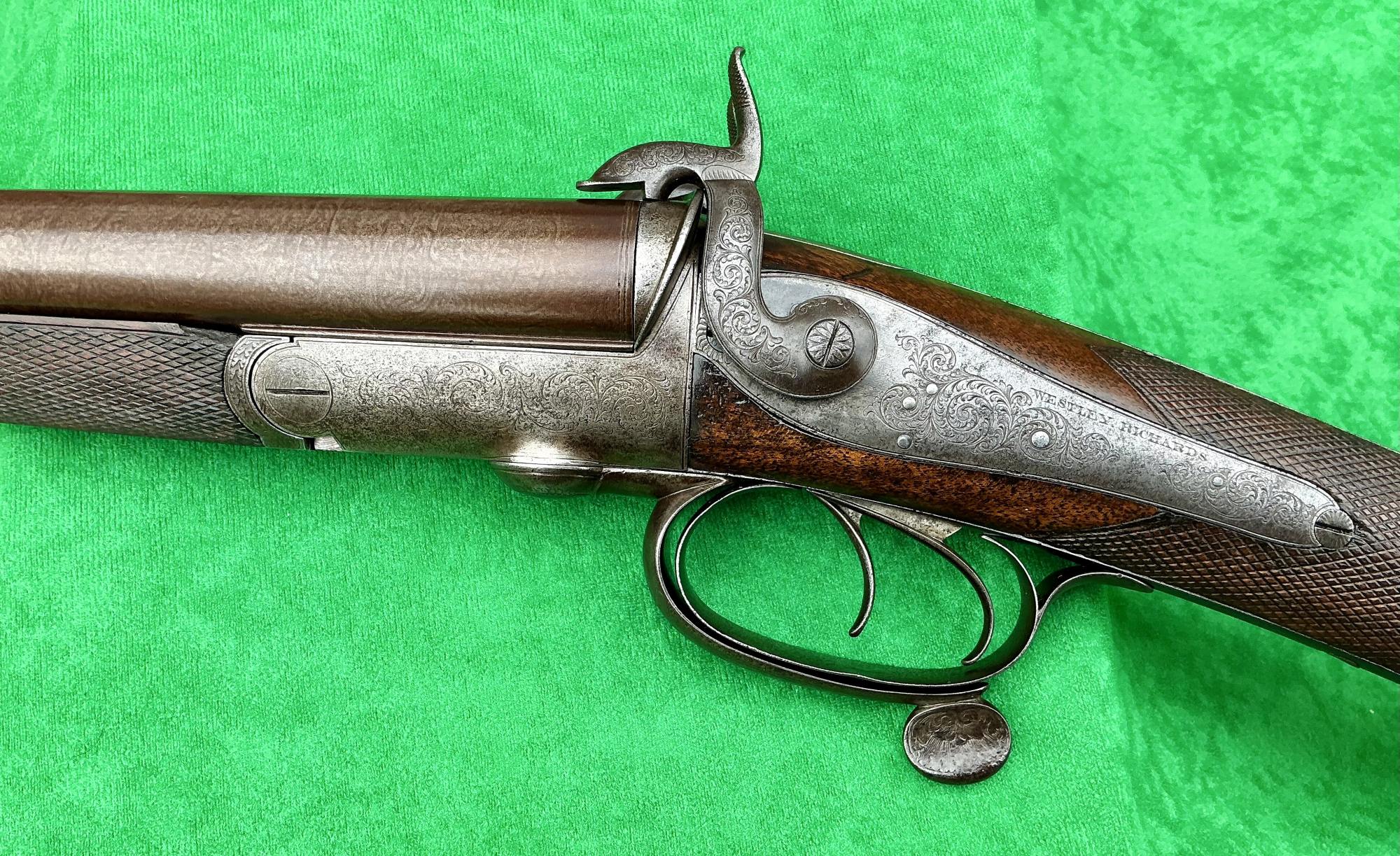
Thomas William Miller was known for his best laminated steel barrels, and here we see why. His attention to detail throughout the gun is impressive, the engraving throughout the gun is exceptionally fine, and of the best quality. The wood is both well figured and straight grained, the wood is dark giving a rich appearance, the stock originally having a heel plate with a widows peak has been replaced with compressed horn, this has added a little length, checkered and fitted with engraved screws.

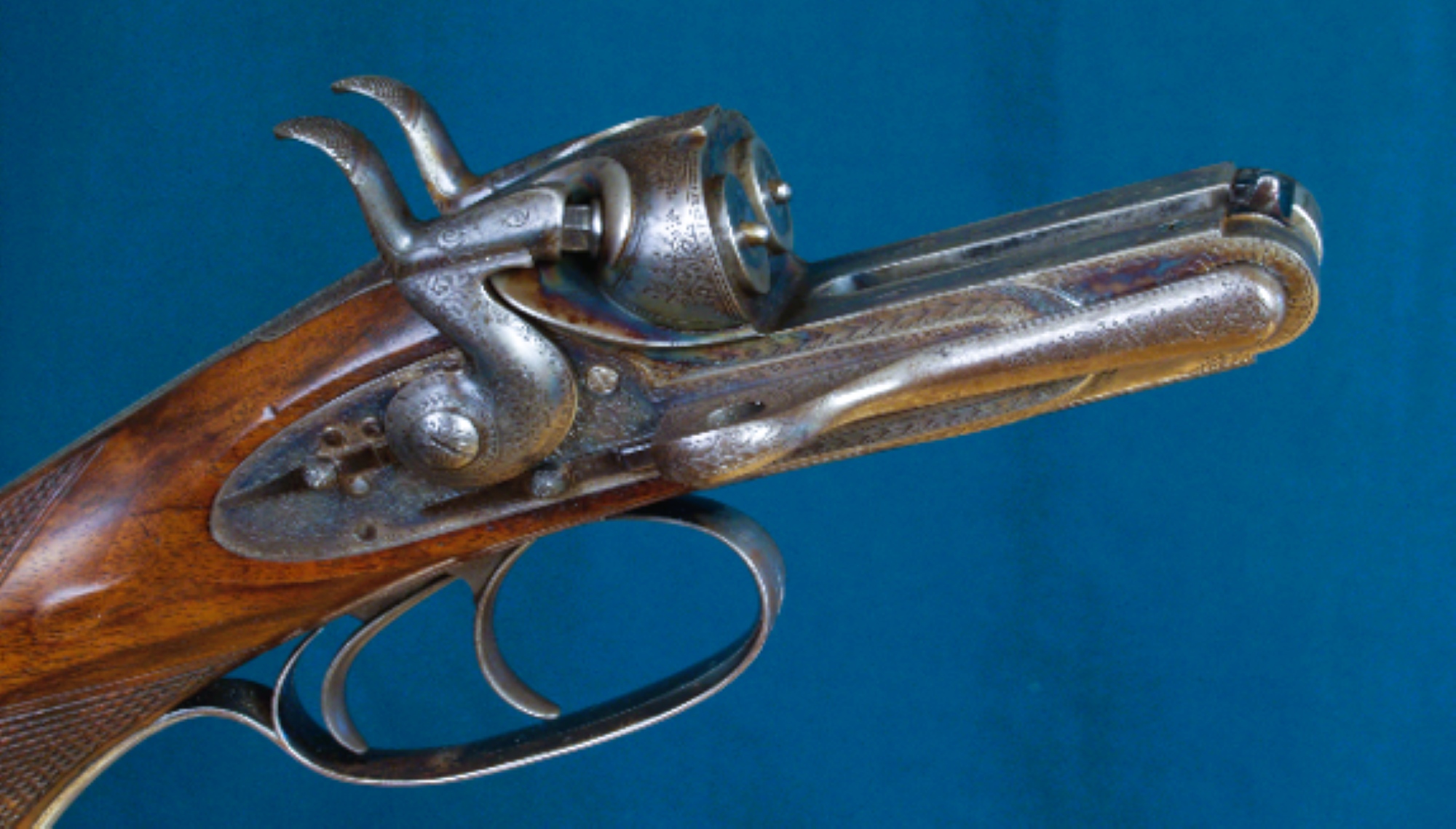
The gun is mid 1870’s, on his return to Sunderland and opening his business, the gun has a low three figure serial number, cross-latch forend fastening, and a Jones under-lever opening. The gun has been finished to a Best Gun finish. The opportunity to remove the locks showed the foundation of this eye catching gun and little known maker, the 20 bore locks were made by Joseph Brazier “Ashes” and are presented beautifully, including pierced bridles. The levels of quality from this maker are hidden in plain sight for those interested in the gun and not the name.


Thomas Miller's gun making abilities have stimulated a small number of collectors and enthusiasts in trying to find out more about Thomas Miller of Sunderland. The initial sources of information have come from; Sunderland City Community and Cultural Services Directorate, Trade Directories for the area, Sunderland Library Services, the London Patents Office, and Lewisham Local Studies Archives.

Thomas Miller secured a provisional patent, fortunately this is recorded and allowed a thread of information to be secured. The provisional specification patent number 571 was recorded at the Office of the Commissioners of Patents on the 15th February 1873. Interestingly, Thomas Miller gave his residency as being Blackheath in the County of Kent. The patent number 571 on his guns, allows us to make the link, he was working in the London area when securing the patent. This is supported by the information from Lewisham Local Studies Archives, stating Thomas William Miller lived at 4, Kidbrooke Grove, Blackheath Village from 1870. Thomas W. Miller is also listed in the Sunderland Trade directories 1873, 1877 and 1881. The Sunderland Library Service have also provided an advert image from the Ward’s directory 1881 – 1882. The advert image below identifies the Thomas Miller firm in Sunderland as being able to make and supply a number of different guns.

Thomas W. Miller as a Journeyman in Blackheath - Although Thomas W. Miller’s own workshop was in Sunderland, there’s tantalizing evidence that he passed through London, and specifically the Blackheath Woolwich area, learning his Trade as a journeyman gunsmith before striking out on his own. The Census and Directory Entries - The 1861 London Census (Deptford/Blackheath district) lists a “Thomas Miller, age c.24, gunsmith journeyman,” lodging at a private house near Lee Terrace. The 1868–69 London Post Office Directory shows “Miller T., gunsmith, 112 Blackheath Road (Deptford).” These two snapshots suggest the future Sunderland Gunmaker honed his skills in quality gun making in the shadow of the Woolwich Arsenal. The Blackheath area was a Hotspot for the Military & Sporting Gun Trade, with Blackheath Road shops and outlets regularly providing all manner of gun making services for Officers from Woolwich Arsenal and nearby Royal Dockyard. The role of the Journeymen within this immediate area worked on all aspects of firearms; from military carbine repairs to early sporting-gun experiments. The exposure to Woolwich Arsenal could explain Miller’s total confidence in laminated steel.
Miller’s 1873 patent shows technical fluency and understanding in design and benefits to users, with the quality of craftmanship being gained through working in London workshops. A move North to Sunderland in 1872–73 aligns with finishing his journey-man service (typically a seven years apprenticeship).
The firm were only briefly in business for a period of approximately a decade. The number of guns made are difficult to state, however it is likely T. W. Miller supplied other makers with guns, and gun parts, there are no serial number records, but it would be safe to say guns were made between 1872 and 1882. The narrowing of a production or build date could be refined via proof marks, patent application, the use of latches, catches and design developments etc.

Several enthusiasts and collectors have made close comparisons with William Rochester Pape’s and Thomas William Miller’s guns. There have been several occasions where W. R. Pape has been referred to as “Purdey of the North” this term has been given, due to the quality and finish of W. R. Pape’s guns. The level of quality is similarly demonstrated and is underlying in T. W. Miller’s guns – were there any links ? William Rochester Pape established gun retail businesses in Newcastle (from the late 1850s), Alnwick, and by the late 19th century in Sunderland as well. Thomas W. Miller’s workshops and retail outlet in Sunderland (c. 1873–1882) would have fallen squarely within W. R. Pape’s Sunderland catchment area, making links highly likely. It is thought that Miller’s workshop facilities allowed the wholesale supply of parts to other gun making outlets including Pape. This taking the majority of his time, and only allowing his own guns to be made during quieter periods, this is likely to account for the small number of Thomas Miller guns in circulation, however all the guns produced with the Thomas Miller name upon them, were self-containing advertisements for his ability and skill. We need to give a thought and consideration to how many best quality guns Thomas Miller made, that bear the name of others !

Retail and Distribution Links are limited, however, as Thomas W. Miller ran his own workshops and forge, many of his guns are likely to have passed through regional retailers; William R. Pape’s Sunderland branch is likely to have finished and retailed Miller made actions and barrels in leather cases with Pape labels, then sold through W. R. Pape’s Sunderland showroom. Selling to regional sportsmen under the Pape’s banner or shop name.

Best Quality Thomas William Miller Laminated Barrels.
His Patent was based around understanding the strength of Best Quality Laminated Barrels
This business model of “Maker wholesaler, Retailer finisher”- Gun makers suppling gun parts “In the White,” with masters like Pape finishing the gun through adding woodwork, engraving, finishing, casing and trade-labels was common, and not only among North-East firms of that period, this practice was also common place throughout the Victorian British Gun trade.