John Dickson and Son
John Dickson & Son
Rare Single Barrel Pin-Fire ( One of Ten )
The Scots have always excelled at making guns a notch above their English counterparts. There are a number of Scottish gun makers that have earned their reputation over the past few hundred years, but probably the best known of them all is the firm of John Dickson & Son, of Edinburgh.

Rare Dickson & Son - Single barrel - Superb wood work, Deep Action body, Deep Forend Iron & Timber
John Dickson was born around 1795. At the age of 11, he was apprenticed for 7 years to James Wallace at 187 High Street, Edinburgh, completing his apprenticeship in 1814. From 1814 to 1821, he worked as a journeyman for Wallace. In 1821, Wallace seems to have supported him in becoming an outworker, working for Wallace and others in his workshop. In 1828, James Wallace moved to 63 Princes Street, and John Dickson moved with him. From 1830, John Dickson was recorded in the directories as a gunmaker at 63 Princes Street, as his own business (presumably Wallace had died or retired).

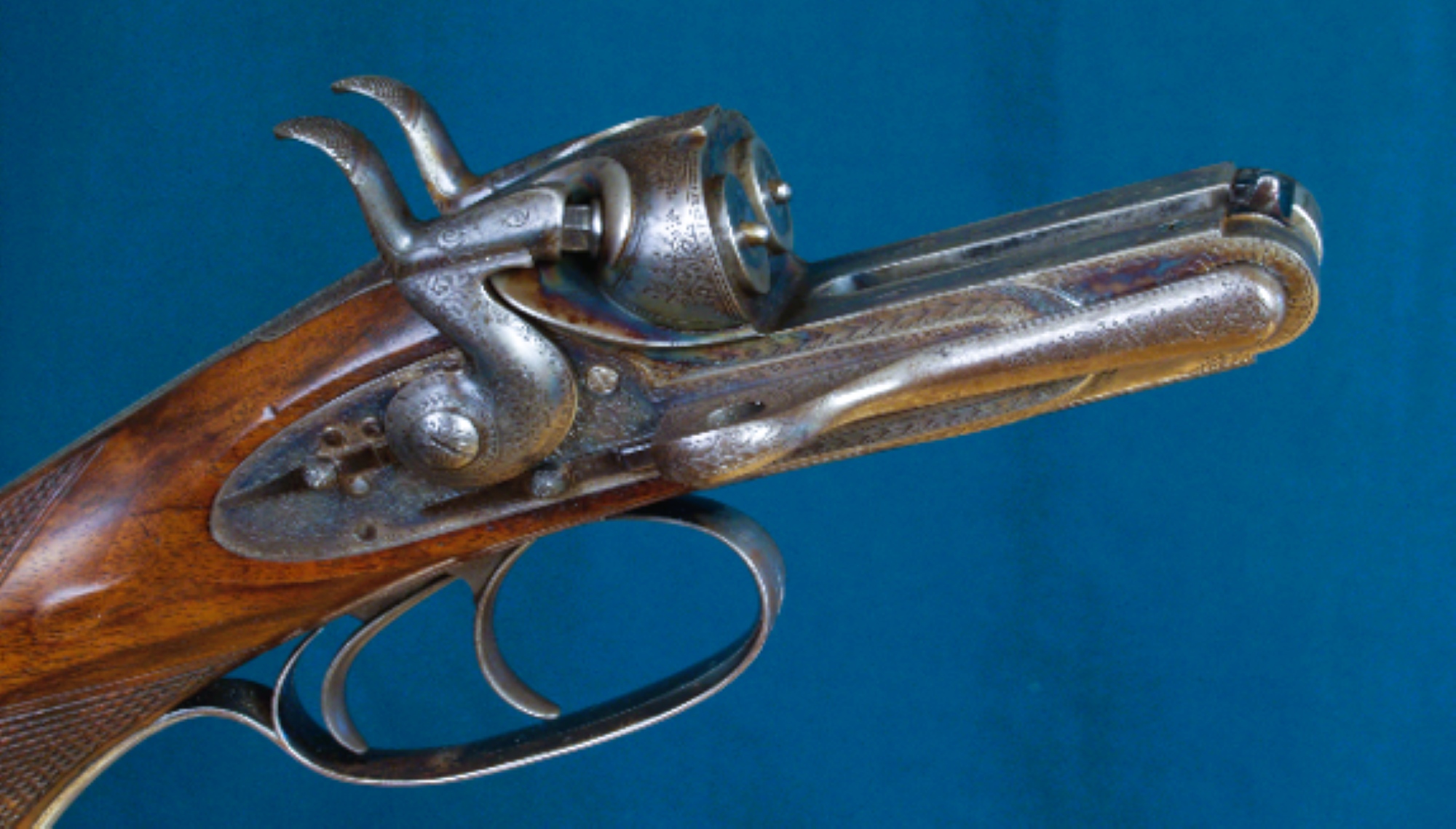
Unusually Deep Lumps, Hook, Forend Loop, and Action body sides - Jones Rotary Under-lever opening
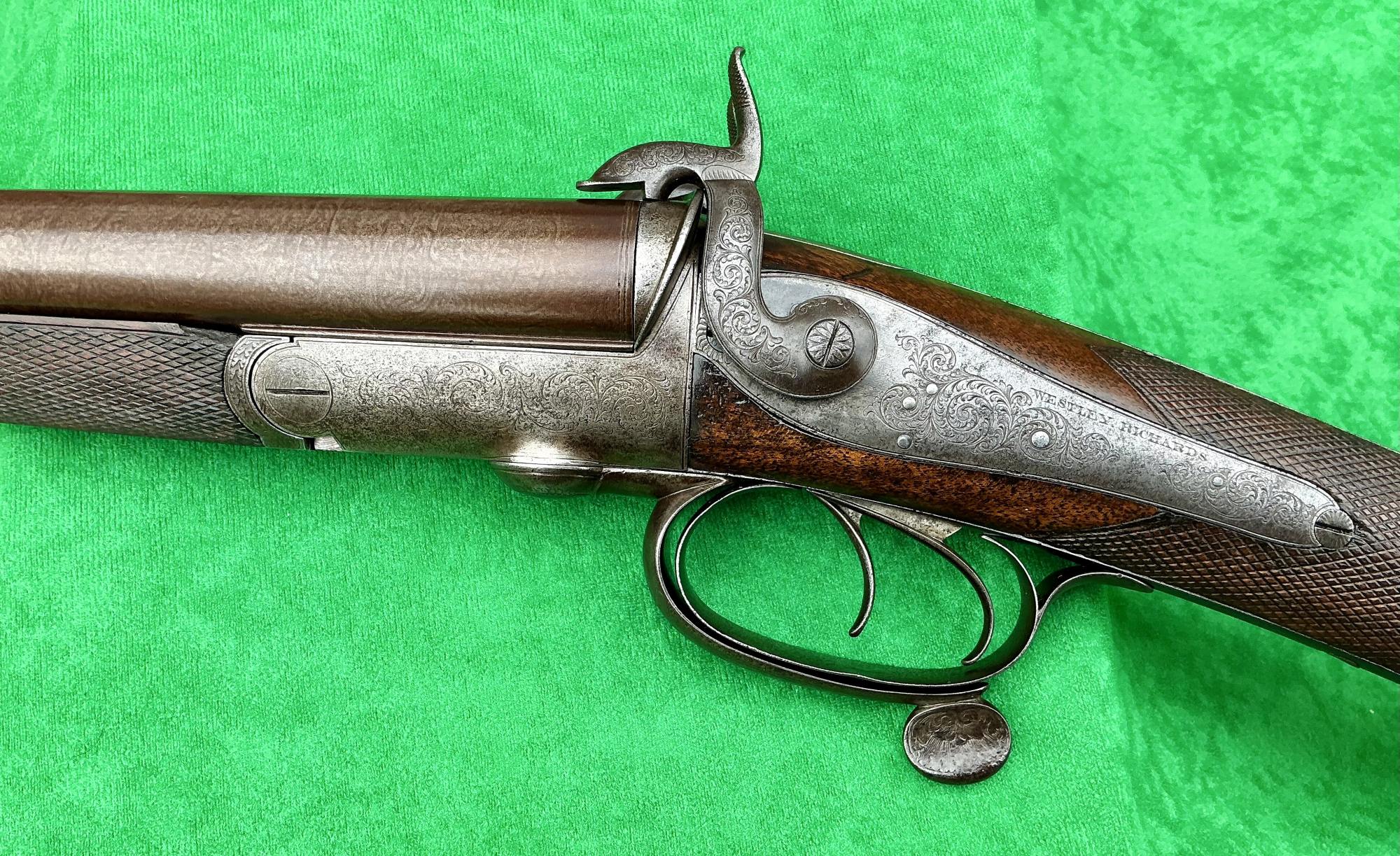
In 1840, John Dickson brought his son, also named John, into the business, renaming it John Dickson & Son. In 1852, James MacNaughton was apprenticed to John Dickson, and from 1859 to 1864, he worked for him as a journeyman. In 1864, he established his own business at 33 George Street, Edinburgh. From 1865, the firm of John Dickson & Son built snap-action breech-loaders, using patent actions by Richard Brazier, Thomas Horsley, Westley Richards, Charles Lancaster, and James Purdey. In 1873, John Dickson senior retired, and John Dickson junior took over the firm.

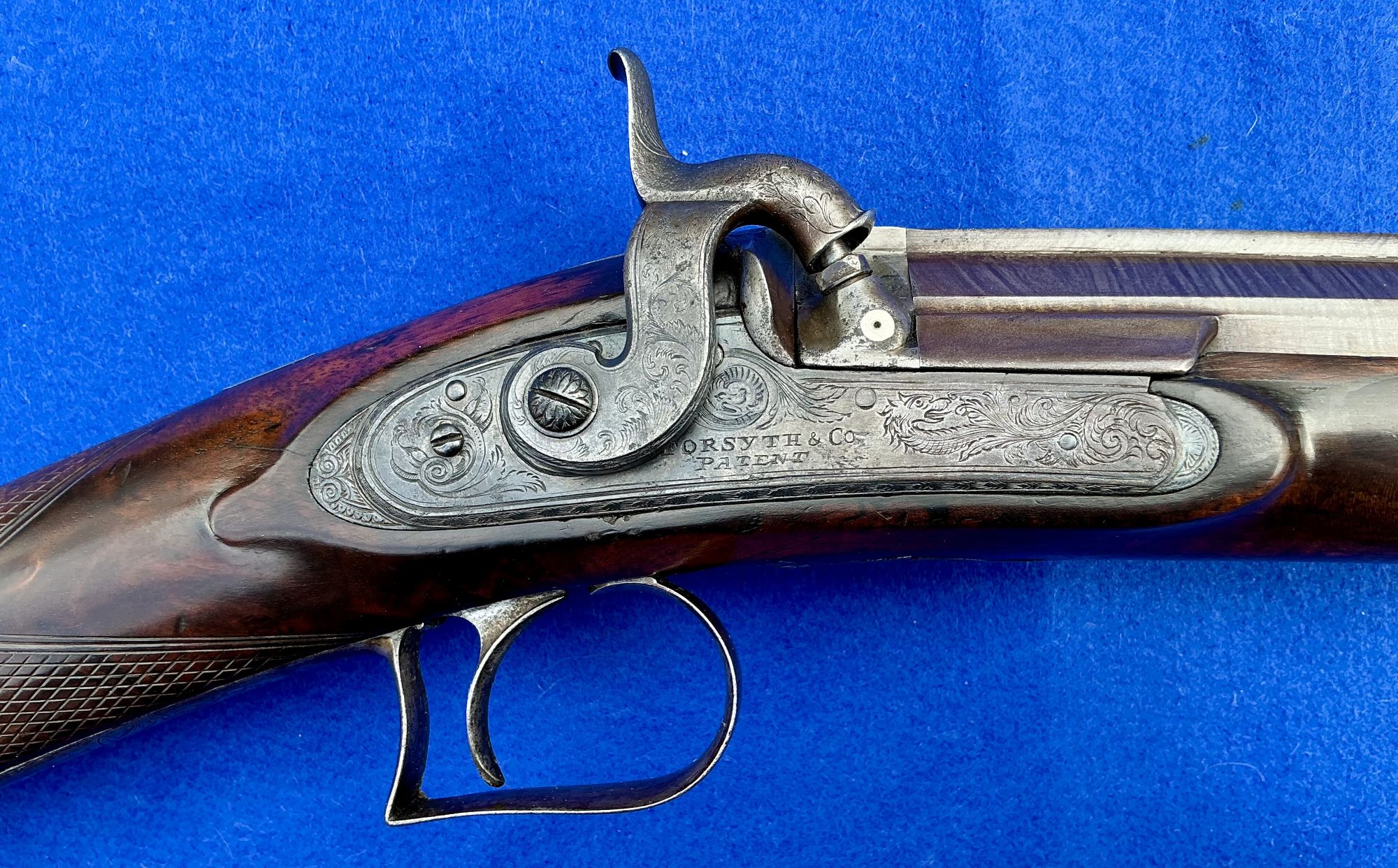
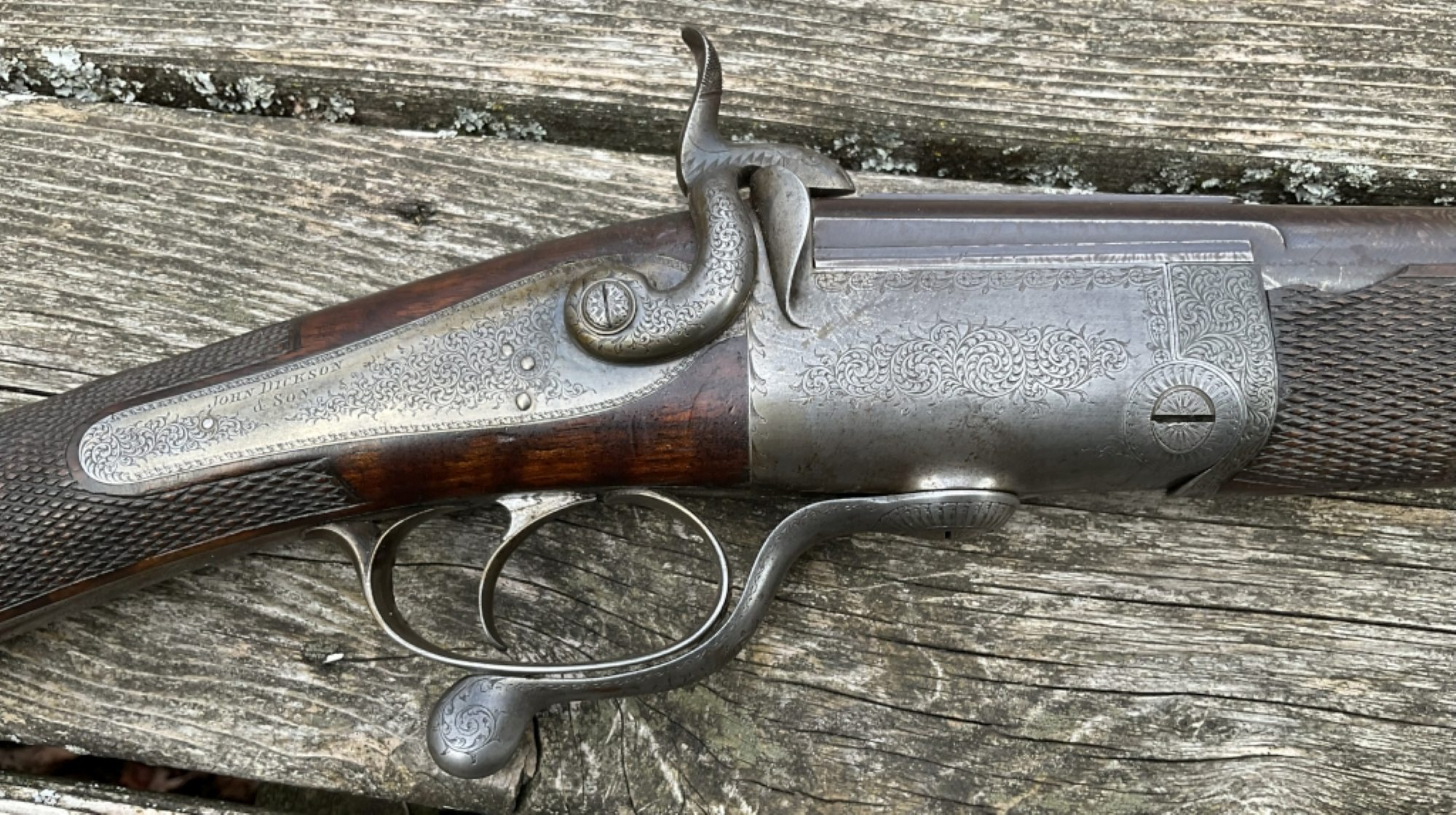
Canted hammer, off centre Pin-fire barrel hole, Double Percussion fences - Exceptionally well made throughout.
It was in 1875, the year today’s gun was made, that the eccentric collector Charles Gordon first bought a Dickson gun. The firm would go on to build 225 guns, rifles and pistols for Gordon between 1875 and 1904, many of them out-of-era muzzle-loaders. Sadly, the gun in this article is not from the Gordon collection.
The gun that inspired this article is a 12-bore single-barrel pin-fire, already by definition rare and unusual. John Dickson & Son made 460 pin-fire guns between 1859 and 1875, and of these, only 10 were single barrelled. This one was completed in 1875, and it was one of the last five pin-fire guns made by the firm. The existing workshop records show it was made entirely in-house ( though the final barrel browning might have been locally outsourced ), at a time when the firm employed 18 men and boys. From an engineering standpoint, it is not exceptional, as it has a standard double-bite screw-grip underlever action, built some 13 years after the Henry Jones patent expired. However, how it has been made is exceptional, and it is a gun of rare beauty and execution.

Short sighting rib, Hammer clear of the line of sight, exceptional work in creating the Double Percussion fences.
As we are aware, Pin-fire cartridges have a protruding pin, and Pin-fire hammers are generally of the ‘hare’s ears’ type, with tall vertical thumb-pieces. On a double gun, one aims between the hammer ears, like goalposts. With a single-barrel gun, the exposed pin and corresponding hammer risk obscuring the sight line. One could, I suppose, angle the pin sharply towards one side, but the hammer would not hit the pin true, resulting in bent pins and misfires from lost striking energy. The single pin-fire gets around this by slightly canting the pin hole and pin to one side, and offsetting the hammer nose inwards, to strike the pin as directly as possible.

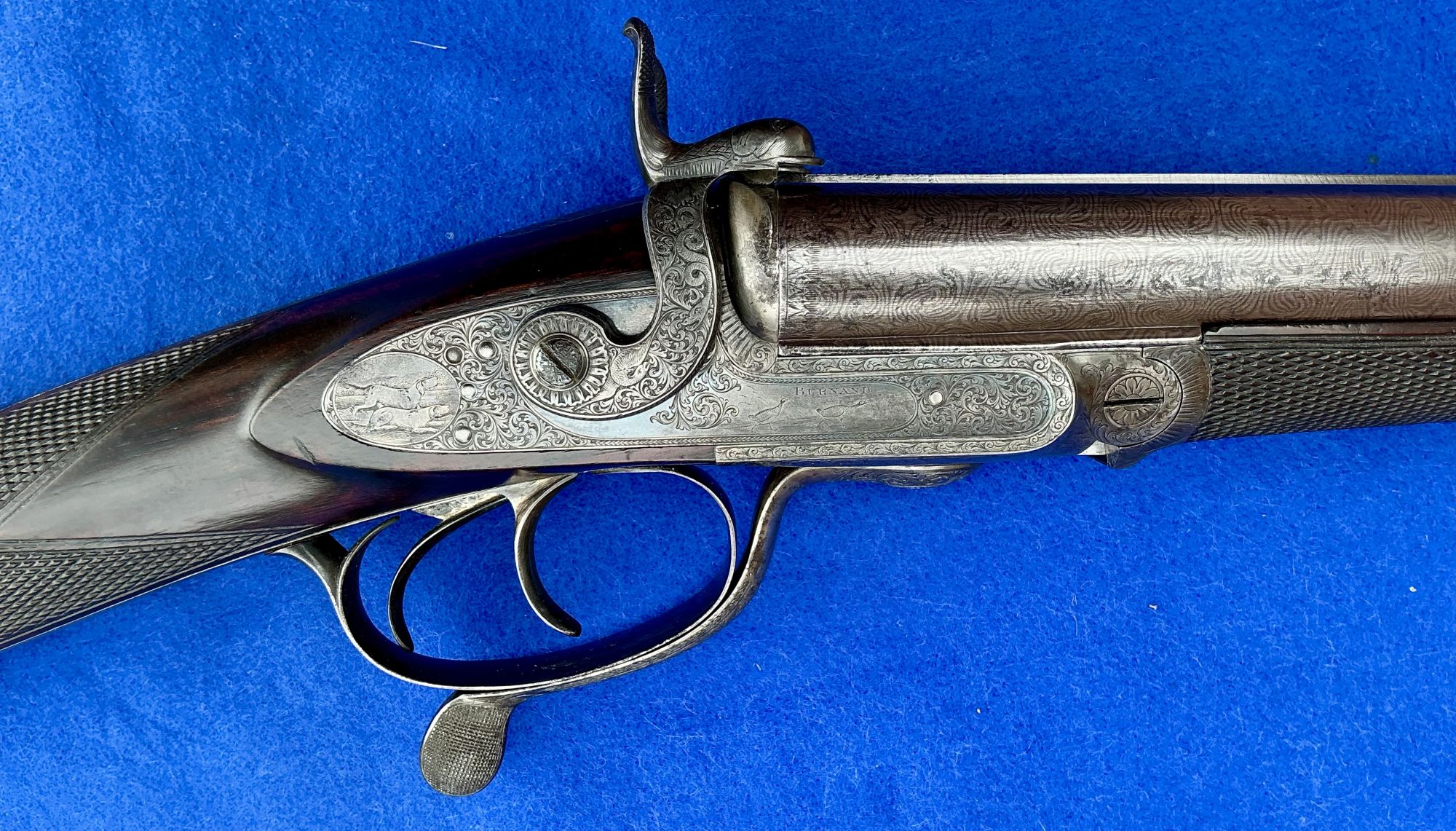
Best engraving throughout, Recess on breech head for Hammer tip, Rounded internal action bar to accommodate barrels.
The gun is fitted with a back-action lock, a dolphin fish-styled hammer, London proofs, and a 31 1/16” fine Damascus barrel that still has a spotless bore. The barrel is signed “John Dickson & Son, 63 Princes Street, Edinburgh.” In pure Gun making excess, it has two symmetrical percussion-style fences, neither of which is in any way functional. There are no action ‘flats’ per se, but a filed U-shape recess for the barrel. The fore-end is also deep in profile. The gun has a short sighting-rib, a well-figured stock, and a horn fore-end cap. Unusual for a pin-fire, but in keeping with its late manufacture date, there is a contoured chequered horn butt plate. Solidly built, the gun weighs 6 lb 7 oz. This was not a gun built for lightness, as singles sometimes were. The guns’ ultimate purpose in the shooting field is not known.