John Blanch and Son
John Blanch & Son
29 Gracechurch Street, London
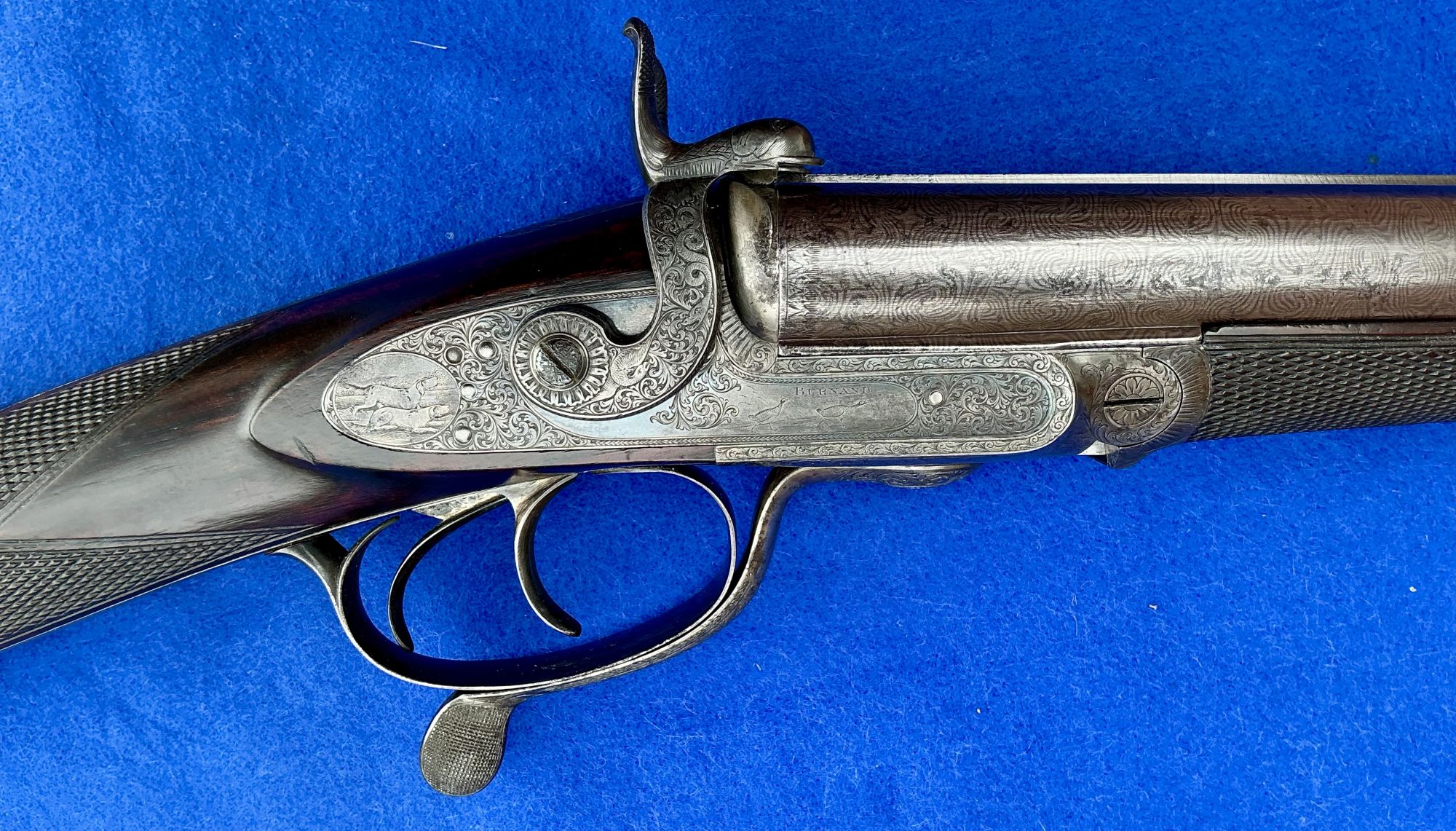
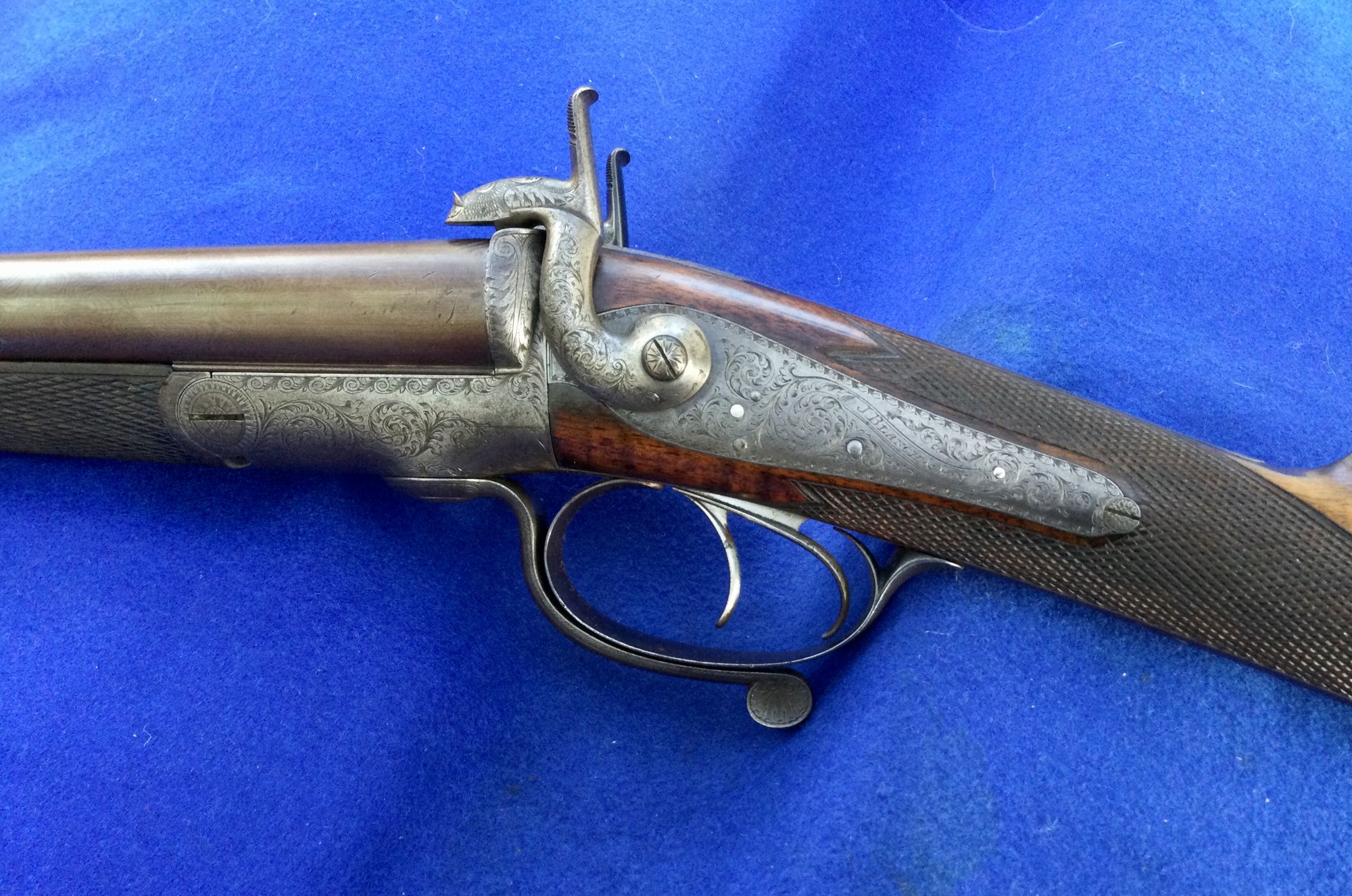
This early Breech-loading Pin-fire by John Blanch and Son, would have been seen as a best gun at the time. The gun was made circa. 1862, with the most up to date technology and development available. The gun is finished to a high level throughout, with engraving covering 100% of the gun.


Best Blanch Pin-fire, Fine engraving, Single bite, Rising Stud - Circa. 1862
The style and geometry of the gun being part of the Blanch firm’s ongoing development. In 1855 John Blanch bought from Beatus Beringer of Paris and St Etienne a Pin-fire breech loader for the sum of £27. Blanch openly copied and improved on the design, however due to the lack of Pinfire ammunition, he imported Pinfire cartridges from Chaudun and Gevelot for use within the guns he had copied and built. Importantly, it should be noted there were no English Pinfire cartridge makers at that time (1855). Once the new concept gained full traction, the transitional period from muzzle loader to the centre fire system was relatively short for the British game shooter.

Blanch & Son - 29 Gracechurch Street London Address
The Field, Saturday 2 May 1857 carried the following advertisement
"BREECH-LOADERS” - JOHN BLANCH and SON, Gunmakers, 29 Gracechurch Street, London, beg respectfully to call the attention of their friends and the sporting world generally to the above guns, which are much admired for their rapidity of loading, and the numerous safe-guards against accident which they possess. They would earnestly request those gentlemen who intend favouring them with orders for these guns for the ensuing season to do so as early as possible, that no delay or disappointment may be experienced. A large stock Single and Double guns and rifles and revolving pistols always on hand.
The Field, Saturday 6 February 1858 – Transcription of Advertisement
ELEY BROTHERS, LONDON, respectfully announce that they have now ready Cartridges of precisely the same sizes as the French, and of a superior quality; equally certain in ignition; and warranted not to split at the seams, nor to suffer pin displacement. Each case stamped ‘ELEY BROTHERS, LONDON.’
For sale by all leading gunmakers throughout London and the provinces.


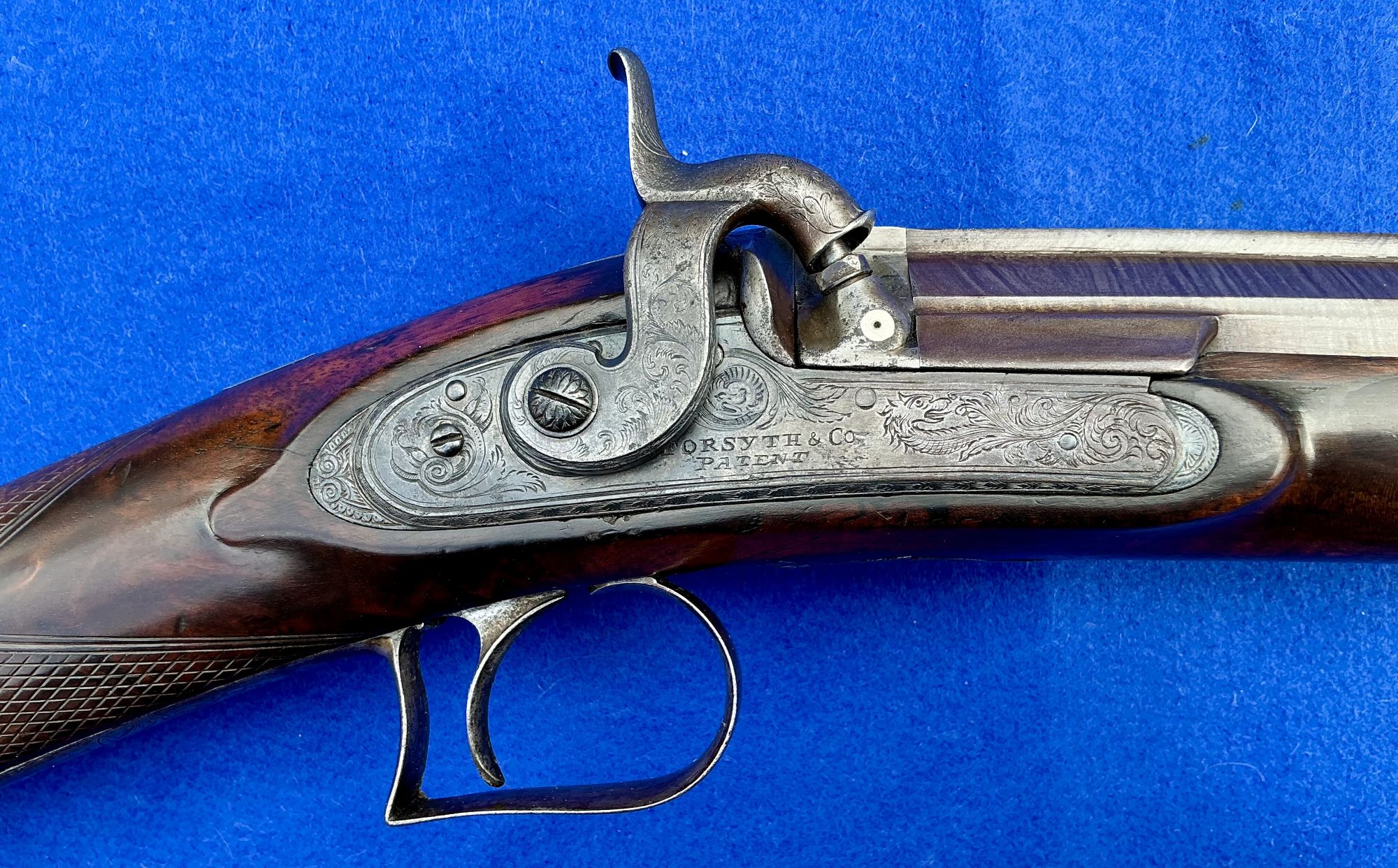
Single Bite lock-up, and Forend Loop for cross pin latch

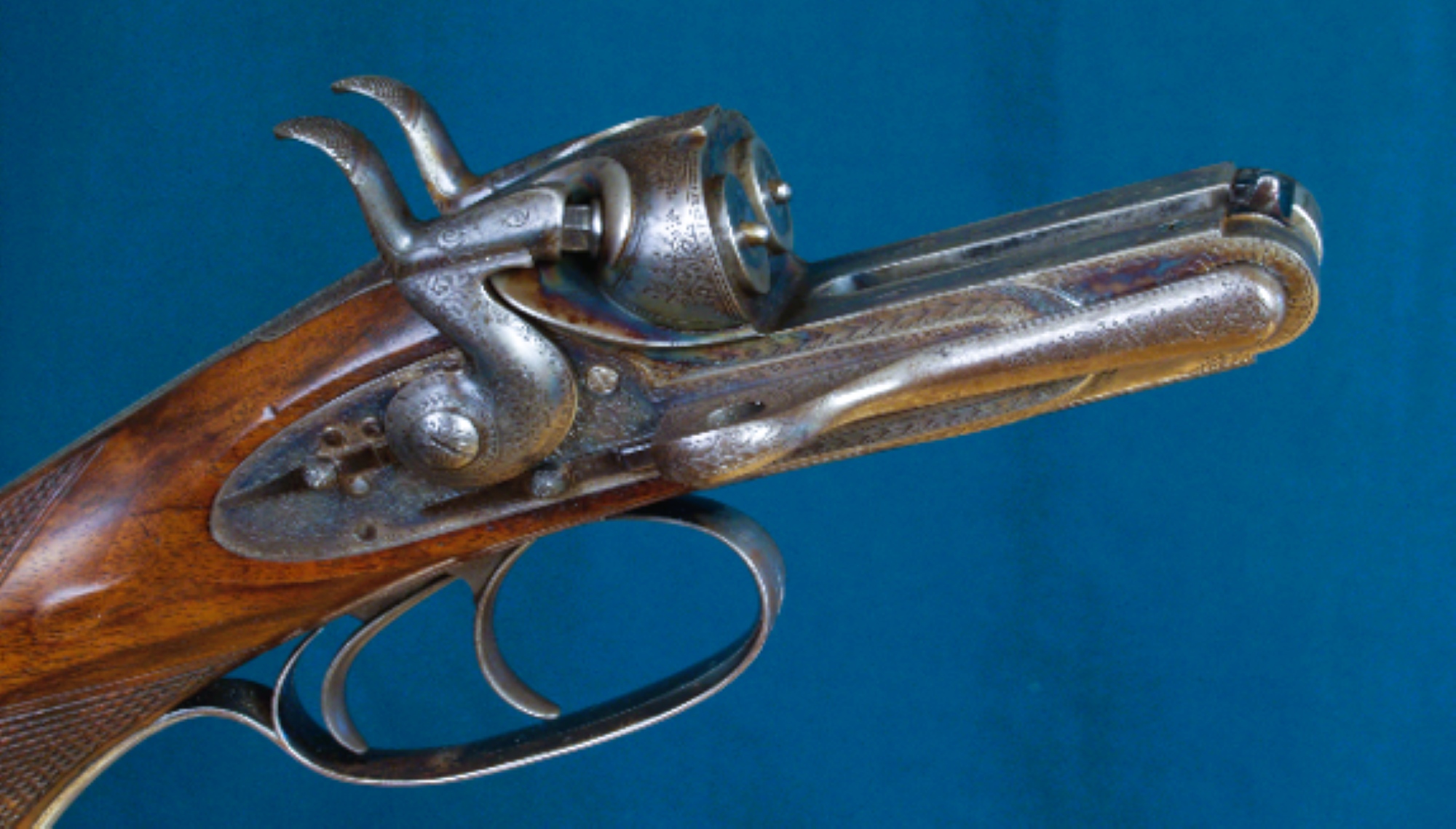
Lightening cuts to the action body - Rising stud - Under-lever securing pin
This particular “John Blanch and Son” made in 1862 is an interesting gun, and uses an action body with a rising stud and single bite under-lever. This would have been similar in design to the gun purchased by Blanch for the sole purpose to copy from Beatus Beringer, however the action body with its deep cuts in the action bar, is typical of the work, and highly likely to have been made for Blanch by Edwin Hodges.
The use of the single bite with the assisted-opening stud is very much the type of action that was around in Britain 1858-1860. This action is of a type likely to have come from Joseph Lang / Edwin Hodges, they did not patent either the locking system or the rising stud – possibly due to both being copied from the Parisian inventor / gunmaker Beatus Beringer. This Parisian Gunmaker also being the source for a number of the Blanch and Son firm’s Breech-Loading developments.

Strong straight grain through the grip, with figuring increasing to the rear of the Stock

As a matter of note, one of the earliest single-bite action makers, with rising stud identified as supplying the Birmingham trade, was the Brazier family, but there must have been others. Unfortunately many components made close to patent designs remained unsigned.
The John Blanch & Son Pin-Fire in this article, is a good example of what Best British Gunmakers of the time were producing for their clients and customers during Victorian Britian in the 1860’s. This elegant Blanch Pin-Fire was made as a 16 bore, London Proofed between 1855 and 1868 (Still well in Proof), 29 ¾ inch fine twist Damascus barrels, Right handed well figured stock with LOP at 14 3/8, engraved throughout covering all areas, the forend using a cross pin latch, the gun as a whole weighing 6 lbs. 7 oz. and balancing directly over the hinge pin. This gun moves and handles like a magicians wand. The gun being 163 years old at the time of this article, and being ready for a day shooting game is testament to the maker and the custodians of this gun.


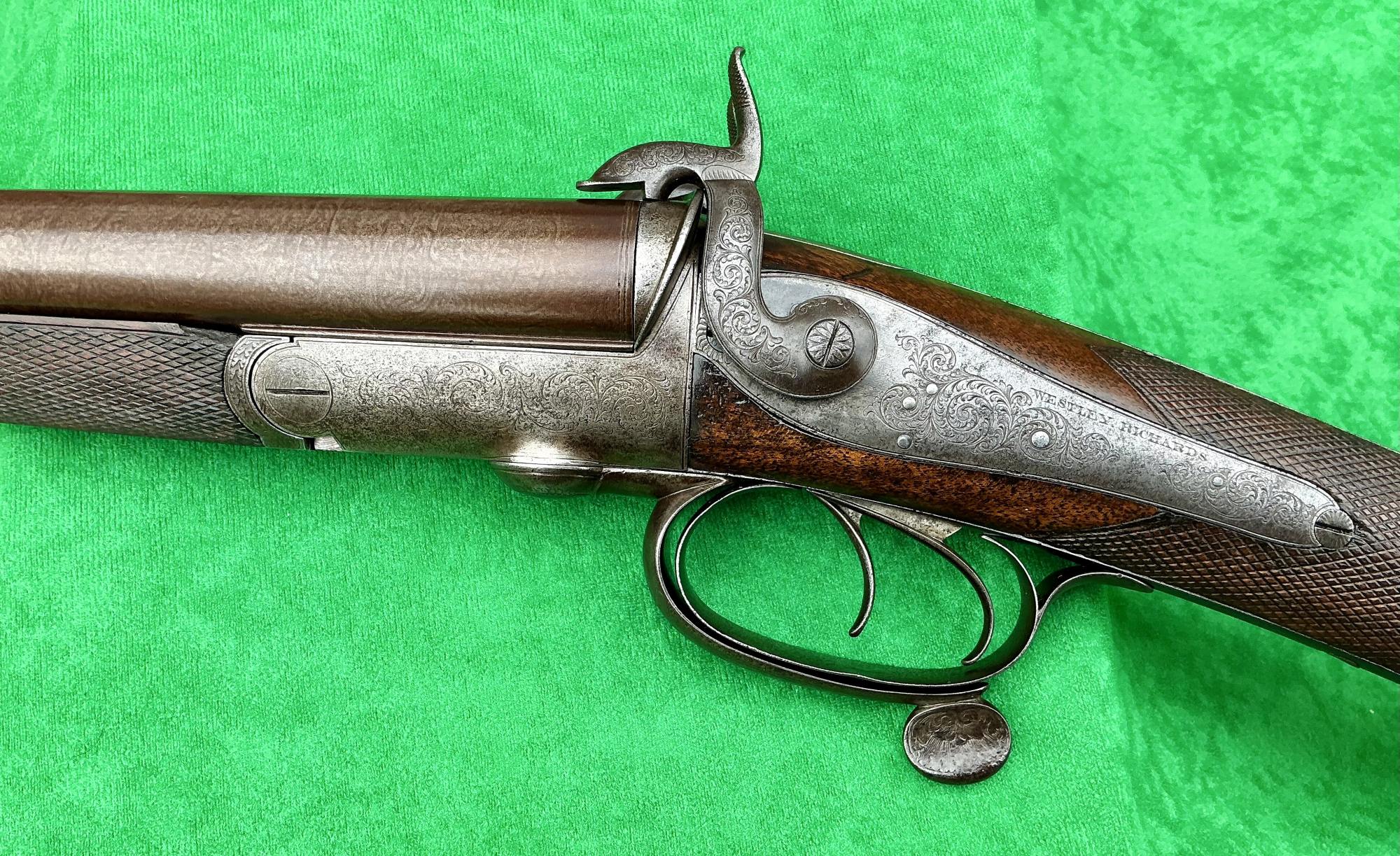
The Trigger guard made in two parts - The under-lever secured through the top of the action body
We are aware developments were rapidly moving towards the introduction of the centre fire, and even though the time-frame of the British pin-fire game gun was relatively brief, the effort and dedication in producing the very best during this short time frame is true testament to all those involved.
A brief history of John Blanch and family, at the time this gun was made.
"John Blanch's wife, Ann Eleanor, died on 24 September 1860. The 1861 census records John as a 77 year old gun maker, not retired, living at 25 Hanover Street with Ann Helena his grand-daughter and Frances Studd his housekeeper.
Also in the 1861 census William (II) was recorded as a gun maker employing 4 men and 1 boy and living at 29 Gracechurch Street with his wife, Madeline (nee Gooch b.1837 in London) and their children, Kate Eleanor (b.1857), Herbert John (b.1858), Chrissie Madeline (b.1860) and two visitors, Eliza Watkins (b.1819 in London) and Thomas Mortimer Watkins (b.1856 in Banbury, Oxfordshire).
They employed a house servant and two nursemaids. John Blanch died on 5 December 1868 aged 84. William (II), had obviously taken over most of the running of the firm some years previously.