The Nickel Plated British Shotgun
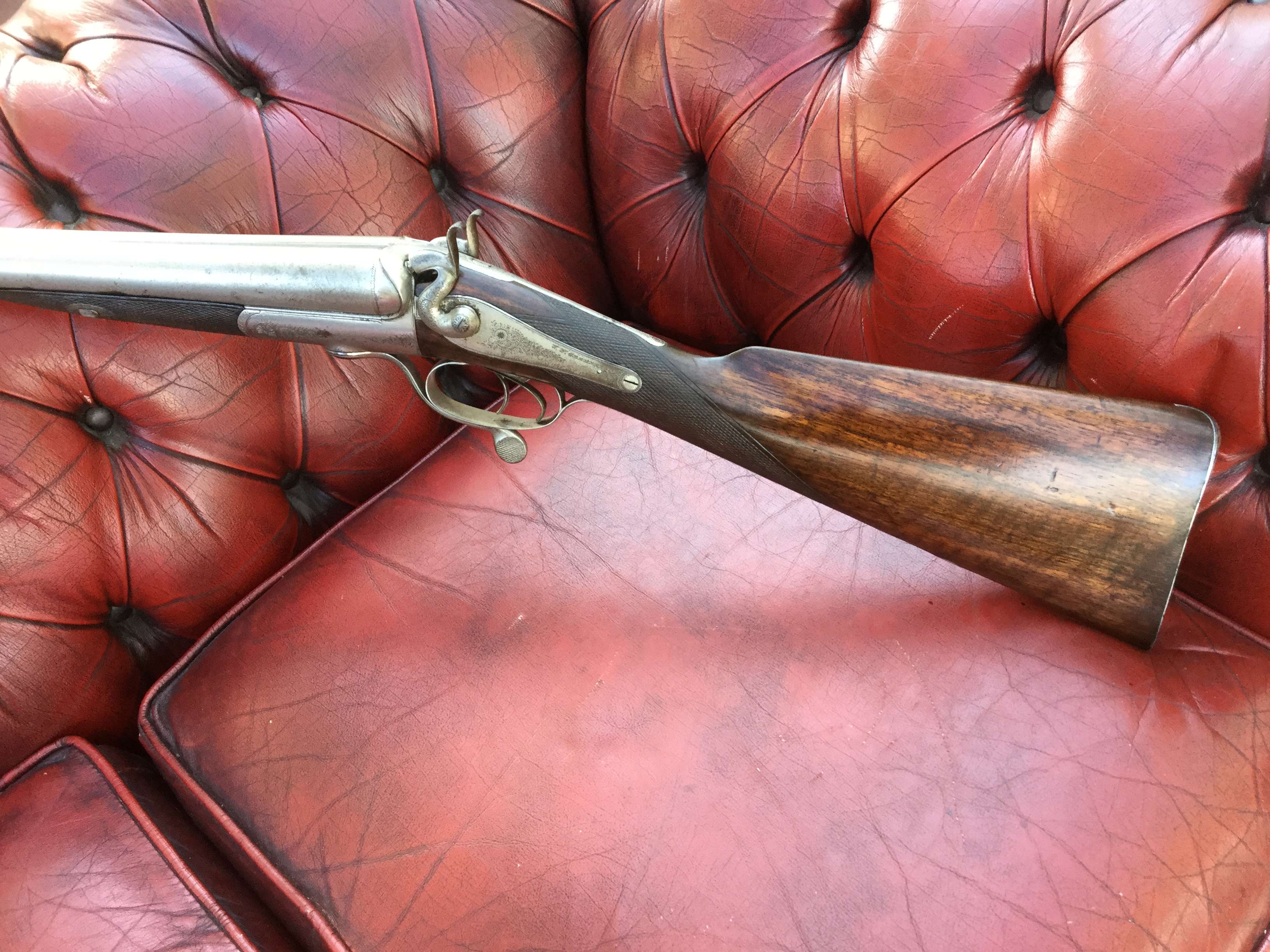
The Nickel Plated British Shotgun
Fad, Fashion, or a Practical solution ?
Gunmakers would supply and build whatever the customer ordered, as the customer was always right ! Several popular adaptions were built in to handmade guns, whether they were simply fad or fashion, however on occasion a practical solution would be borne out of the sever conditions where the gun was to be used.
The use of Nickel Plating on long guns emerged in the late 19th century, as professional users sought a corrosion-resistant finish for weapons exposed to the harshest of environments. Nickel was well known not to be effected but damp conditions, and warded off the corrosive properties of salt. The makers of shotguns within the late Victorian period, created limited specialised guns for customers who used their shotguns in coastal areas, salt marshes, and extreme damp environments including overseas, and even Jungle environments. The application of a thin nickel layer over steel parts, allowed gunmakers to protect the guns supplied to their customer, against corrosion in the worst environmental conditions.
Electroless nickel plating deposits an even nickel-phosphorus layer without electrical current. It yields uniform thickness over complex contours, from receivers to trigger guards, and can be finished to satin or mirror polish based on pre-plate preparation. Its hardness (RC 53–56) provides enhanced wear resistance compared to chrome.
In electrolytic nickel plating, parts serve as the cathode in a nickel-ammonium sulfate bath while a nickel bar acts as the anode. An electrical current dissolves nickel from the anode into the electrolyte, which then deposits uniformly on the firearm’s surfaces. Proper surface cleaning and polishing prior to plating are critical to avoid dips or seam failures in the finish.
The nickel plating of British long guns in the late Victorian period, up to the early 1900’s was reserved mainly for the heaviest of wildfowling guns, like punt guns, four bores and eight bores. These big bore guns are not common in general, however guns that have been Nickel Plated are also not rare, as several were made, and being made to resist corrosion, they have journeyed well through the passage of time.
This article focusses on a ten bore hammer gun, made by W. W. Greener in 1871. Images were sent to the Great Grandson of W. W. Greener - Mr Graham Greener. The company today still produce best quality W. W. Greener guns. The reply from W. W. Greener was both informative, and interesting. The gun was confirmed as being made by, and nickel plated by the Greener company in 1871. This gun was noted by Graham Greener, as being unusual, due to the number of ten bores actually being nickel plated by the Greener company was very low. The nickel plating process was used primarily on the larger bores as previously mentioned.

Original Nickel plating from 1871, 95% still in tact
This gun has been worked hard over its 150 year plus life, so the opportunity to observe, and delve in to how the gun has stood up, along with its original factory nickel plating was too good to miss. Purchased for just a few hundred pounds, and seen previously as an obsolete old gun with little or no purpose. However, as collectors we see things differently, firstly the gun is a black powder proofed 10 bore with short chambers 2 7/8, ensuring the gun meets the requirements of the obsolete caliber list (section 58) – no license required. The gun deserved a good strip and clean prior to being added to the collection. The images below show so much more than words can say. The whole of the gun; action body, lock plates, trigger guard, underlever, hammers, and barrels had all been nickel plated using the earliest process of nickel plating. Environmental conditions have caused corrosion in places, but very little under the circumstances of time. The barrels are Damascus, then nickel plated. Basically everything that could be nickel plated has been.

The 1871 Greener dismantled, ready for servicing, cleaning, lubricating, and reassembly. The ingress of salt water, humidity and poor drying is evident, however after over of 150 years the gun remains serviceable.

The cleaning shows high percentage of Nickel Plating still solid and in place, even high wear areas have held up well.

The non rebounding locks have been full dismantled, checked, serviced, and re-built. The locks have been made in house by Greener, they retain excellent crisp trigger pulls, on inspection there appears to be little wear, possibly due to the quality of materials used.

The underside of the barrels show Black Powder proof marks for 1868 to 1875, the forend loop, and importantly the Greener elephant trade mark.

The top rib shows the W. W. Greener. St. Mary's Works. Birmingham address. The amount of Nickel Plating in place after over 150 years is simply a testament to the quality delivered my the maker.