Edward Paton
Edward Paton - Gunmaker
Two overlooked Pinfire game guns
It is notable that some of the most skilled British gunmakers remain largely unrecognised today. This is partly due to timing, with few guns made before 1900 remaining in active use, so those makers who ceased trading before the 20th century are easily overlooked. Edward Paton is one of these gunmakers. Although his work was highly respected, his name is now largely forgotten, despite his reputation as a leading gunmaker of the day.

The Gun owned by - Sir Alexander Charles Ramsay-Gibson-Maitland, 3rd Baronet of Clifton Hall (1820-1876).
Edward Paton was born in 1819 in Dublin into a military family, who were deeply tied to the 42nd (The Royal Highland) Regiment of Foot. Edward became the regiment's armourer, and in 1847, was stationed in Malta, where his son was born. Soon after, the family left the regiment and moved to London, where Paton is likely to have worked as a journeyman before partnering with Charles Frederick Walsh in 1854. Edward and Charles as partners purchased the Ancell & Salmond Gun-making business in Perth, Scotland. After Walsh left the business in 1859, Edward Paton continued under his own name, achieving the title of gunmaker to Prince Albert, an honour he featured in his advertising.

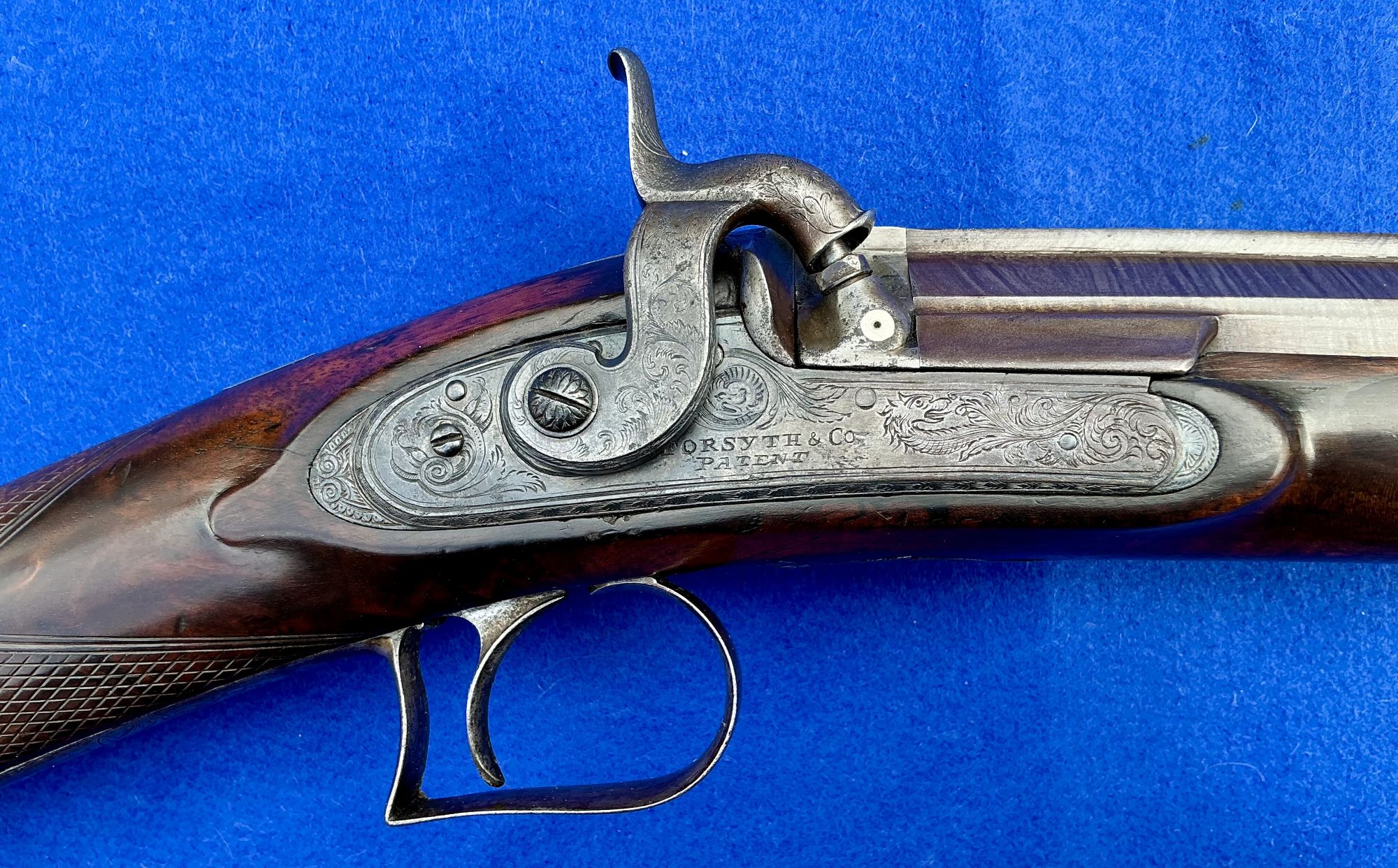
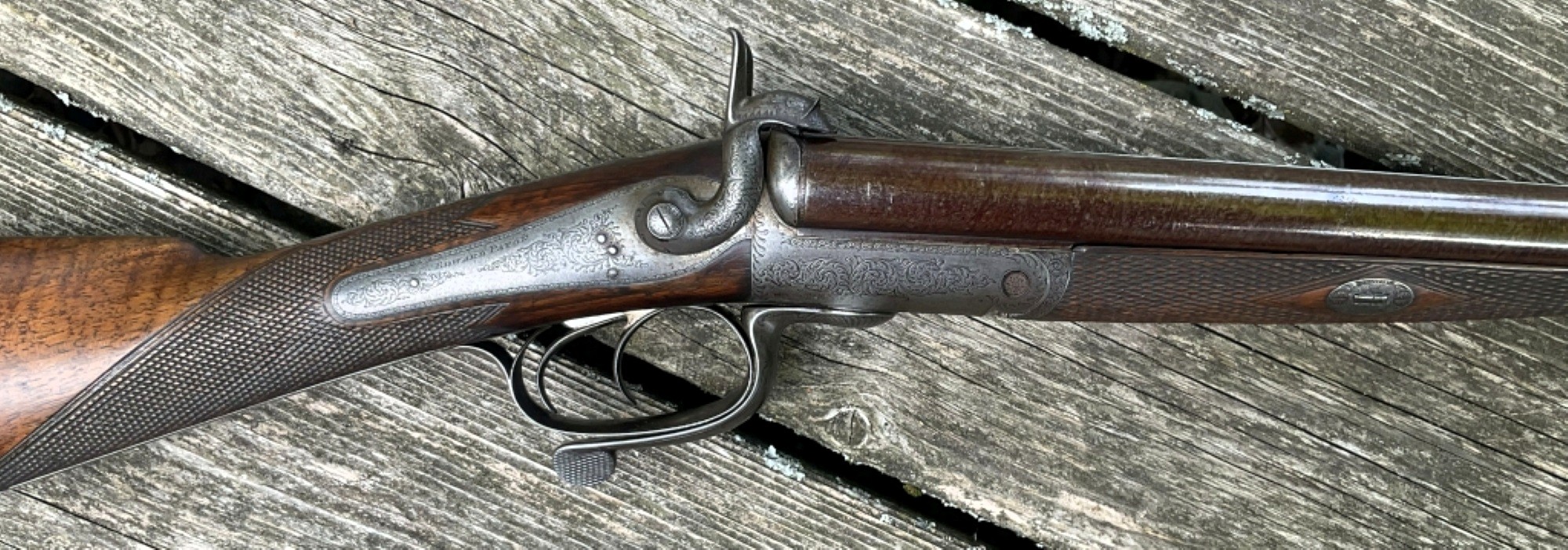
Early single bite, Assisted opening stud, Hodges lightening cuts, and Beatus Beringer style close guard lever.
The 1861 census records Edward Paton as employing seven men and two boys. An example of his work, shown here, this being a 16-bore pin-fire game gun, serial number 2337, produced around 1861. This particular gun features one of the early single-bite actions, with a rearward under-lever and an assisted-opening stud, elements copied from the Parisian inventor Beatus Beringer. The design became popular among certain London makers from the mid-1850s, but was largely replaced by the stronger double-bite design that became favoured in the later 1860’s. The wide top rib is inscribed with, “Edward Paton. Maker to His late RH the Prince Consort. Perth.” The under-lever design fills the space between the lever and the front of the trigger guard, a stylistic mark attributable to Beringer and seen on early British pin-fires. Edward Paton appears to have produced between 20-30 firearms per year, and likely to have included rifles, pistols, and game guns of varying grades. This gun has been well maintained, retaining mirror bores and weighing 6lb 13oz.

“Edward Paton. Maker to His late RH the Prince Consort. Perth.”
The Edward Paton Pinfire game gun with serial number 2337 belonged to Sir Alexander Charles Ramsay-Gibson-Maitland, 3rd Baronet of Clifton Hall (1820-1876). The stock escutcheon displays the family crests of both, his and his wife's families. Sir Alexander was Magistrate and Deputy Lieutenant in Mid-Lothian and Stirlingshire, Provincial Grand Master of the local Freemasonry, and a director of the Scottish Central Railway and the Royal Bank of Scotland. He won the Mid-Lothian seat as a Liberal in 1868, holding it until 1874. Sir Ramsay-Gibson-Maitland died in 1876 at the age of 56. Clifton Hall, built for the Graham family around 1214, later became the Ramsay-Gibson-Maitland baronial seat. It was once owned by Euphame Macalzean, reputedly Scotland’s most famous witch. Walter Dalrymple Maitland Bell, known as ‘Karamojo’ Bell, was also born there and became a renowned adventurer and elephant hunter.
______________________________Edward Paton Pinfire's______________________________
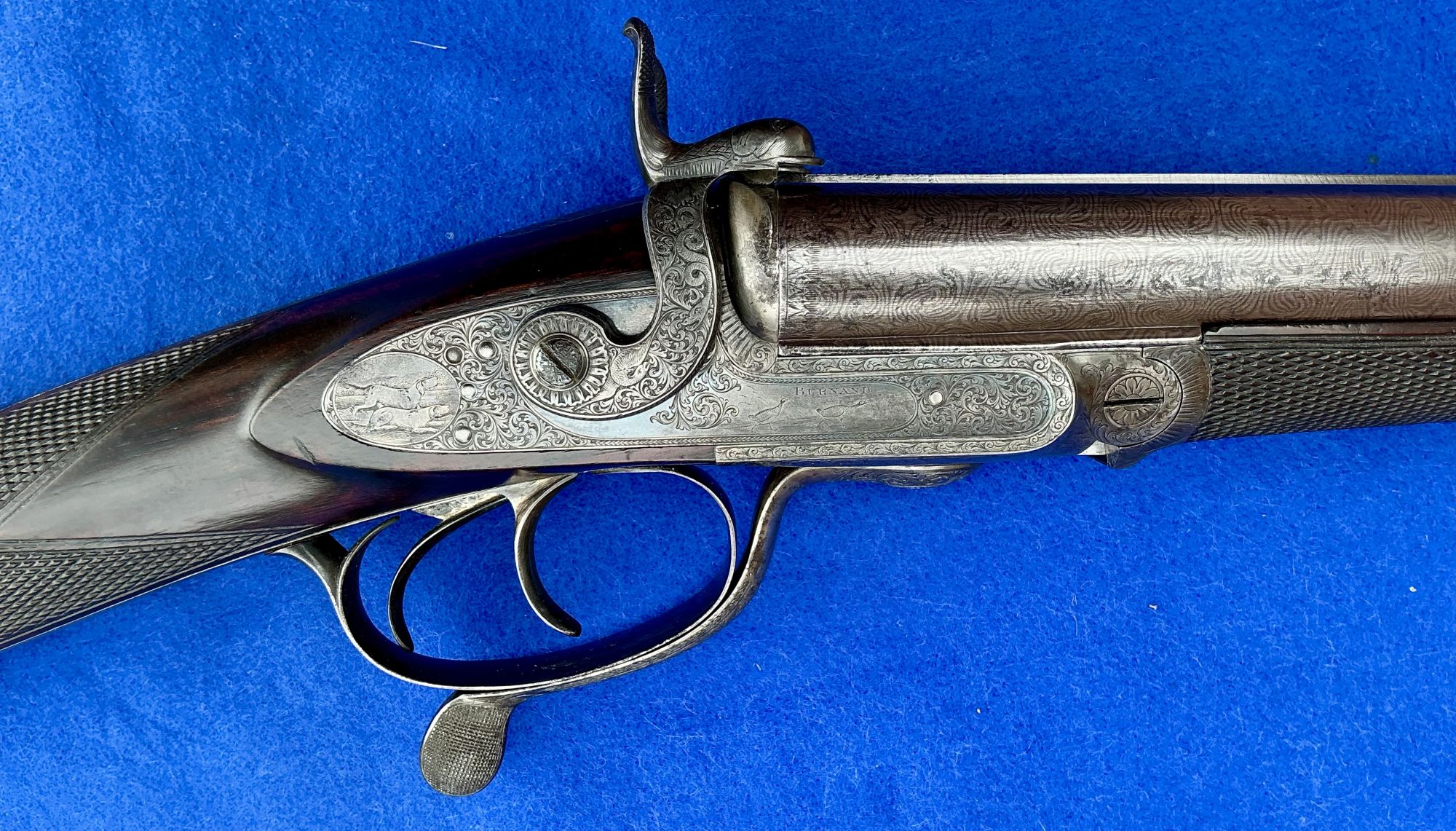
The next example dates from around 1863. Built as a 14-bore, with serial number 2397. It has the later double-bite screw-grip action, seen as an improvement on the earlier single-bite action.

Double bite screw-grip under-lever lock up (Jones patent 1859)
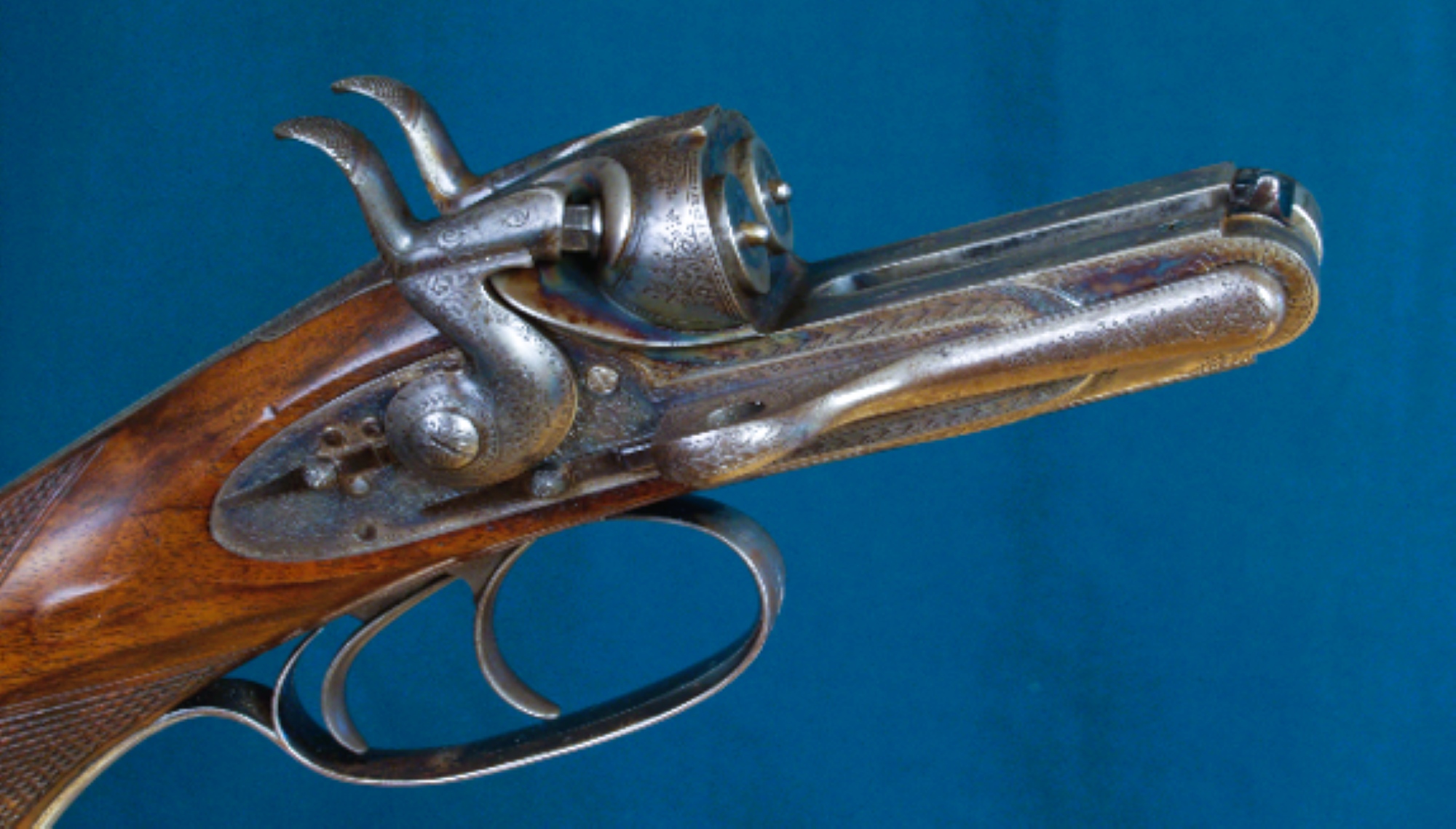
The gun has thin percussion fences, signed back-action locks, rounded dolphin-headed hammers and, interestingly, a perforated trigger guard bow and corresponding raised button on the under-lever. The wide top rib is similarly marked “Edward Paton. maker to His late RH the Prince Consort. Perth.”

Interesting perforated trigger guard bow with corresponding raised button on the under-lever.
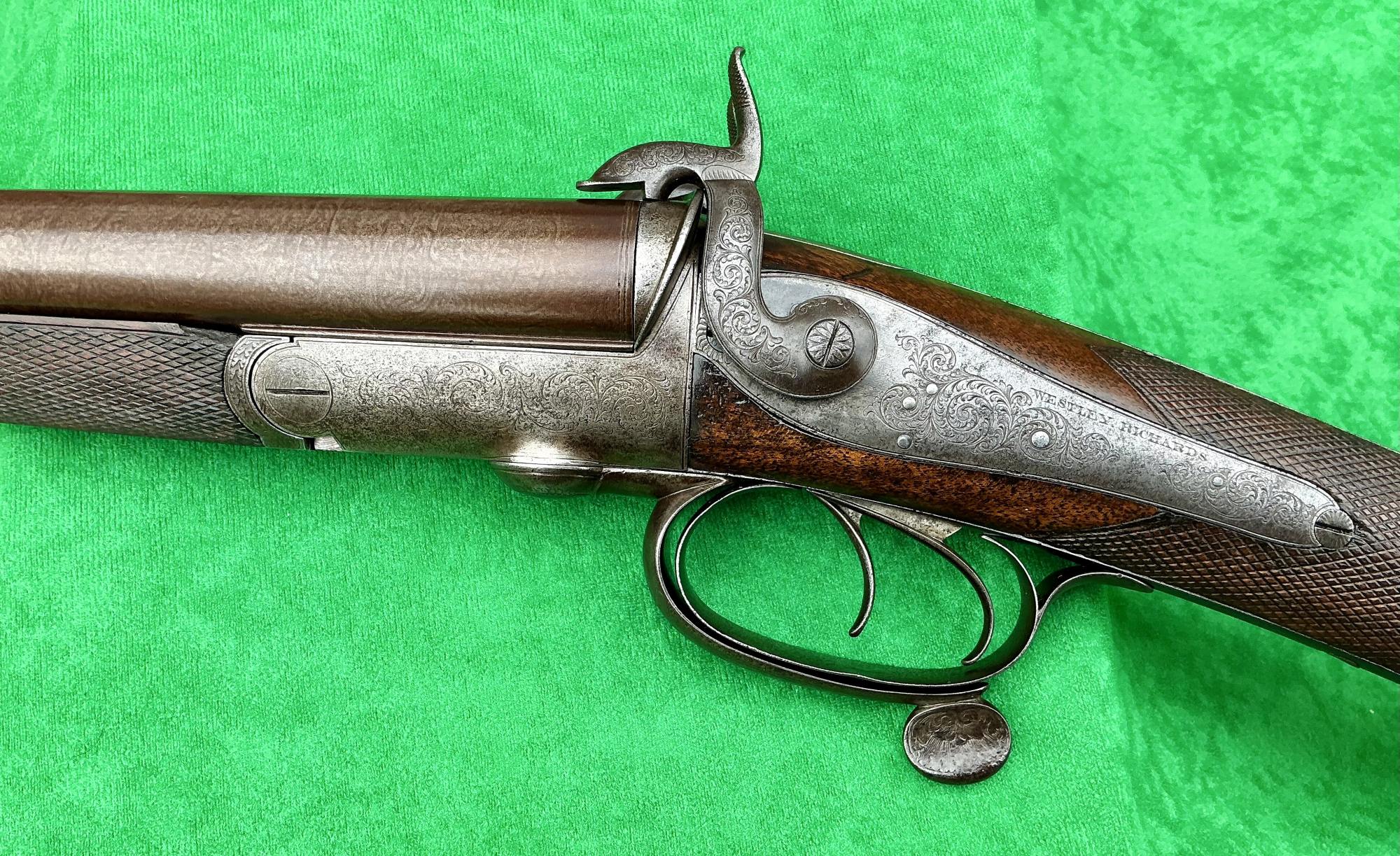
The foliate scroll engraving is very similar in design and execution to the best London guns of the day. This is not unusual, as the top makers would source and purchase their barrels, locks etc. from the same sources, and often employed the same outworkers to build and finish their guns. This resulting in similar guns’ for slightly less money than the top London makers, however of equal quality.

Quality Pinfire game gun, equal to offerings from London maker's of the time.
Unfortunately there are no clues as to the original owner of this fine gun. This gun has seen hard use, and the bores are moderately pitted. As the first Edward Paton gun in this article, the second gun also weighs 6lb 13oz