Casimer Lefaucheux
Casimer Lefaucheux
The Elephant in the room
British Gun collectors, enthusiasts and researchers, all recognise and understand the development of the British Breech loading Sporting gun, and would agree it is unlikely to have come to fruition within the Victorian time period without the foresight and input of the French Gunmaker Casimer Lefaucheux.

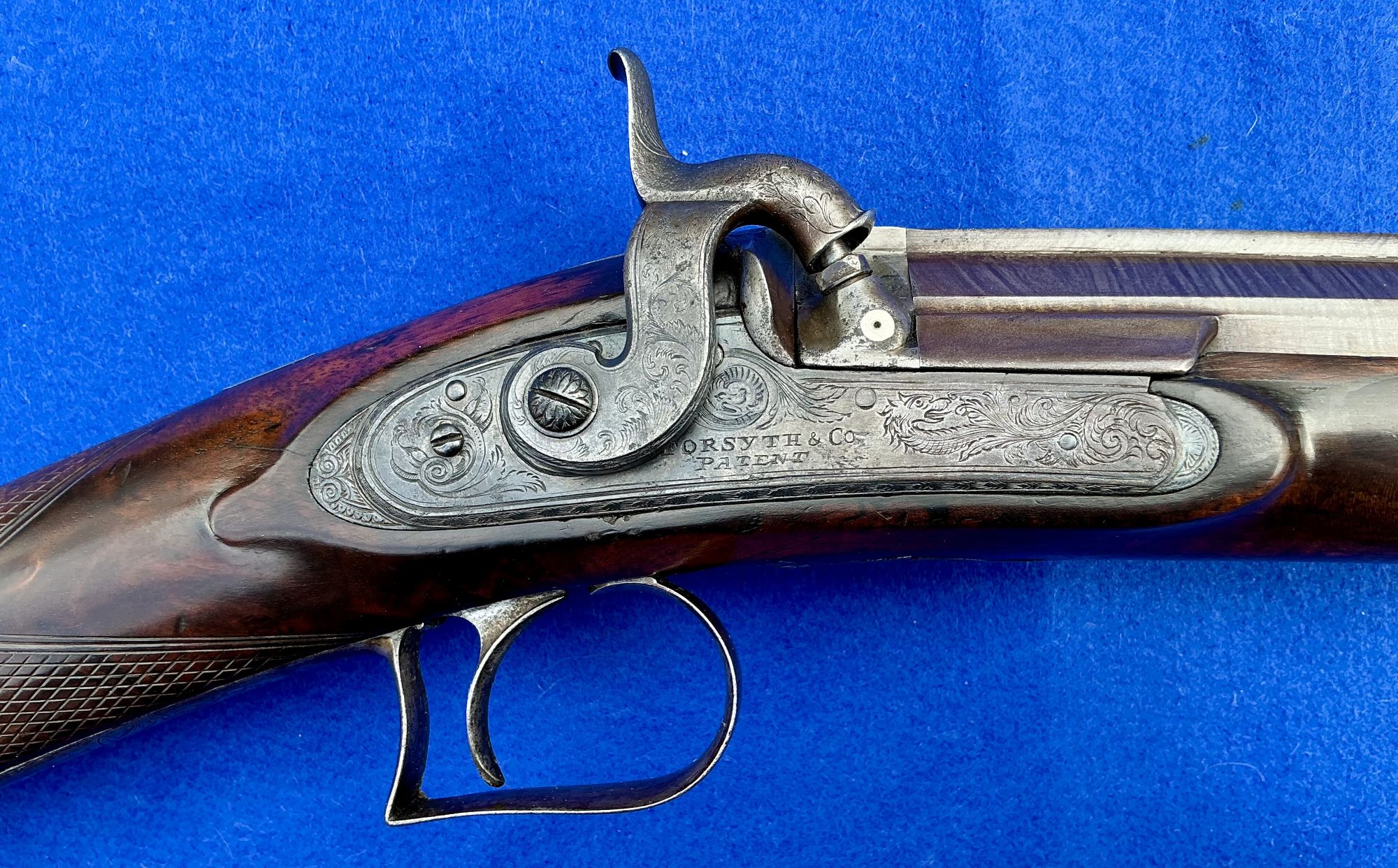
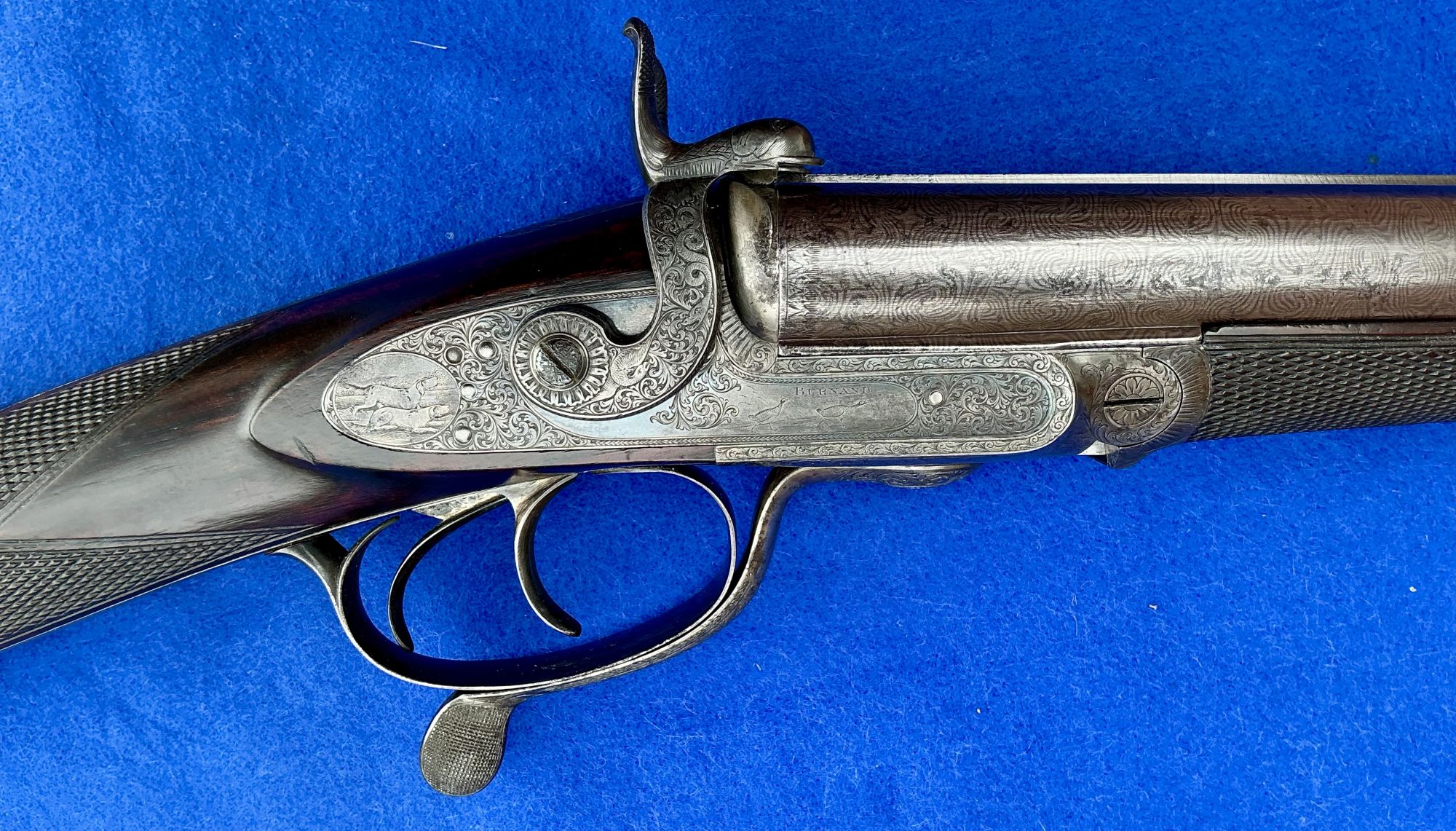
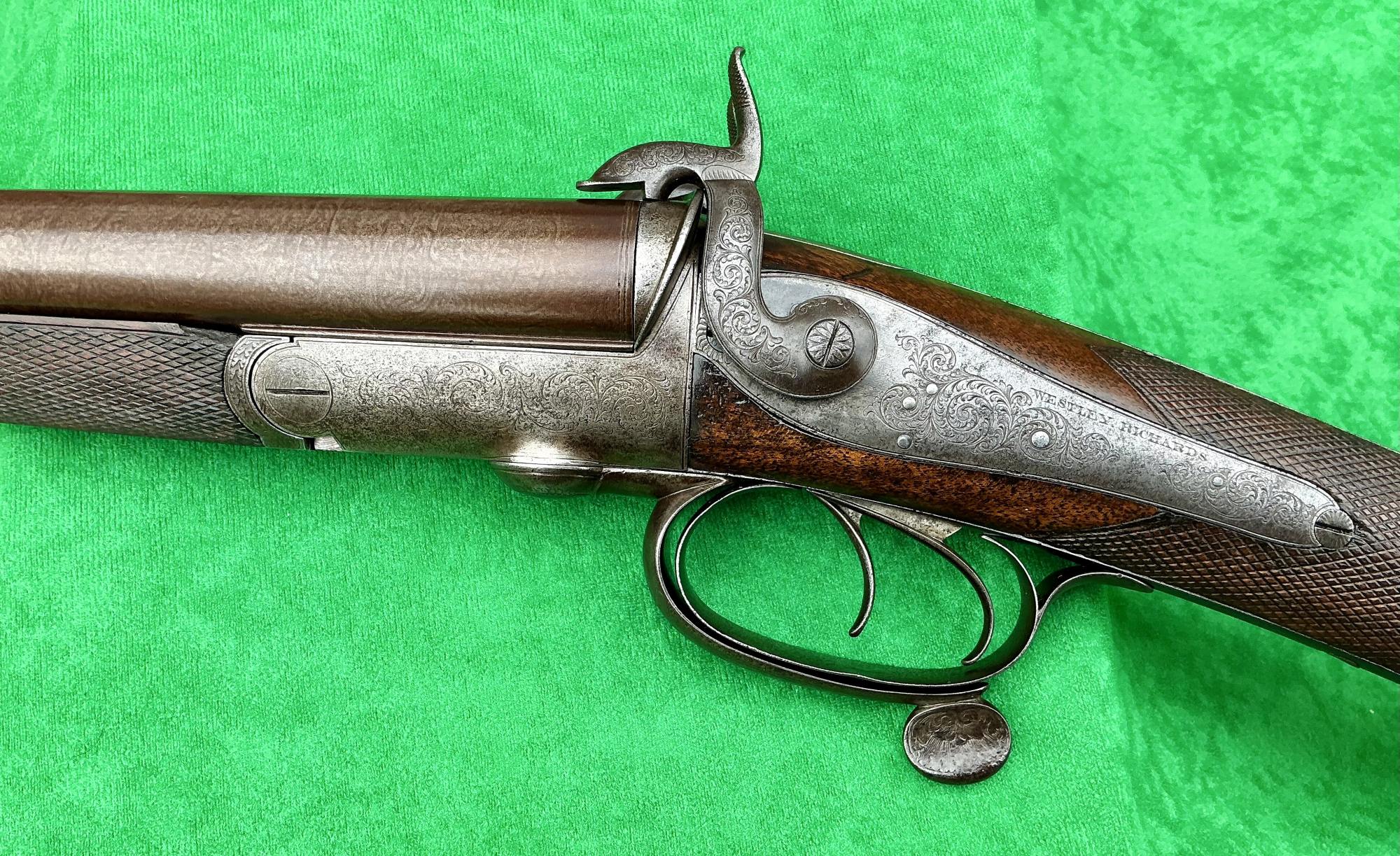
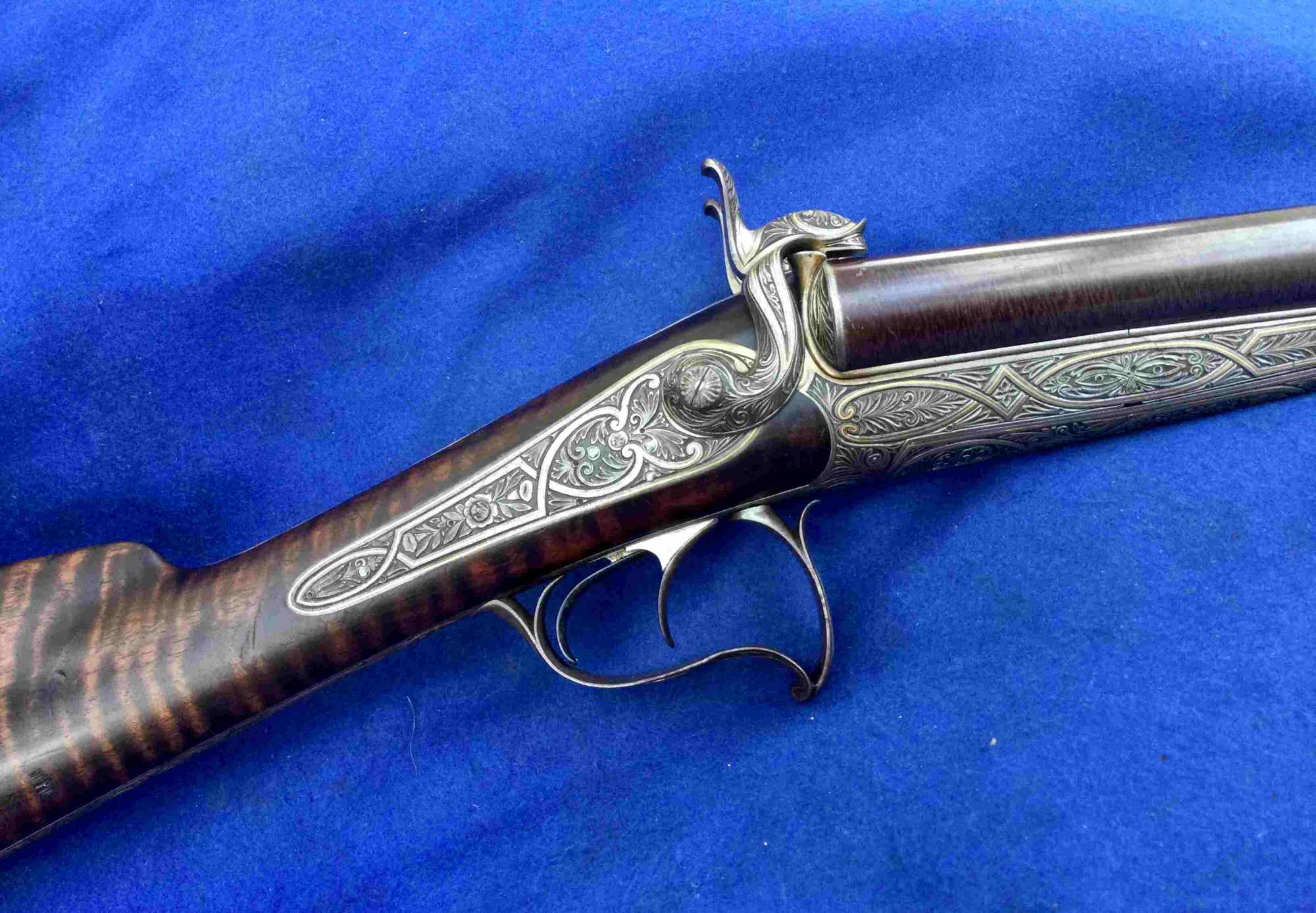
Every part of this Lefaucheux gun is deeply engraved, and surrounded with gold wire-work.
At the Great Exhibition of 1851 in London an example of Casimir Lefaucheux's pinfire gun created an opportunity for all to see the latest development in “Sporting Guns” – The Breech Loading Pin-fire, even though this concept had been used in France since the 1830’s. The Lefaucheux Pin-fire concept allowed British Gunmakers, Joseph Lang, E. M. Reilly, and John Blanch to develop the new concept for the British game Shooter, the development was supported by the likes of Edwin Hodges and Joseph Brazier.


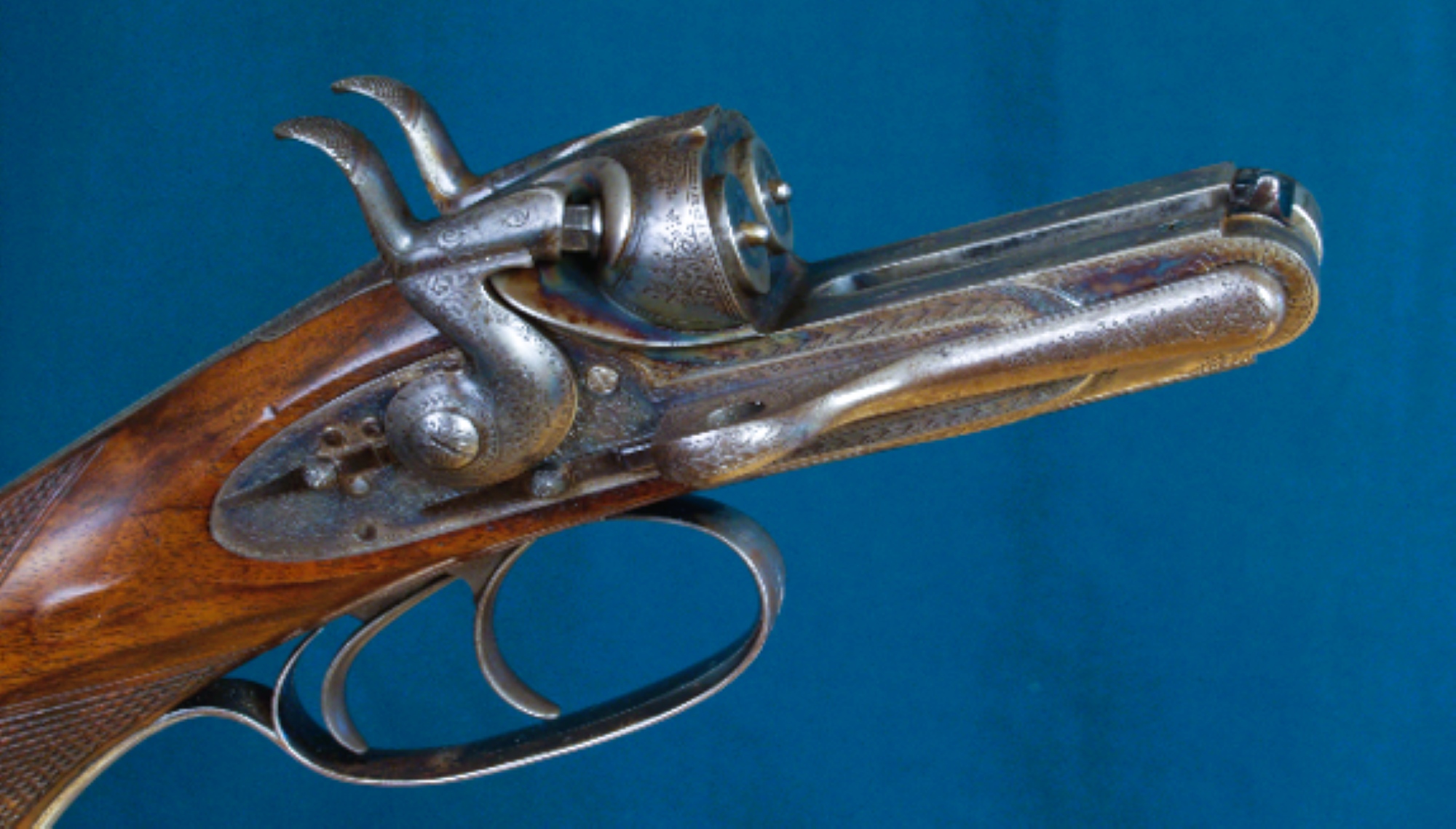
All metal forend - forend tip pierced and shaped as a tail
The development of new systems that work can take time to achieve, and even longer for an acceptance, however once in place, there can be a natural resistance to change. The path and direction for further developments, becomes more difficult, especially when every Sporting Game shot has an opinion on their own latest gunmakers developments and designs.

The forend Iron-work includes the forward facing opening lever - the join hidden in the engraving.
The period between 1855 and 1875 gave rise to a massive change for the Sporting Shooter in Britian, during this period the variations in Sporting Guns and their ignition systems were wide and varied – For a short point in this period of development, it is highly likely that - Muzzle loaders, Pinfire, Base fire and Centre fire, and all their variants could have attend the same Game shooting events, and all shoot alongside each other.

Hare eared, and Dolphin headed Hammers - fully engraved with gold wire-work.
As a part of the resistance to change, Gunmakers during this golden period built some of their finest Guns, demonstrating to patrons and client their ability, skill, and understanding of building best quality Sporting Game Guns, using their own preferred and promoted ignition systems, designs and patents.
Today, the changes have slowed considerably. The popularity of the Over and Under shotgun is strong, both in competition and game shooting, however we find a number of traditional Sporting Game shots regularly using Side by Sides, to which there is a good following and plenty of interest, in turn covering both tradition and the challenge of using older designs - it appears both gun types have so much in common, yet there is a place for both of them as Game guns, to which they are regularly used alongside each other ( sounds familiar, just a 150 years between events )


The above images showing Barrels made by - Leopold Bernard of Paris.
In relation to the resistance to change, and prior to the introduction of the centre fire breech-loading game gun as we know it today. The developers of certain ignition systems went the extra mile to produce something special. The Lefaucheux Pin-fire ignition system being the foundation of the British Breech-loader has been with us in the UK from around 1851, although the initial drawing for the Lefaucheux gun was produced in 1830, it was not until 1833 before the gun came into production in France - Over seventy years on, and the gun was still in production, and remained in use in Europe and the continent well into the early part of the new century. The production and manufacture of the Lefaucheux system was used in a diverse range of weapons, the quality levels covered were from basic low quality, to best quality guns as in this article.

The under-side of the gun fully engraved.
The Lefaucheux gun featured is dated for 1873, this being relatively late, especially considering the centre fire was developed during 1861, and the use of centre fire guns would have been strong at the same time this Lefaucheux was made. The gun featured leads us to consider, what is this gun about ? was the gun as a Special Order ? or maybe an Exhibition Gun !, or simply one of the manufacturer’s last attempt’s to show its clients and patrons what was on offer.

Elongated top strap from the heel plate - The engraved and gold wire-work theme continues throughout the gun.
Information received from the Lefaucheux Museum identified there was a good amount of history about the House of Lefaucheux, but in respect to detailed records on particular guns, this was extremely limited, or none existent. The reason for no Lefaucheux serial number database, was not to dissimilar to other European gunmakers, as many European and continental gunmaker records were destroyed or lost during the various Wars across Continental Europe.
The timeline for the House of Lefaucheux, as we know it.
1827 Casimir Lefaucheux buys Pauly patents and starts his company
1852 Casimir Lefaucheux dies; his widow takes over retail
1870 Laffiteau & Rieger form partnership, assume retail
1873 Lefaucheux Exhibit at Vienna Expo; public acclaim and criticism
1870’s–80’s Lefaucheux brand expand offerings: cartridges, accessories, target balls
1885 Rieger becomes sole proprietor of Lefaucheux
1886 Rieger registers Trademark for Lefaucheux cartridges
The Lefaucheux gun focussed in this article, has been confirmed as being made in the House of Lefaucheux during the era of Laffiteau & Rieger (1870 to 1885). This information has added to a line of speculation that surrounds this gun. The gun has been viewed by a variety of collectors and researchers, and has raised a number of thoughts including, who might have ordered the gun, and the reasons for the elaborate engraving, and gold inlay, unfortunately without detailed records, all questions are likely to remain unanswered. There is agreement, the gun was made as a best gun. As with many guns that have little written records, the gun itself can give us a few clues and answer some questions.

The trigger guard inscription - "NANTUTE ET SANGUINE" - translates to - "With Intenseness and Blood"
Research of the Gold encrusted adornment on the trigger guard was an area for information. The trigger guard engraved with an arm holding a sword, the arm and sword is held high, and piercing a severed head, symbolically dripping blood. The lettering surrounding the grotesque engraving reads - “NANTUTE ET SANGUINE”, this translates from Latin to English as “WITH INTENSENESS AND BLOOD” In European heraldry, the severed Turks head is most often seen as pierced by a sword, and signifies the many wars fought by European Christian states during the 19th century... As expected, this type of inscription engraved in precious metals is unlikely to be made for the majority of users or hunters, but more likely as an one off, special order, commissioned, or for exhibition.

The Gunmakers Art in fully flow - Lefaucheux 16 bore Pin-fire - Fully engraved, and accented in Gold.
The information supplied by the Lefaucheux Museum gives an interesting entry on the timeline, that the gun was finished in early 1873, at this time the House of Lefaucheux was owned in partnership with Laffiteau & Rieger. The most interesting information came from the fact the House of Lefaucheux Exhibited at the Vienna International Exhibition in May 1873.
1638 LAFFITEAU LEFAUCHEUX et H. RIÉGER
(maison Lefaueheux), à Paris, rue Vivienne, 37.
Médaille, Londres 1831. Médaille d’honneur, Paris 1833. Médaille d'argent, Paris 1867 .
Fusils de chasse à broches et à percussion cen¬ trale; pistolets de luxe et revolvers. — Spé¬ cimen de cartouches de chasse.
Vienna International Exhibition Publication date 1873
The Pinfire system for British game shooters ( 1855 to 1870 ) resisted for a while, before slowly giving way to the speed and convenience of the centre fire.